Know-Your-Rights After Arrest Checklist (Free PDF)
A free, printable checklist can help you stay calm after an arrest. Use it to remember your rights and the first steps to take in the first 24 hours.
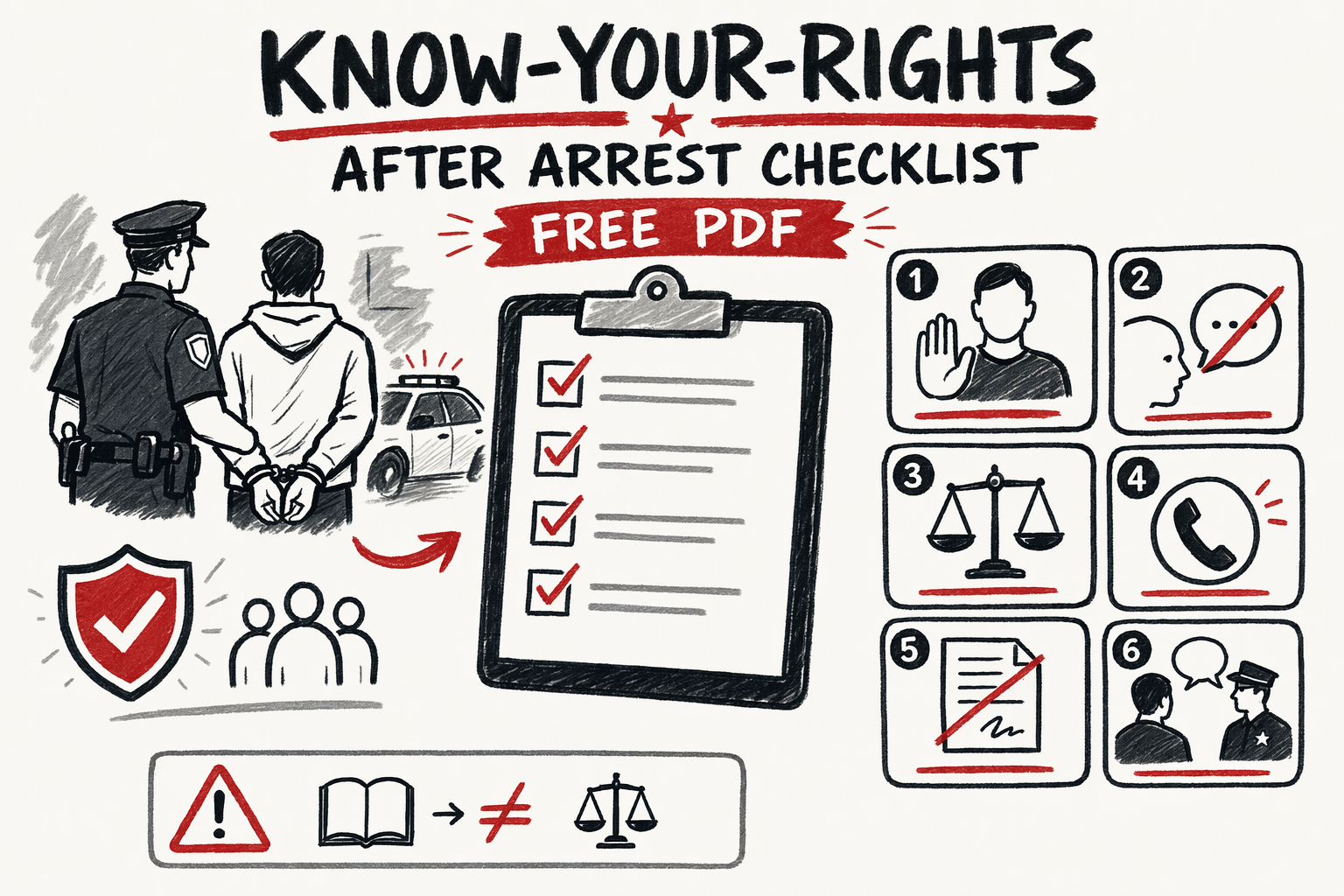
PDF • printable • free, no payment
An arrest is scary, especially if this is your first time dealing with police or court in the United States. This free checklist is made to help you remember simple steps, protect your rights, and get ready to speak with a defense lawyer.
You can use this page with our other free tools and our guide on your rights after arrest. GuardLine Defense is not a law firm. We do not give legal advice, and using this free service does not create an attorney-client relationship.
What this free checklist helps you do
The checklist is for the first 24 hours after an arrest. It helps you remember what to say, what not to say, who to call, and what papers or details to save. It is written in plain language and meant to be easy to print or save on your phone.
- Remember your right to remain silent.
- Ask for a defense lawyer as soon as possible.
- Avoid signing papers you do not understand.
- Write down names, dates, badge numbers, and court information.
- Tell a trusted person how to find you.
- Keep track of deadlines, release papers, and court dates.
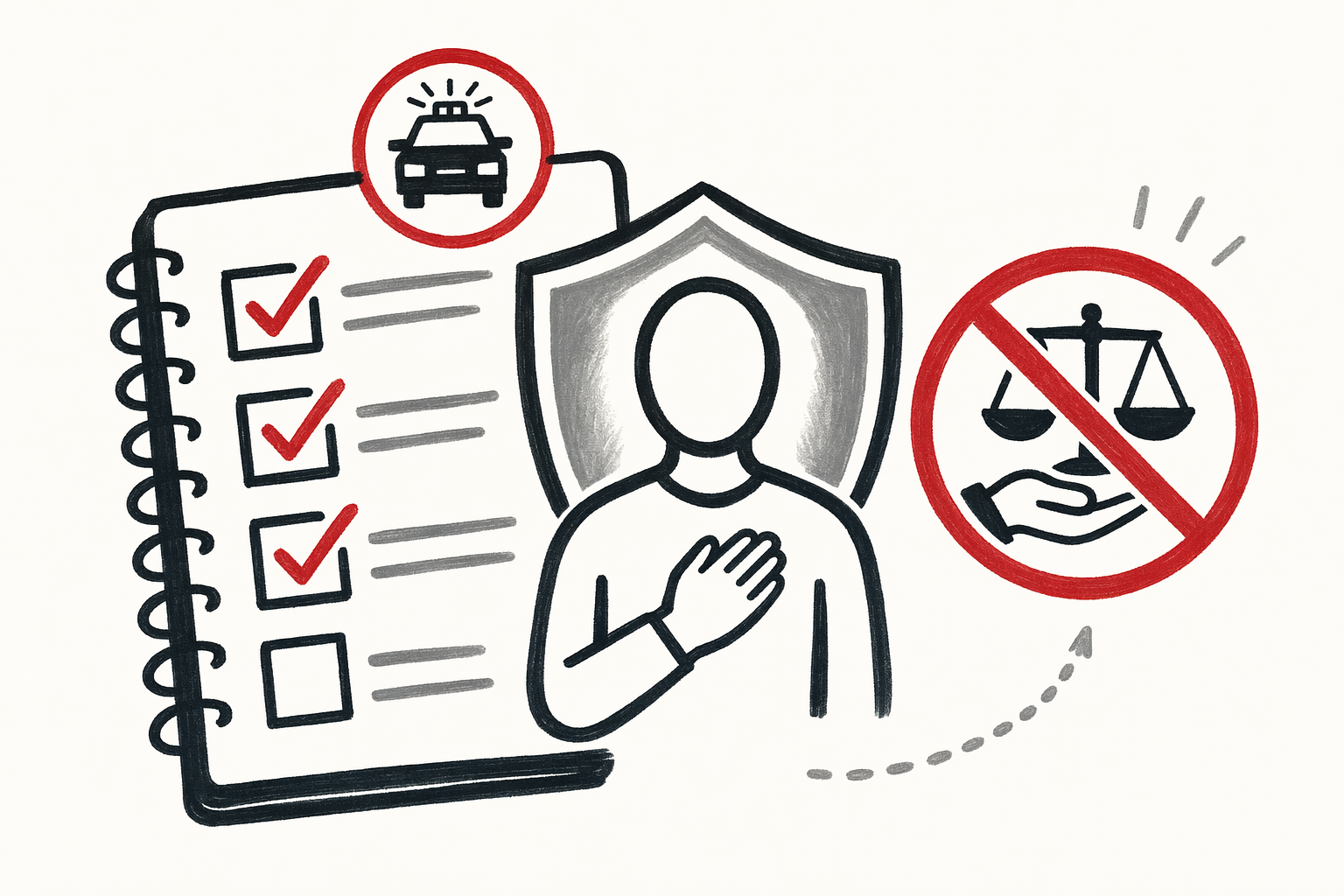
What to do right after an arrest
In the first minutes and hours, small choices matter. Try to stay calm. Speak clearly. Do not argue, run, or resist, even if you believe the arrest is unfair. Fighting with police can lead to more charges or make things harder later.
- Ask if you are free to leave. If the answer is no, ask for a lawyer.
- Use your right to remain silent. Do not explain, guess, or tell your side right away.
- Do not consent to searches if police ask. You can say, "I do not consent to a search."
- Do not sign anything you do not understand.
- Ask for the booking number, jail location, and next court date if you can.
- As soon as you can, contact a trusted person and a defense lawyer.
If English is hard for you, ask for an interpreter. If you do not understand a question, say that clearly. Do not pretend to understand. A wrong answer can hurt your case.
What not to do in the first 24 hours
Many people hurt their own case by talking too much. Police may sound friendly. They may say this is your chance to explain. You still have the right to stay silent. You do not need to answer questions about where you were born, how you entered the U.S., or what happened in the incident before you speak with a lawyer.
- Do not post about the arrest on social media.
- Do not text friends about what happened except to ask for help finding a lawyer.
- Do not let other people tell you to "just explain everything" to police.
- Do not sign a statement you cannot read or do not agree with.
- Do not miss court, even if you are scared.
- Do not assume a small charge is harmless if you are not a U.S. citizen.
It is also smart to save details while they are fresh in your mind. If you are released, write down the time of the stop or arrest, the location, the officers' names if you know them, and the names of any witnesses. Put papers in one folder. Take photos of injuries or damaged property if it is safe to do so.
How this checklist can help you and your family
A checklist gives you a simple plan when your mind is racing. It can also help a spouse, family member, or friend know what to do next. They can use it to find your jail location, keep your papers together, and help you connect with a defense lawyer.
If you want help finding an independent defense lawyer, you can get matched here. Our service is free to you. You never pay us, and we never take a percentage of any attorney's fees. We are paid a flat marketing fee.
I do not want to answer questions. I want to speak with a lawyer.
This free checklist helps you remember your rights and first steps after an arrest, but it is not legal advice.