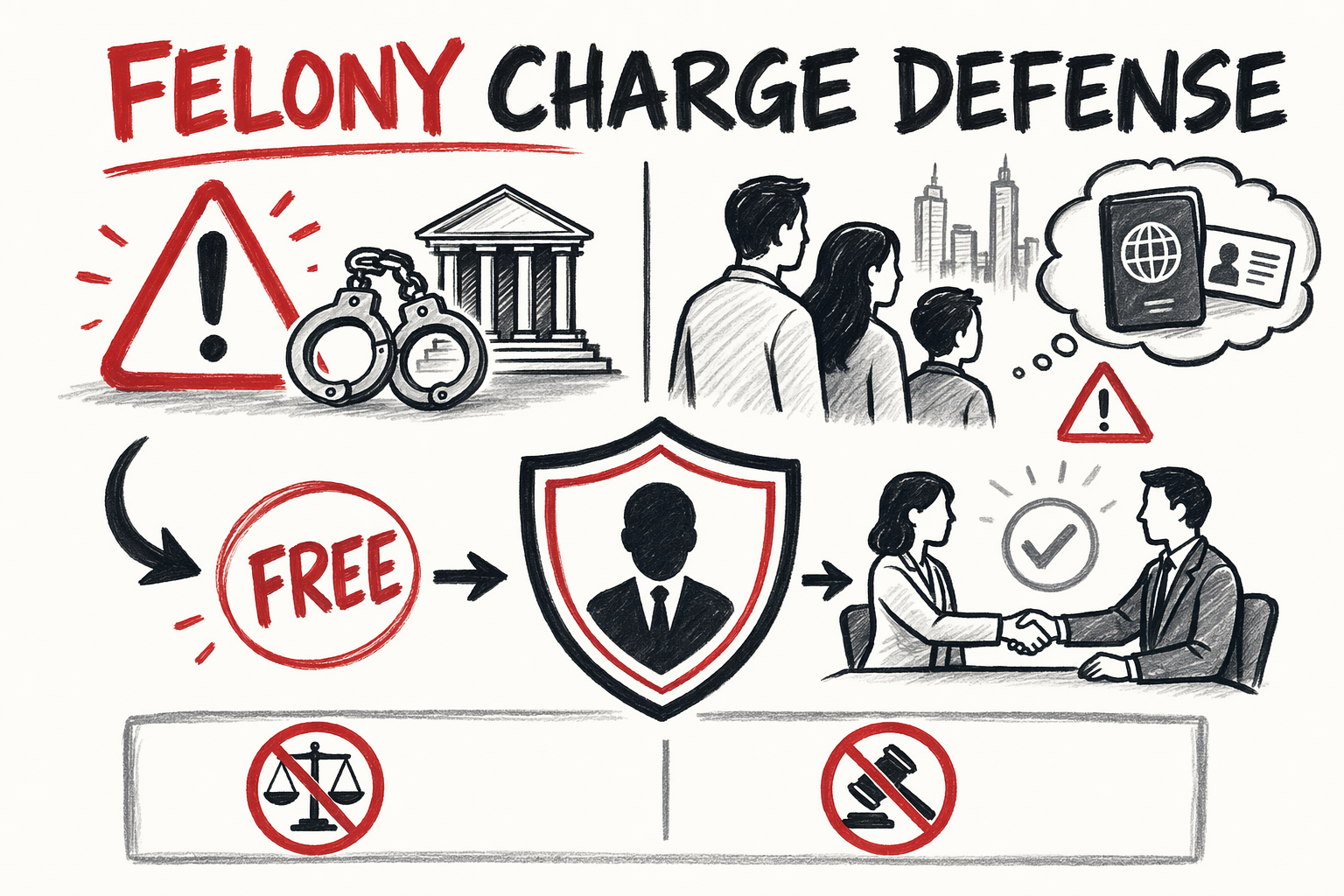
A felony is a more serious criminal charge. It can mean jail or prison, court dates, fines, and long-term harm to your job, housing, and family life. If you are not a U.S. citizen, a felony charge can also affect your immigration status.
You do not have to face this alone. GuardLine Defense is a free attorney-matching and know-your-rights service. We are not a law firm, we do not give legal advice, and we do not form an attorney-client relationship. We can help you get matched with an independent defense attorney, or you can learn more about our services.
What a felony charge means
In the United States, crimes are often divided into two main groups, misdemeanors and felonies. A felony is usually the more serious group. The exact rules depend on the state and the charge, but felonies often carry possible sentences of more than 1 year in custody. Some states send people to state prison for felony convictions. Others use different systems, but the charge is still serious.
Examples of charges that may be treated as felonies include some drug offenses, some theft cases with higher dollar amounts, robbery, burglary, assault causing serious injury, gun charges, and some fraud cases. A charge is not a conviction. It means the government says you committed a crime. You still have the right to defend yourself.
- A felony charge can lead to arrest, bail, and many court dates.
- The prosecutor must try to prove the case. You do not have to prove you are innocent.
- The facts matter. Small details can change how a case is charged.
- State law matters. The same conduct may be charged differently in different places.
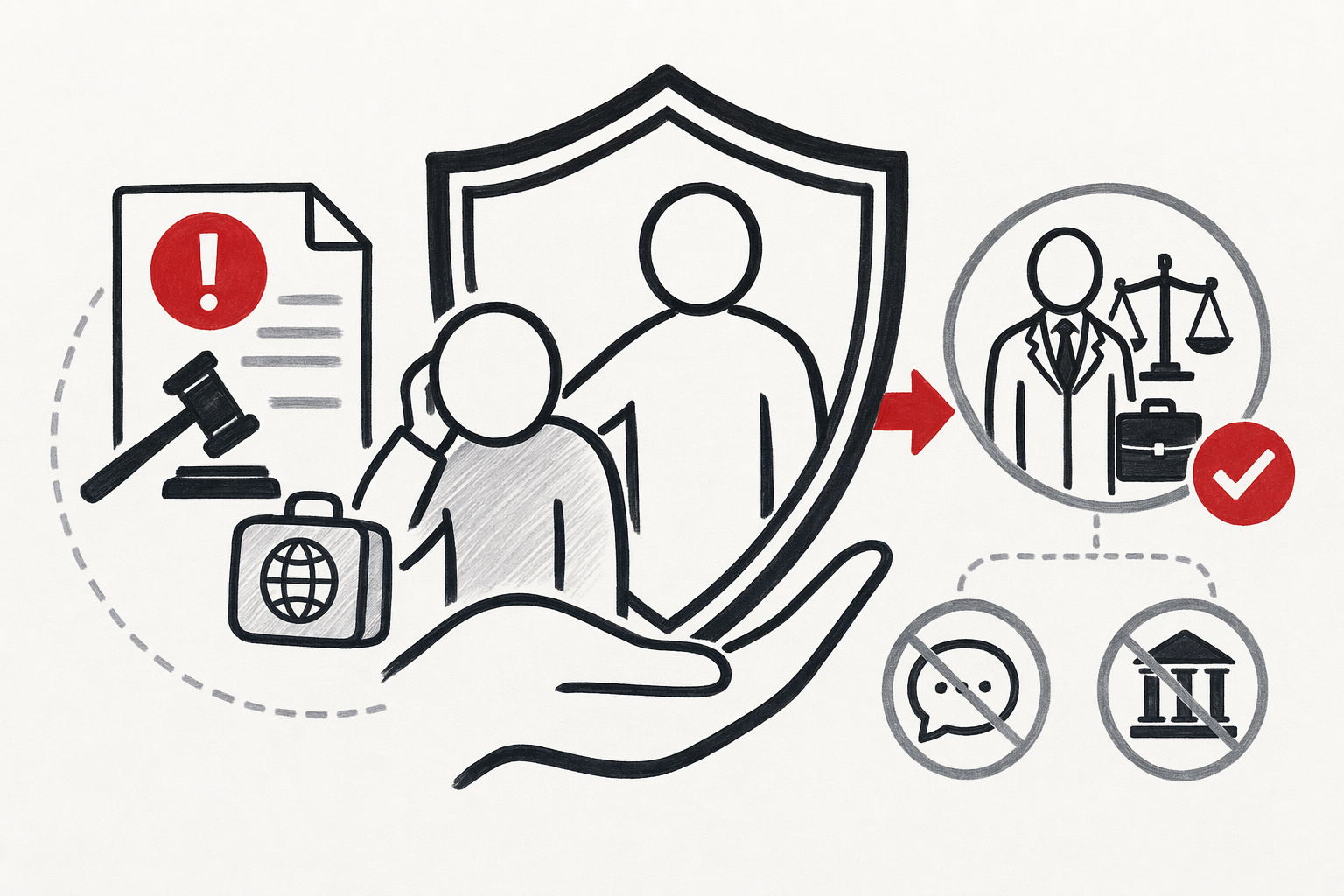
Why felony charges are so serious for immigrants
A felony case can be frightening for anyone. For immigrants, the risk can feel even bigger. A criminal case may affect a green card, visa, work permit, asylum case, DACA, future applications, or the chance to return to the U.S. after travel. Some pleas and convictions can create immigration consequences even if the sentence seems short.
That is why it is important to look for a defense lawyer who understands immigration issues in criminal cases. We are not immigration lawyers and we do not give immigration advice. But we can say this clearly. If you are not a U.S. citizen, tell your defense lawyer about your status and immigration history as early as possible. That includes past visas, old arrests, prior deportation orders, and any pending immigration case.
Even a first arrest can raise hard questions. Should you speak to police. Should you accept a plea. Could a certain charge label hurt you later. These are legal questions for a licensed attorney. You can also read more about your rights after arrest so you know the basics before court.
- Do not guess about immigration consequences.
- Do not rely on what friends, social media, or cellmates say.
- Do not assume a plea is "safe" just because it avoids jail.
- Tell your lawyer if immigration status is a top concern for you.
What to do now if you were arrested or charged
Try to stay calm. The first steps matter. What you say, what you sign, and whether you miss court can change your case. If police want to question you, you can say, "I want to remain silent. I want a lawyer." Then stop talking about the facts of the case.
- Ask what your next court date is. Write it down.
- Do not miss court. Missing court can lead to a warrant.
- Keep all papers from the jail, police, or court in one place.
- Make a list of witnesses, places, and events while your memory is fresh.
- Save texts, photos, videos, receipts, and call logs if they may help your case.
- Tell your lawyer about any immigration concerns right away.
- Use a trusted interpreter if you do not fully understand English forms or court notices.
Many people worry about cost. Attorney fees can vary a lot by state, charge, and case complexity. GuardLine Defense is free to you. You never pay us, and we never take a percentage of any attorney's fees. If you want general cost information, read cost of a criminal defense lawyer.
How GuardLine Defense can help
We help new immigrants and families find an independent criminal defense attorney. We can try to connect you with a lawyer who handles felony cases and understands that immigration issues may be part of the picture. We also offer information in plain language and in more than one language, so you can better understand what is happening.
Our role is limited and honest. We are not a law firm. We do not represent you in court. We do not give legal advice. We do not promise any result. What we do is help you take the next step fast, because criminal cases can move quickly.
- Free attorney matching
- Help in your language when available
- Plain-language information about rights and process
- Support finding a lawyer familiar with serious charges
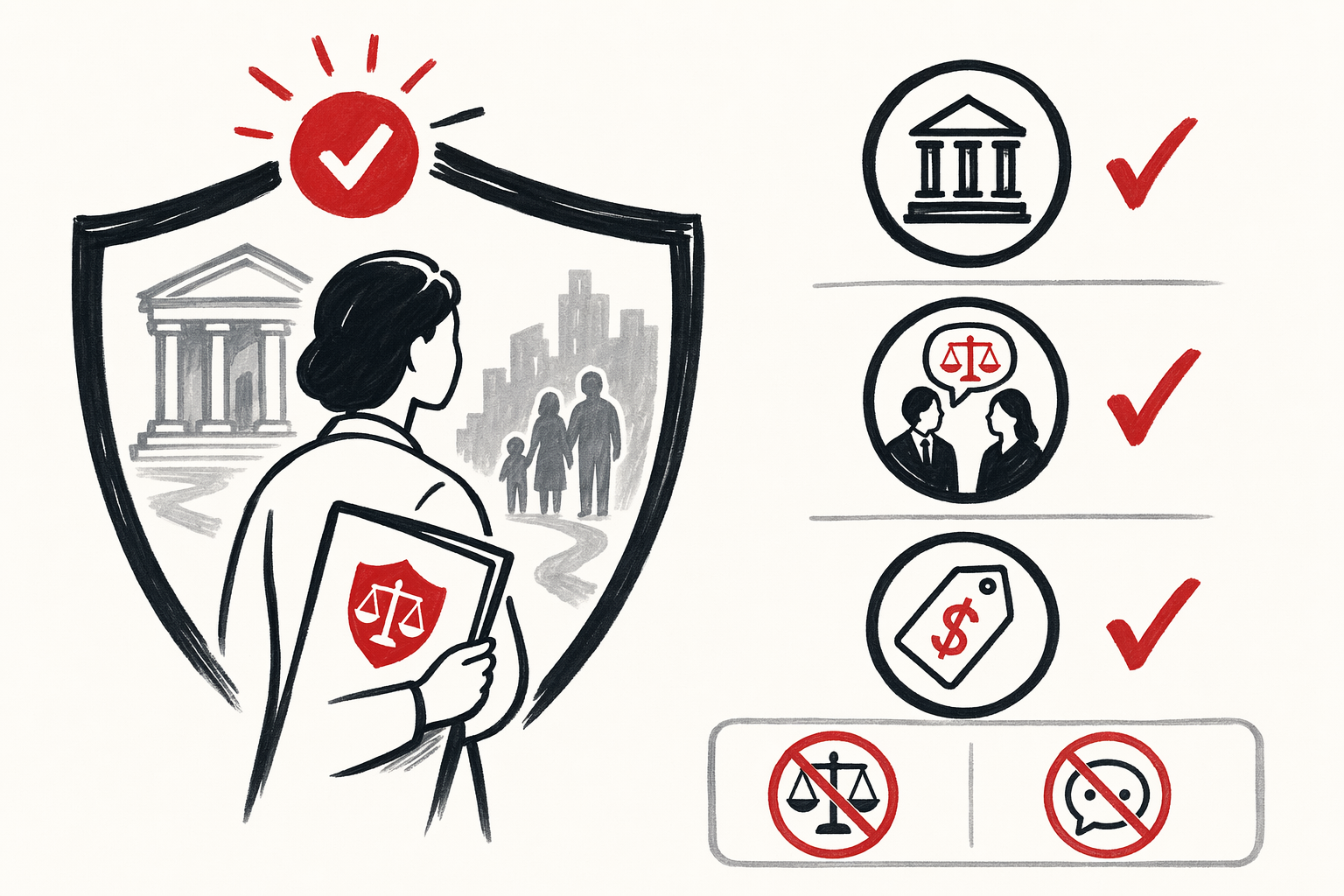
A felony charge is serious. Getting clear information early can help you avoid mistakes.
If you or a loved one is dealing with a felony charge, quick action matters. Bring your court papers together. Write down what happened. Do not discuss the facts with police or anyone else except your lawyer. If you are ready, use our free service to find an attorney match.
A felony charge is serious, especially for immigrants, and we can help you find a defense lawyer for free, but we are not a law firm and do not give legal advice.