Your Rights After an Arrest in the U.S.
If police arrest you in the U.S., you still have rights. The first steps matter. Stay calm, stay silent, and ask for a lawyer.
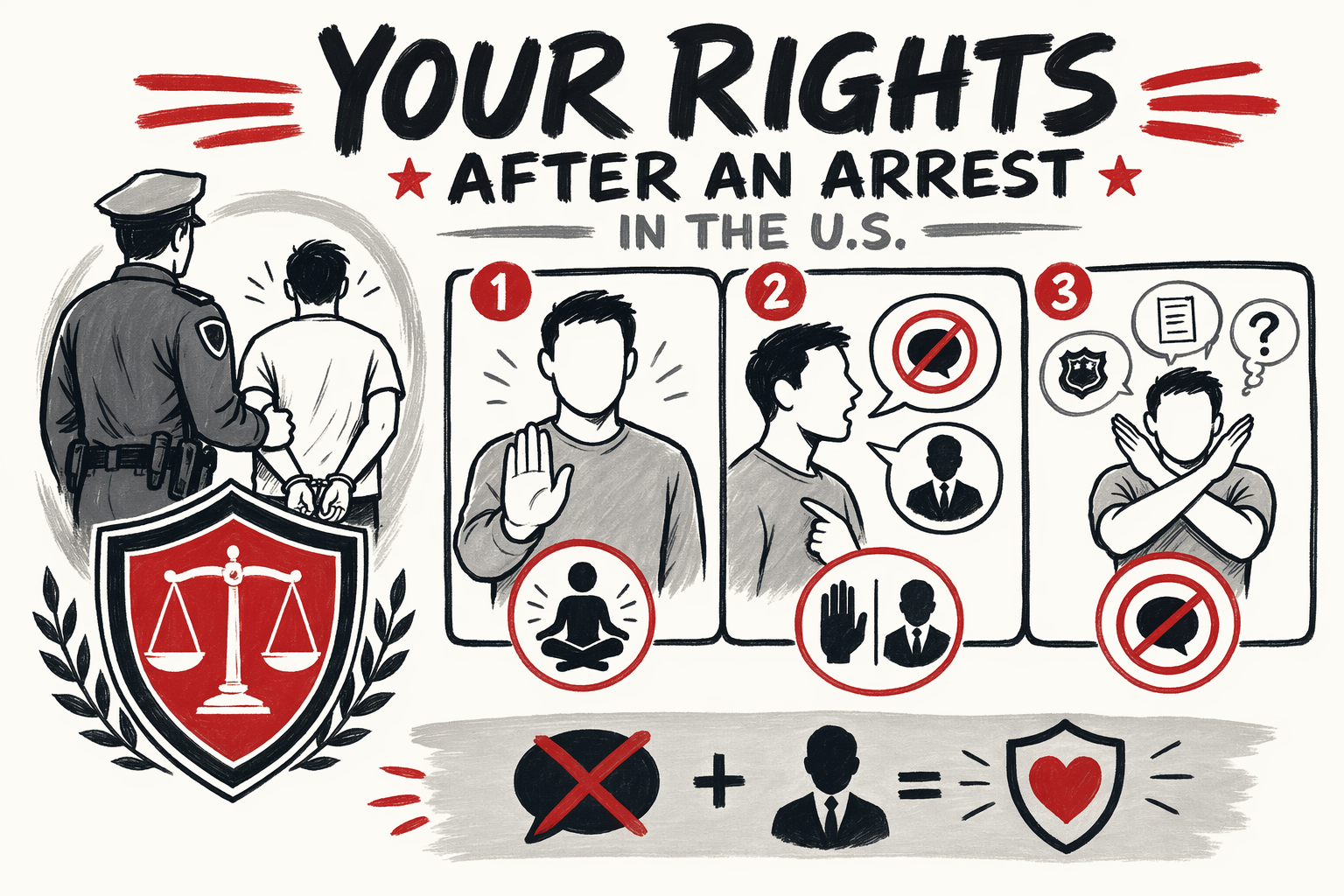
An arrest is scary, especially if this is your first time dealing with police in the United States. You may worry about jail, court, your family, and your immigration status. Take a breath. You still have rights, no matter where you were born.
This page gives general information in plain language. GuardLine Defense is not a law firm and does not give legal advice. We do not form an attorney-client relationship. If you want help finding an independent defense lawyer, you can get matched here. You can also read more in our learning center.
What rights do you have after an arrest?
After an arrest, two rights are very important right away. First, you have the right to remain silent. Second, you have the right to ask for a lawyer. These rights apply even if you are not a U.S. citizen. They apply even if you do not have immigration papers. Everyone in the U.S. has the right to a defense and the right to remain silent.
- You do not have to answer questions about what happened.
- You can say you want a lawyer before answering questions.
- You can ask for an interpreter if you do not understand English well.
- You do not have to sign papers you do not understand.
- You should stay calm and not argue or resist physically.
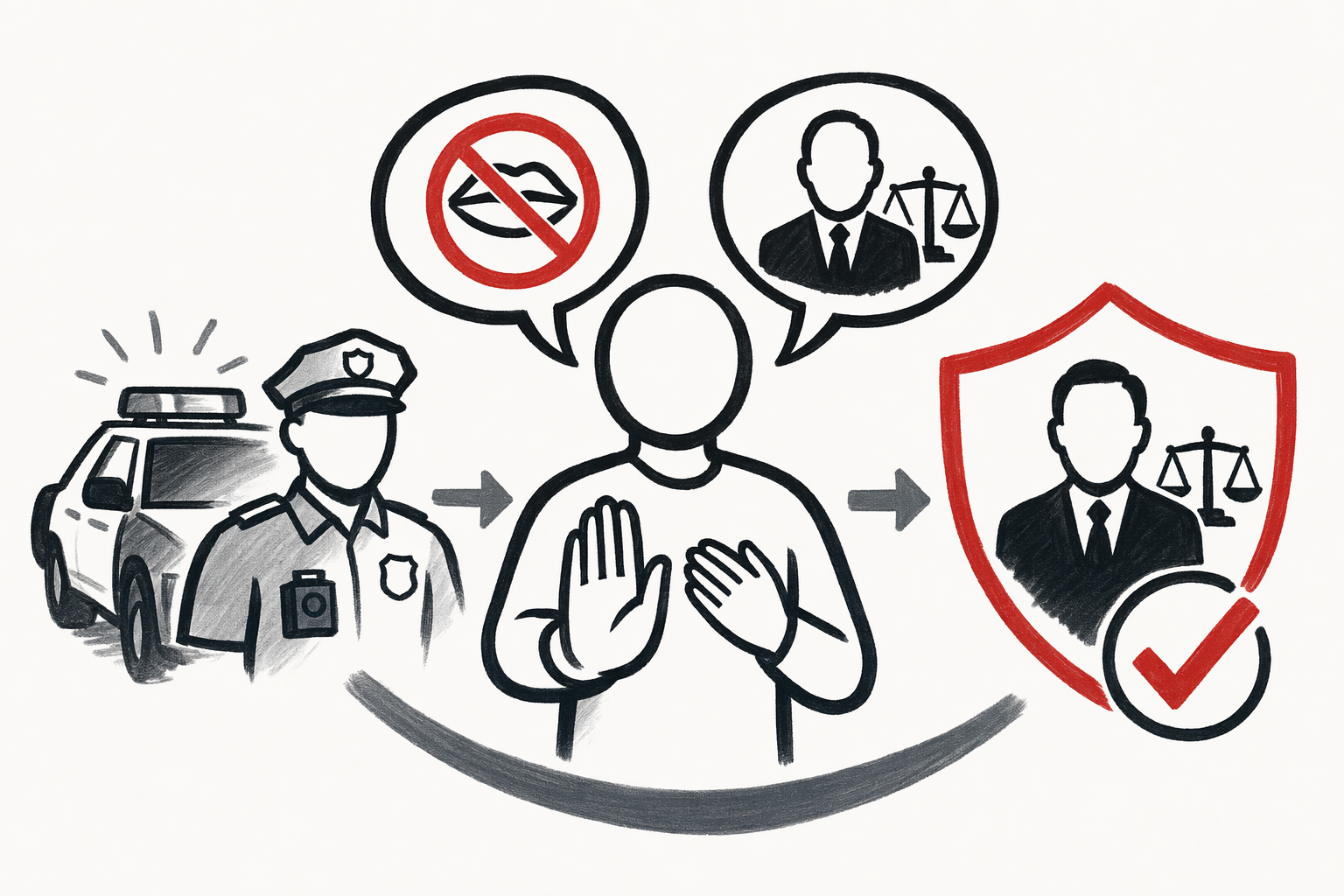
Police may ask questions in a calm way, or they may act like they are trying to help you. They may say, "If you explain, this will go easier." Do not guess. Do not try to talk your way out of it. What you say can be used against you later in court.
What should you say, and what should you not say?
Simple is best. You do not need a long speech. You do not need to explain your side. You do not need to answer questions about where you were, who you were with, what you drank, what you touched, or what you meant. You can clearly use your rights with short words.
- Say your name if needed for identification.
- Say: "I want to remain silent."
- Say: "I want a lawyer."
- If you need language help, say: "I need an interpreter."
- Then stop talking about the case.
Do not lie. Do not give fake documents. Do not argue with police on the street, in the car, or at the station. Staying silent is not the same as lying. It is using a legal right. If police keep asking questions, repeat that you want a lawyer.
Many people feel pressure to explain because they think silence looks bad. In the U.S., using your right to remain silent is allowed. It is not an admission of guilt. It is a way to protect yourself until a lawyer can advise you.
What happens after the arrest?
The steps are different in each state, but many cases follow a similar path. Police may book you, take fingerprints, and place you in a cell or holding area. You may have a first court date soon, sometimes within 24 to 48 hours, depending on local rules and timing. At that hearing, a judge may talk about the charge, release conditions, or the next court date.
A criminal charge can also affect immigration status. In some cases, even a plea that seems small can cause serious immigration problems. Because of that, it is important to try to speak with a defense lawyer who understands immigration issues. GuardLine Defense is not a law firm, and we are not immigration lawyers. We do not give immigration advice. But we can help you connect with an independent defense attorney, including for serious charges such as felony defense matters.
- Booking. Police record your information and the charge.
- Possible questioning. You can still stay silent and ask for a lawyer.
- First court appearance. The judge explains the case steps and may address release.
- Future court dates. Your lawyer can help you prepare and speak for you in court.
You do not have to handle this alone. Asking for a lawyer is a smart first step.
What if you are not a U.S. citizen?
If you are a green card holder, visa holder, asylum seeker, undocumented, or waiting on an immigration case, a criminal arrest can have extra risks. Some charges, pleas, or sentences may lead to detention, removal problems, or trouble renewing status later. This is one reason it is so important not to plead guilty or accept a deal without legal advice from your own defense lawyer.
You still have rights. Police status questions can feel very frightening, but your right to remain silent and your right to a lawyer still matter. If you are worried about what to do next, read more on your rights after arrest or use our free service to find a lawyer match. You never pay GuardLine Defense. We never take a percentage of any attorney's fees. We are paid a flat marketing fee.
Family members often want to help by calling police, calling the jail, or posting online. Help can be useful, but details about the case should be shared carefully. It is usually safer for loved ones to help you find a lawyer, gather basic documents, and plan for child care, work, or medication while the case is pending.
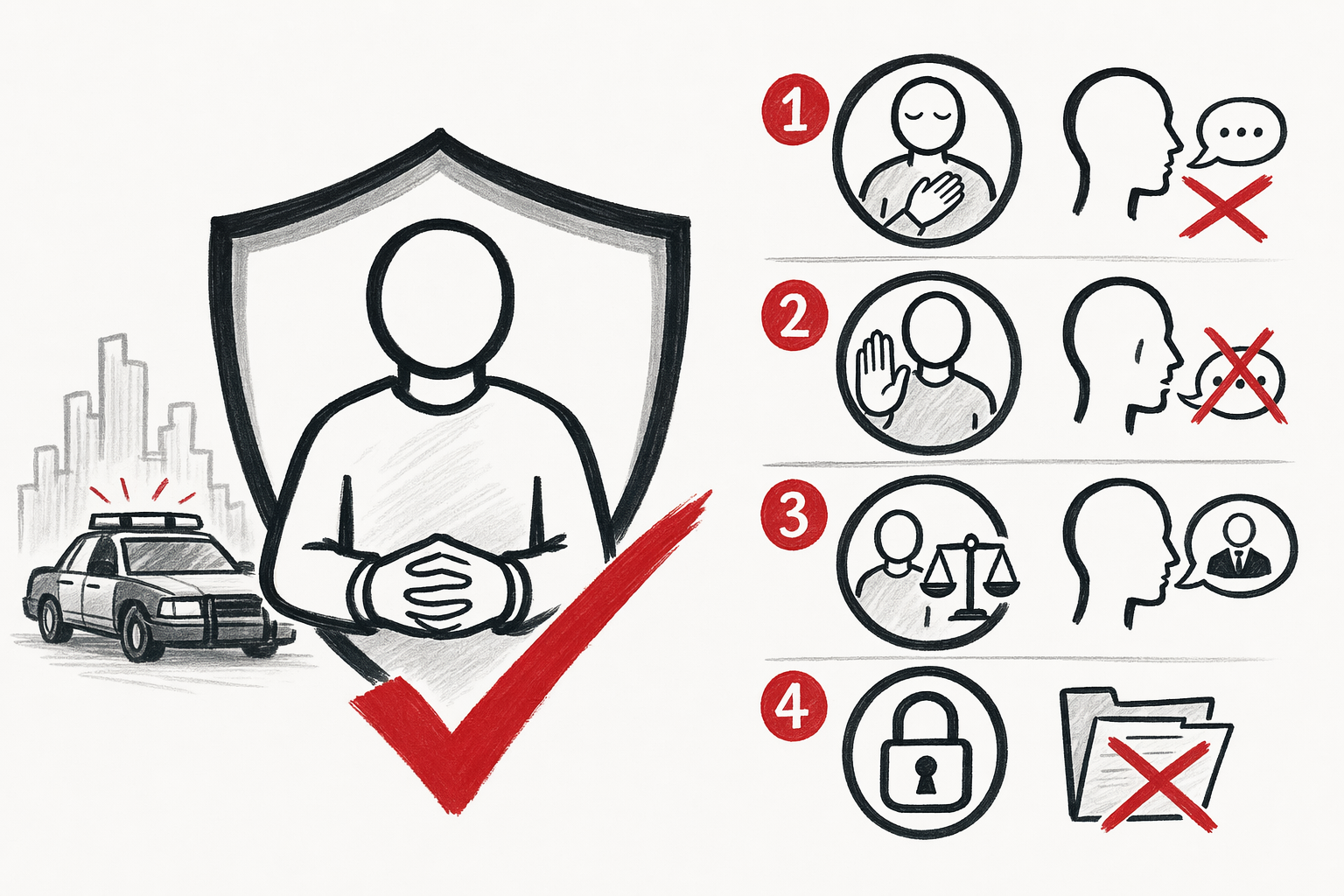
How can you protect yourself right now?
Focus on the next hour, not the whole case. You do not need to solve everything at once. Small choices now can protect you later. Stay respectful. Use your rights clearly. Wait for legal help before making big decisions.
- Keep your hands visible and follow physical commands safely.
- Do not resist, even if you think the arrest is unfair.
- Ask for a lawyer as soon as you can.
- Ask for an interpreter if English is hard for you.
- Do not discuss facts of the case with police or other inmates.
- Do not sign statements or plea papers you do not understand.
- Tell your lawyer about any immigration concerns right away.
- Ask a trusted person to write down your court date and case number if possible.
No article can tell you exactly what will happen in your case. Every arrest is different. The charge, your record, the state, the judge, and your immigration situation can all matter. But one thing is simple. You have rights, and using them early can make a real difference in how you protect yourself.
If you are arrested, stay calm, say you want to remain silent and want a lawyer, and do not talk about the case until you get legal help.