Immigration Consequences of a Criminal Charge
A criminal charge can affect your immigration status, even before a case is finished. This page explains the risk in plain language and why it helps to get a defense lawyer who understands immigration issues.
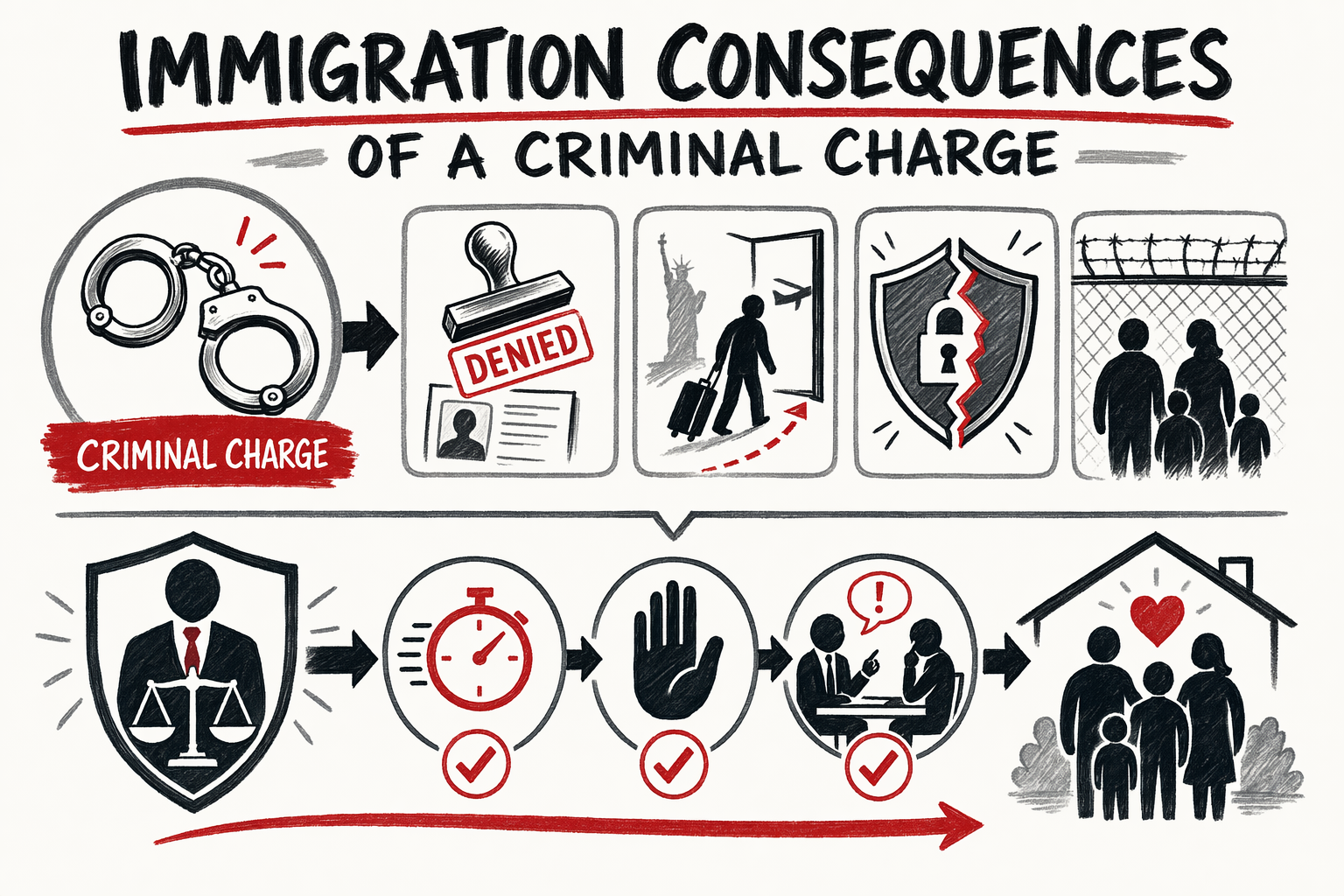
If you are not a U.S. citizen, a criminal charge can bring two problems at once. You may have to deal with criminal court and also worry about your visa, green card, work permit, or future immigration case.
That can feel scary. You still have rights. You also still deserve a defense. GuardLine Defense is not a law firm and does not give legal advice. Our free service can help you get matched with an independent criminal defense attorney. It can help if that lawyer understands how criminal cases may affect immigration.
Why a criminal case can affect immigration
Immigration law and criminal law are separate, but they can overlap. A charge, a plea, or a conviction may be reviewed by immigration officers or an immigration court later. Even a case that seems small in criminal court can create serious immigration problems for some people.
The risk depends on many facts. These include the exact charge, the final result, your immigration status, your record, and what happened in the police report or court file. That is why details matter. One word in a plea agreement can make a difference.
- A person with a visa may worry about renewal, cancellation, or future travel.
- A green card holder may worry about removal, re-entry after travel, or problems applying for citizenship.
- A person with no status may face extra risk if police contact leads to immigration attention.
- A person with asylum, TPS, DACA, or another pending case may face delays or new problems.
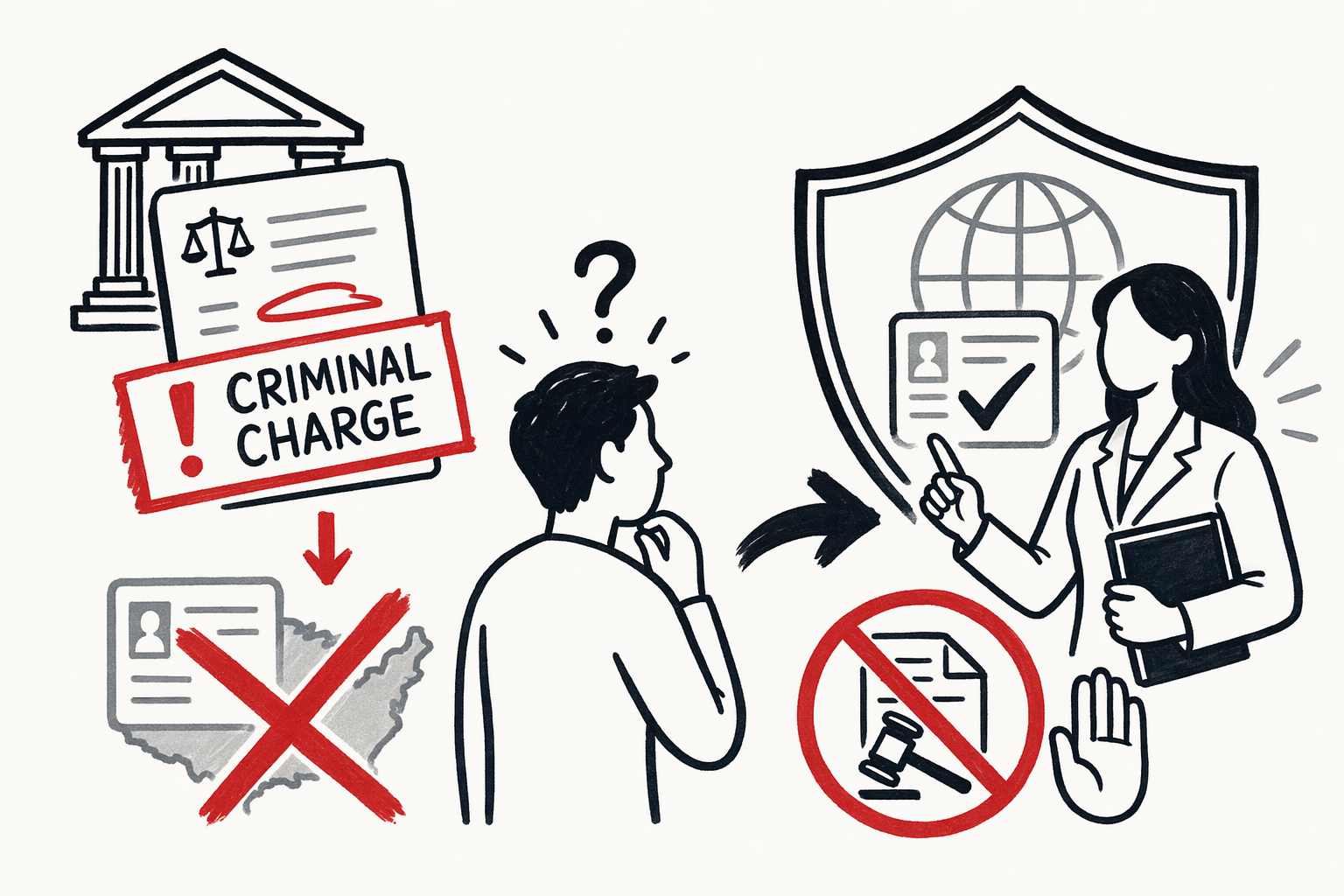
Charges and outcomes that can cause trouble
No one can tell you the immigration result without reviewing your case. But some types of charges are often treated as high risk. These may include drug offenses, theft, fraud, domestic violence related charges, some assault charges, child endangerment, firearm offenses, and some DUI cases, especially if there are extra facts involved.
A conviction is not the only thing that matters. In some cases, a plea deal, an admission in court, a sentence, or a violation of probation can also create immigration problems. That is why it is important to slow down and ask questions before you accept any deal.
- Ask what the exact charge says on paper.
- Ask whether the plea requires you to admit facts that may hurt your immigration case.
- Ask whether a different charge or sentence structure may reduce immigration risk.
- Ask the lawyer to explain both the criminal risk and possible immigration consequences in plain language.
If police have arrested you, read your rights after arrest. If the charge is serious, you can also learn more about felony defense. Our learn page has more plain-language information.
What to do right now if you are charged
First, use your right to remain silent. You do not have to explain, argue, or guess. You can say, "I want to remain silent. I want a lawyer." This right applies no matter your immigration status.
Second, try to get a criminal defense lawyer as soon as possible. Tell the lawyer about your immigration status, even if you feel embarrassed or afraid. The lawyer needs the truth to protect you. If you hide that information, the lawyer may miss an important risk.
Third, bring your papers to the first meeting if you can. Useful papers may include your charging documents, bond papers, court date notice, any prior case papers, and immigration documents such as a green card, visa, work permit, receipt notice, or old immigration decisions.
- Do not sign papers you do not understand.
- Do not accept a plea just because it seems fast.
- Do not talk about the facts of the case on social media, in texts, or jail calls.
- Do not miss court dates or meetings with your lawyer.
- Do tell your lawyer if you have travel plans, an immigration interview, or a pending application.
Why the right defense lawyer matters
Not every criminal defense lawyer handles immigration-related issues the same way. You want a defense lawyer who takes immigration consequences seriously and can spot red flags early. In some cases, that lawyer may also work with an immigration lawyer. GuardLine Defense is not a law firm, and we are not immigration lawyers. We do not give immigration advice. We help people connect with an independent criminal defense attorney.
A careful defense lawyer may look for ways to reduce harm. That does not mean any result is guaranteed. It means the lawyer may review options such as challenging the evidence, seeking a different charge, avoiding certain admissions, or asking for a sentence that may be less damaging under immigration law.
The words in the court record matter. The final paperwork can matter as much as the final sentence.
This is one reason to get help early, not the day you plan to plead. Time gives a lawyer more chance to investigate, talk to the prosecutor, and understand your goals. For one person, avoiding jail may be most important. For another, protecting a green card or future citizenship may be the biggest concern.
If you want, we can help you find a lawyer to speak with. The attorney is independent. Whether you hire that attorney is your choice.

Common fears, and what is true
Many immigrants think, "If I ask for a lawyer, it will make me look guilty." That is not true. Asking for a lawyer is using a basic right. Many people also think they must answer police questions because of their status. That is not true either. You still have the right to remain silent.
Some people believe a plea is always safer than fighting the case. Sometimes that is wrong. A fast plea can solve one problem in criminal court while creating a new one in immigration. Other people think an old case can never hurt them again. That can also be wrong. A past conviction may appear later during renewal, travel, detention, or a citizenship interview.
- A charge can matter, even if the case is still open.
- A plea can matter, even without jail time.
- A conviction can affect status, travel, re-entry, and future applications.
- A dismissed case may still leave records that a lawyer should review.
- The exact facts and documents matter. Do not rely on rumors from friends or online posts.
The safest next step is to speak with a criminal defense lawyer who understands that a criminal case can carry immigration consequences. Get clear advice from that lawyer about your own situation. GuardLine Defense is not a law firm and does not form an attorney-client relationship with you. We are a free, multilingual matching service.
A criminal charge can hurt your immigration case, so get a defense lawyer quickly and do not accept any plea until you understand the risk.