If the Police Stop or Question You
If police stop you or question you, stay calm and use your rights. You have the right to remain silent and the right to ask for a lawyer, no matter your immigration status.
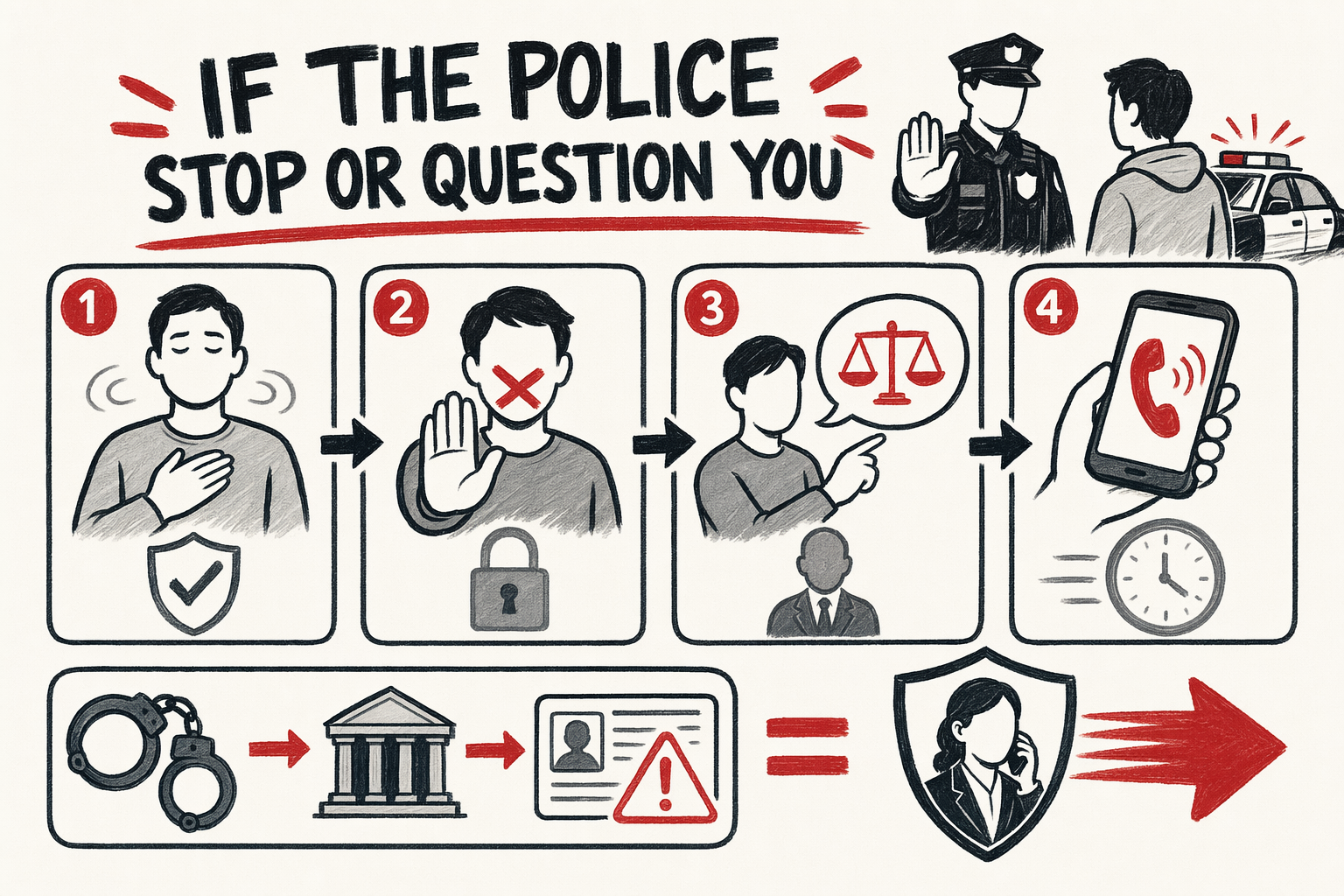
A police stop can feel scary, especially if this is your first time dealing with police in the United States. Simple steps can help protect you. Stay calm. Do not run. Do not argue. Use clear words.
This page gives general information, not legal advice. GuardLine Defense is not a law firm and does not form an attorney-client relationship. We help people connect with an independent defense lawyer through our free matching service. You never pay us, and we never take a percentage of any attorney's fees.
What to do during a police stop
If an officer stops you on the street, in a car, or in a public place, keep your hands where the officer can see them. Speak in a calm voice. Do not reach into your pockets or bag without saying what you are doing. Small actions matter. They can lower the chance of confusion or fear.
You do not have to answer questions about where you were born, your immigration status, where you are going, or what happened. In the US, everyone has the right to remain silent and the right to a defense, regardless of immigration status. You can say, "I am using my right to remain silent. I want a lawyer." Then stop talking.
- Stay calm and keep your hands visible.
- Do not run, pull away, or touch the officer.
- Ask, "Am I free to leave?" If the answer is yes, leave quietly.
- If the answer is no, say, "I want to remain silent. I want a lawyer."
- Do not lie or give false papers. Silence is safer than guessing or making up facts.
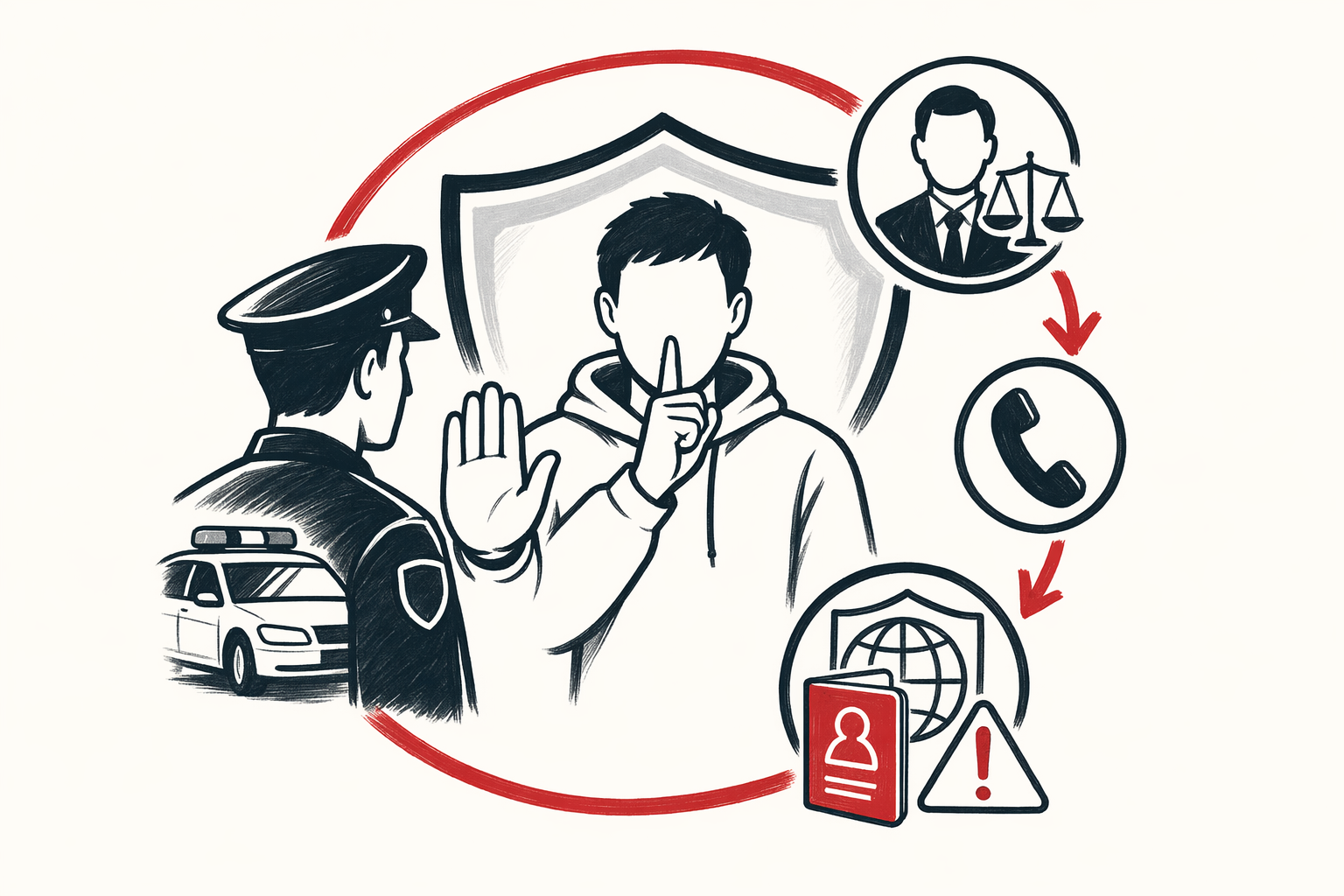
If police ask questions
Police may sound friendly. They may say they only want to clear things up. They may say talking will help you. Be careful. Anything you say can be written down, recorded, or repeated in court. Even a short answer can be misunderstood later.
If police start asking questions, do not explain, defend yourself, or try to talk your way out of the situation. Do not guess. Do not fill in silence because you feel nervous. You can repeat the same sentence: "I am choosing to remain silent. I want to speak with a lawyer."
If English is hard for you, say that clearly. Ask for an interpreter. Do not nod if you do not understand. Do not sign a paper you cannot read. If you want more general help learning what happens after an arrest, see your rights after arrest and more guides in our learning center.
- Ask if you are free to go.
- If not, say you want to remain silent.
- Ask for a lawyer.
- Ask for an interpreter if you need one.
- Do not sign anything you do not understand.
If police come to your home
You do not have to open the door just because police knock. Speak through the door if you can. Ask, "Do you have a warrant?" A warrant is a paper signed by a judge. Ask them to slide it under the door or hold it up to a window so you can read it.
Check the warrant carefully. Does it have your correct name or address? Is it signed by a judge? Does it say they can enter your home, or only arrest a person? If they do not have a judicial warrant, you can say, "I do not consent to entry." Do not physically block them. Do not fight. Just say you do not consent.
- Stay inside if it is safe to do so.
- Ask to see the warrant before opening the door.
- If they enter anyway, do not resist.
- Say, "I do not consent to a search."
- Then stay silent and ask for a lawyer.
If police search your home, your car, or your phone, do not argue at the scene. Say clearly that you do not consent. Then stay quiet. A defense lawyer can later look at whether the search was legal and what evidence may be challenged. If your case is serious, including a felony, you may want to learn more about felony defense and get legal help quickly.
Special care if you are not a US citizen
A criminal case can affect immigration status. Even a minor charge, a plea, or certain statements can cause immigration problems. That is why it is important to get a defense lawyer who understands immigration consequences. GuardLine Defense is not a law firm, and we do not give immigration advice or legal advice. We can help you connect with an independent criminal defense lawyer.
Do not assume a small case is safe. A shoplifting charge, drug charge, domestic violence accusation, or driving-related case may have serious effects for some non-citizens. The right step depends on the exact charge, your record, and your immigration situation. Get personal legal advice from a qualified lawyer as soon as you can.
You do not have to answer questions about where you were born or your immigration status during police questioning. Say you want to remain silent and want a lawyer.
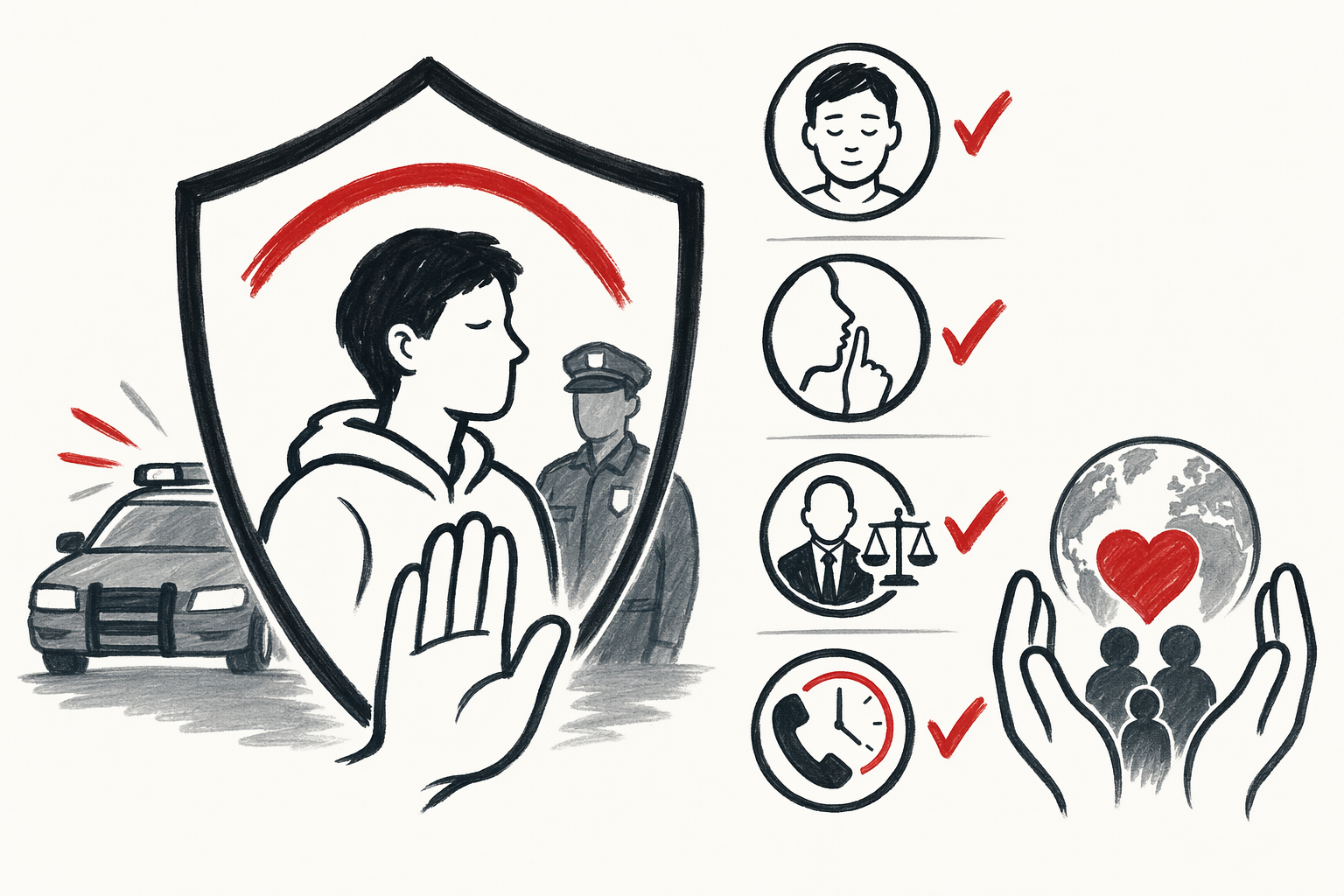
What to remember after the stop
As soon as you are safe, write down what happened. Include the date, time, place, badge numbers if you saw them, what the officers said, and whether anyone saw the stop. Save photos, video, texts, and paperwork. Small details can matter later.
If you were arrested or given a court date, do not miss court. Missing court can make things much worse. Try to speak with a defense lawyer quickly. If you need help finding one, you can use our free attorney match service. We cannot promise any result, but getting legal help early can make a real difference.
- Write down what happened while it is fresh in your mind.
- Keep all tickets, receipts, release papers, and court papers.
- Save names and phone numbers of witnesses.
- Do not post details about the case on social media.
- Get legal help as soon as possible.
If police stop or question you, stay calm, stay silent, ask for a lawyer, and get legal help fast because a criminal case can also affect immigration status.