First 24 Hours After an Arrest: Free Guide (PDF)
The first 24 hours after an arrest can feel confusing and scary. This free guide explains the usual steps, what to say, and how to ask for a lawyer, in plain language.
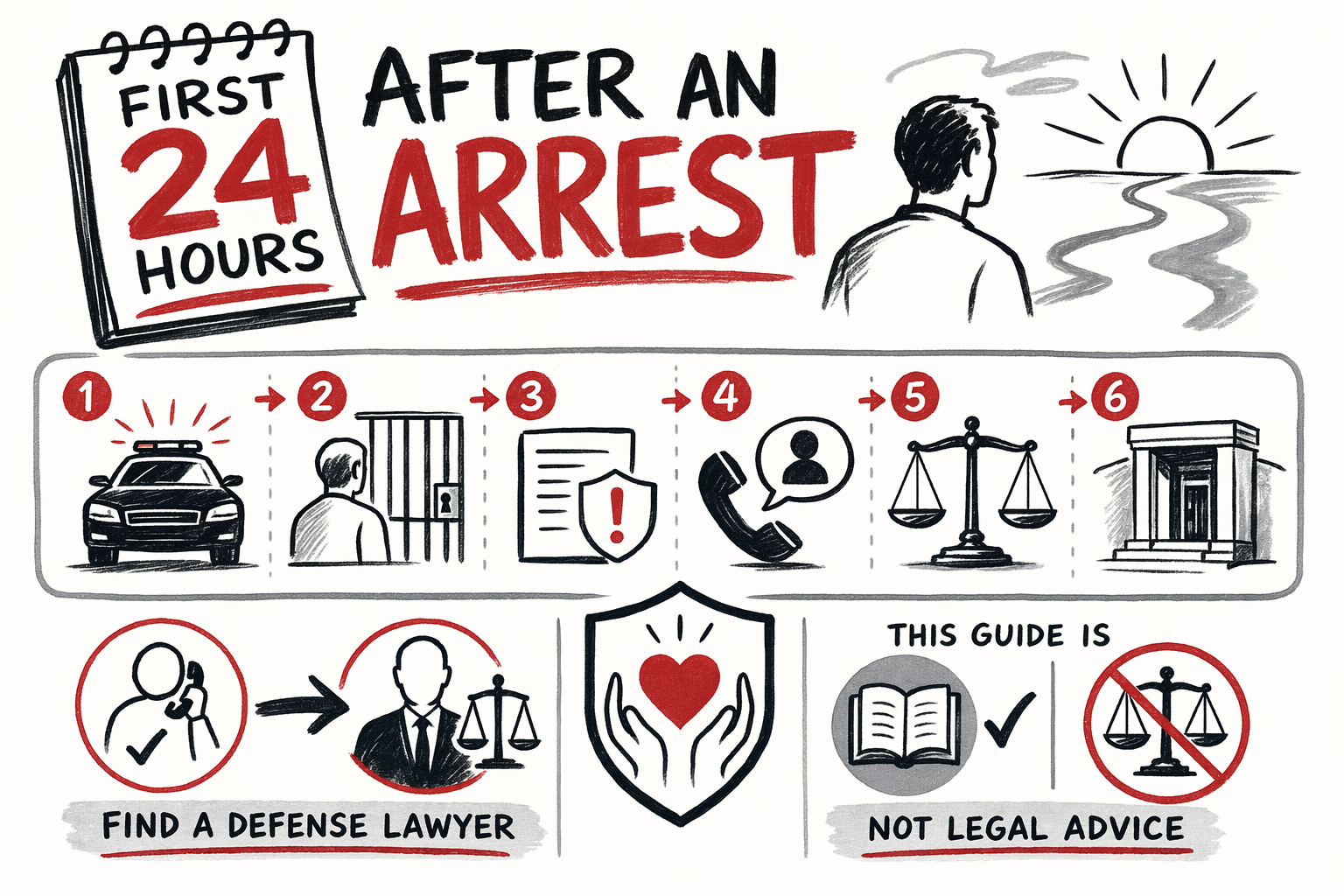
PDF • printable • free, no payment
If you or someone you love was arrested, the first day matters. This page gives a simple overview of what often happens, what rights you have, and how to get help fast.
You can also find more free tools, read about your rights after arrest, or get matched with an independent criminal defense attorney. GuardLine Defense is not a law firm and does not give legal advice.
What usually happens in the first 24 hours
Every case is different, but many arrests follow a similar path. Police may stop you, question you, arrest you, take you to a station or jail, record your information, and place you in a cell. Later, you may see a judge, or you may wait longer depending on the day, the court schedule, and the charge.
Police may take your photo and fingerprints. They may take your property for storage, like your phone, wallet, belt, or shoelaces. You may be allowed to make a phone call. In some places, release can happen in hours. In others, it can take longer.
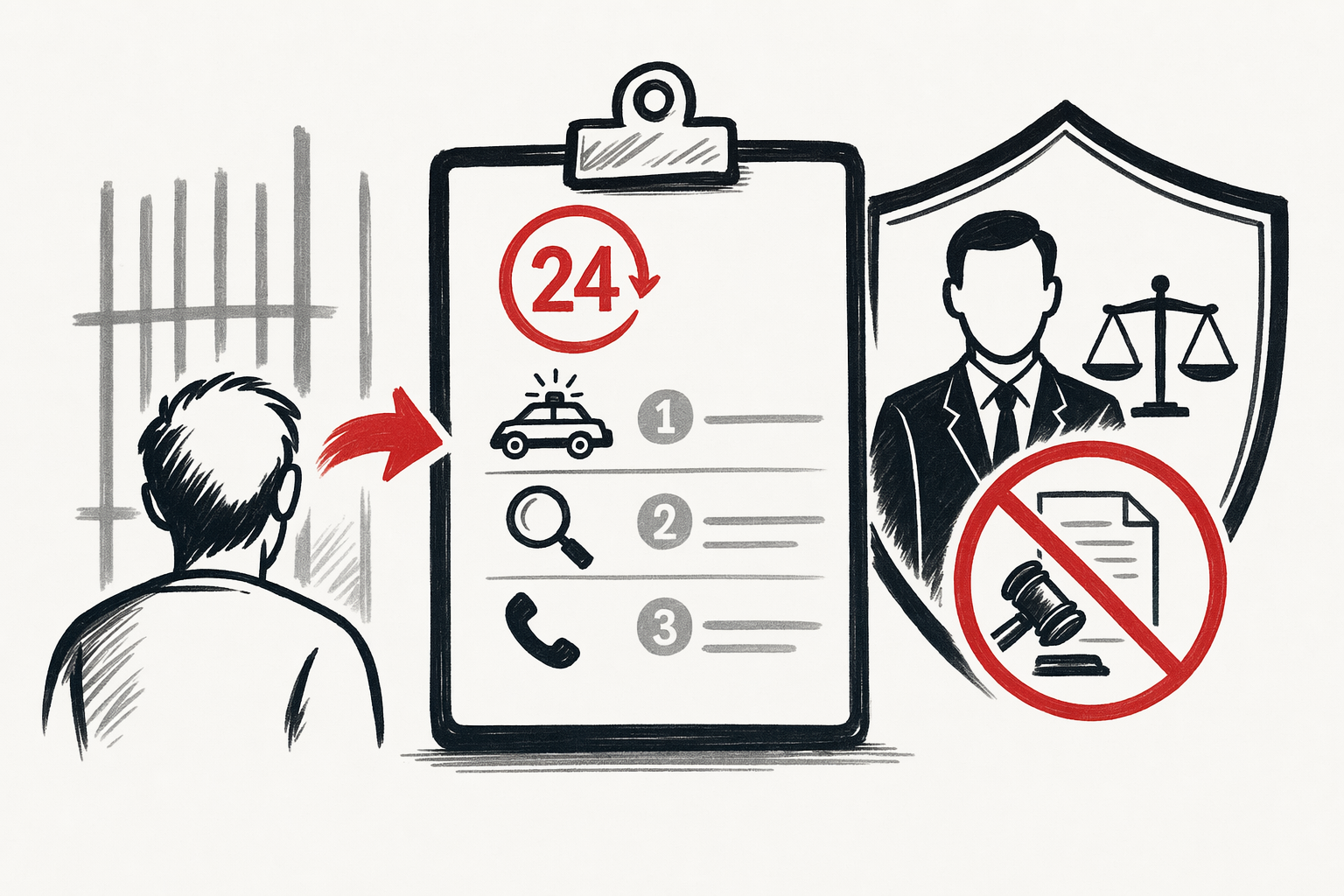
- Police stop or question you
- Police arrest you and move you to a station, jail, or booking area
- Booking happens, including photos and fingerprints
- You wait for release, bail information, or a first court appearance
- You speak with a defense lawyer or ask the court for one if you qualify
What to say, and what not to say
Try to stay calm. Speak as little as possible about the facts of the case. Do not explain, argue, guess, or tell a long story. Even small statements can be used against you later.
If police ask questions, you can say, "I want to remain silent." Then say, "I want a lawyer." After that, stop talking about the incident. Do not sign papers you do not understand. Do not agree to a search if police ask for your permission. Do not lie or use fake documents.
- Say your name and basic identifying information if required
- Ask for a lawyer clearly and more than once if needed
- Ask for an interpreter if you do not understand English well
- Do not discuss your case on the phone, in a patrol car, or in a jail cell
- Do not post about the arrest on social media
- Do not rely on advice from other people in custody
Simple words can help: "I want to stay silent. I want a lawyer. I need an interpreter."
If you are not a US citizen
A criminal case can affect immigration status. This is true even for charges that seem small, like shoplifting, marijuana, or a domestic dispute. Because of that, it is important to try to get a criminal defense lawyer who understands immigration consequences.
GuardLine Defense is not a law firm. We are not immigration lawyers and we do not give immigration advice. We offer a free service to help people connect with an independent criminal defense attorney. You never pay us, and we never take a percentage of any attorney's fees.
How to help yourself or your family fast
If you are out, write down what happened as soon as you can. Include the time, place, officers, witnesses, and anything police took from you. Save papers, bond receipts, property slips, and court dates. If your family is helping, they should keep this information in one place.
If your loved one is in custody, try to learn where they are being held, their booking number, the charges listed, and the next court date if one exists. Ask the jail about phone calls, visiting rules, medication needs, and release procedures. If there are language issues, ask for an interpreter.
- Write down the arrest date, time, and location
- Keep all papers from the jail or court
- Make a list of medicines, urgent health needs, and family contacts
- Tell the lawyer if there are immigration concerns
- Show up to every court date and arrive early
A lawyer can explain the charge, the next hearing, bail or release issues, and possible risks. We cannot promise any result. But getting legal help early can make it easier to understand what is happening and what steps may come next.
This page gives a simple first-day arrest guide and helps you find a defense lawyer, but it is not legal advice.