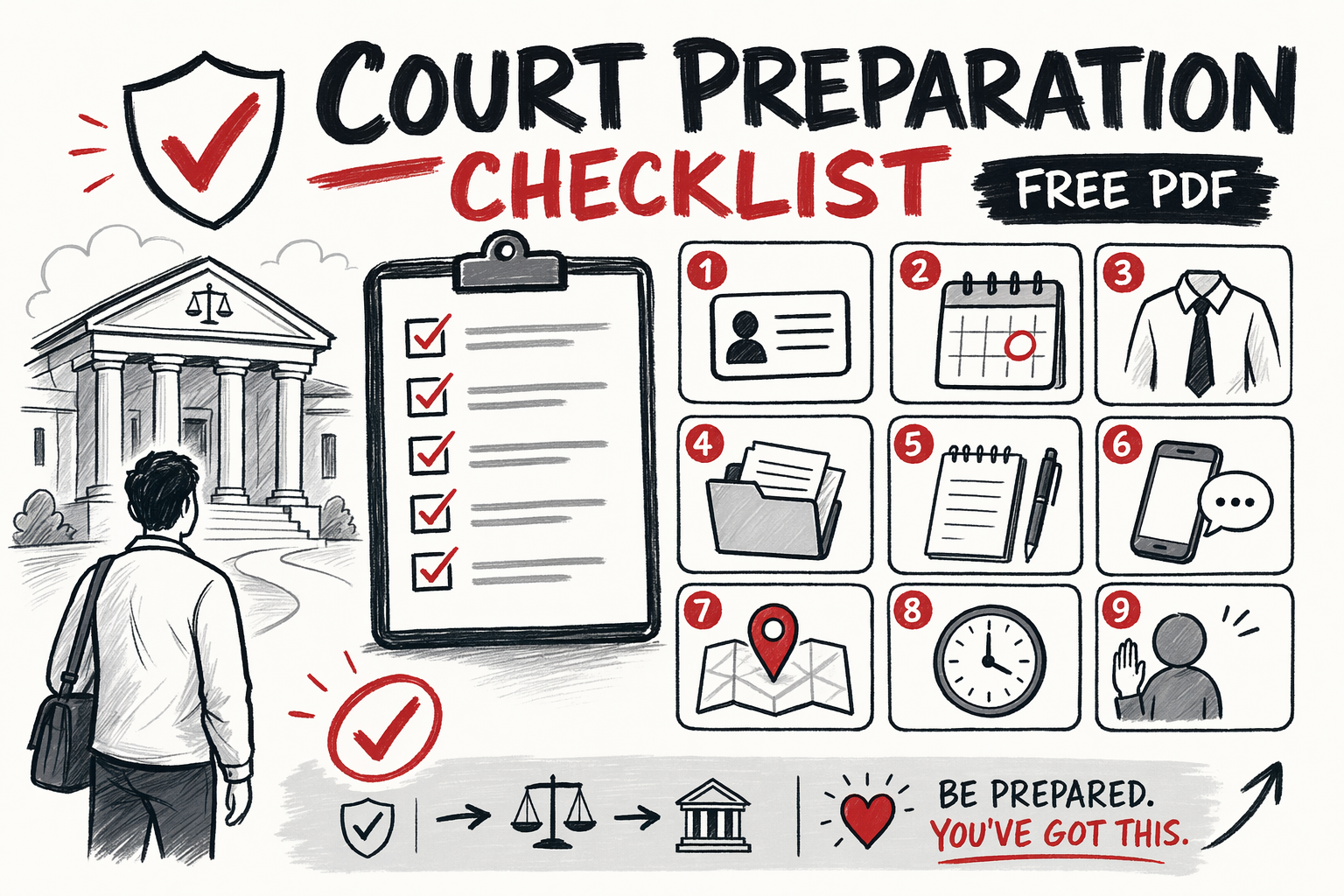
Court Preparation Checklist (Free PDF)
A first court date can feel scary. This free checklist helps you get ready for a criminal court hearing, step by step, in clear language.
PDF • printable • free, no payment
Your first court hearing may move fast. Small details matter. This page gives a simple checklist for what to bring, what to wear, and what may happen in court. You can also visit more free tools for help in plain language.
If you are not a U.S. citizen, a criminal case can affect your immigration situation. Try to get a defense lawyer who understands immigration issues. GuardLine Defense is not a law firm, gives no legal advice, and does not create an attorney-client relationship. Our service is free to you. You never pay us, and we never take a percentage of any attorney's fees. If you want help finding a lawyer, you can get matched here.
What to do before your court date
Start early. Do not wait until the night before. Find your court notice and read every line. Check the date, time, courtroom, and courthouse address. If anything is unclear, ask your lawyer. If you do not have a lawyer yet, try to find one as soon as you can.
- Put your court papers in one folder or envelope.
- Write down your case number, if you have it.
- Plan how you will get to court. Check traffic, train times, parking, and security lines.
- Set 2 alarms so you do not miss the hearing.
- Arrange child care if needed.
- Bring a photo ID if you have one.
- Turn off or silence your phone before you enter the courtroom.
What to bring with you
Bring only what you need. Security may check your bags. Some courthouses do not allow sharp objects, spray, or other items that can be taken away. Keep your papers neat and easy to reach.
- Court notice or hearing notice.
- Any bond or release papers.
- A list of your medicines and important medical needs.
- Your lawyer's name and phone number, if you have one.
- A notebook and pen.
- Money for parking, train fare, or a small meal, if needed.
- An interpreter request note, if one was made for you.
If English is hard for you, bring the name of your language written on paper, such as Spanish, Arabic, Haitian Creole, or Mandarin. If the court already approved an interpreter, arrive early and tell staff you need that interpreter. You can also read your rights after arrest to understand some basic protections.
What to wear and how to act
You do not need expensive clothes. Clean, simple, neat clothing is enough. The goal is to look respectful and serious. Try to avoid clothes with rude words, gang signs, drug images, or very loud designs.
- Wear clean pants, a clean shirt, and closed-toe shoes if possible.
- If you have a hat or sunglasses, take them off in the courtroom.
- Keep your phone silent and out of your hands.
- Stand when the judge comes in, if others are standing.
- Speak clearly. If you do not understand, say, "I do not understand."
- Do not interrupt the judge, clerk, or lawyer.
- Do not chew gum, eat, or sleep in court.
If you are confused, it is okay to say, "Can you repeat that more slowly?"
What may happen in the courtroom
Many first hearings are short. The judge may call many cases one after another. You may wait a long time before your name is called. A first hearing may be about charges, bail, a future court date, or whether you have a lawyer. Every court is different, so do not guess. Listen carefully.
If you have a lawyer, stay close and follow their instructions. If you do not have a lawyer yet, tell the court that clearly. Do not explain the facts of the case in open court unless your lawyer tells you to. Short answers are usually best. If you need language help, say so right away.
A criminal case can have immigration consequences, even for a first arrest. Pleas, admissions, and some convictions may cause serious problems. Ask for a defense lawyer who understands immigration consequences. GuardLine Defense is not an immigration law service and does not give immigration advice.
Quick checklist for the night before and the morning of court
Use this short list to stay calm and ready. Put it by your door or save it on your phone.
- Check the courthouse address one more time.
- Put your papers, ID, and lawyer contact info in one place.
- Choose clean clothes before bed.
- Charge your phone, but keep it silent in court.
- Leave early. Try to arrive 30 to 60 minutes before your hearing.
- Eat something light and bring water if allowed.
- If you feel panic, take 5 slow breaths and focus on the next small step.
If you want the checklist in simple language and more tools like this, visit our tools page. If you need help finding a lawyer for a criminal case, you can use our free matching service.
This page gives a simple, free checklist to help you get ready for your first criminal court hearing.