Anonymized story
How a First-Time Misdemeanor Was Resolved Without Losing a Job
This anonymized story shows how one worker handled a first misdemeanor charge and got help fast. It is only an example, not legal advice or a promise about what will happen in any case.
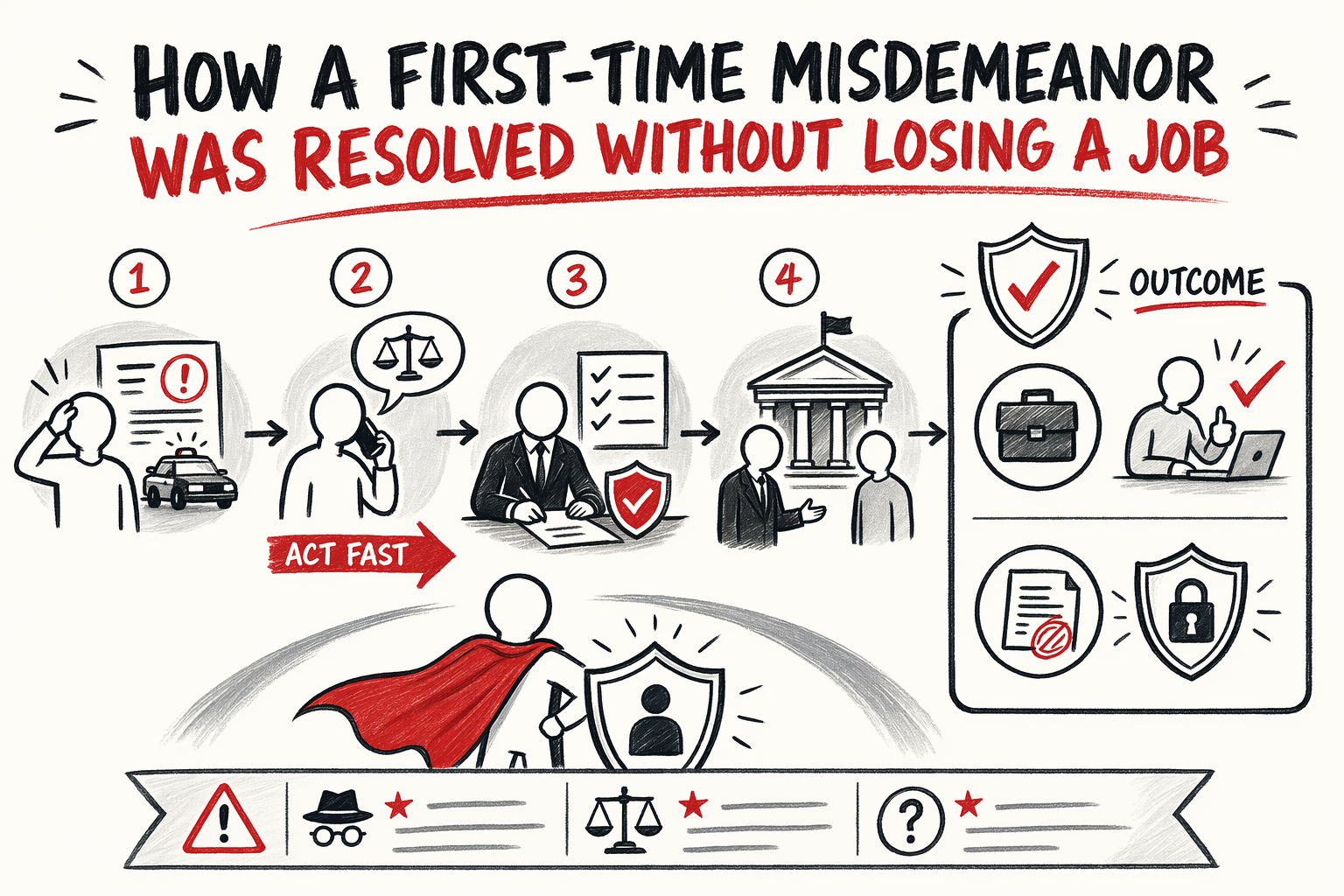
A first criminal charge can feel like life is falling apart. Many people worry about jail, work, family, and immigration problems all at once.
This story is fully anonymized. It is only an example of how one case moved forward after the person used GuardLine Defense to connect with an independent defense attorney. GuardLine Defense is not a law firm, does not give legal advice, and does not create an attorney-client relationship.
The problem started with one mistake
A warehouse worker in their 30s had never been arrested before. After an argument in a store parking lot, police gave them a misdemeanor charge. They were booked, released, and told to come to court a few weeks later.
The person was scared for a simple reason. They needed their job. Missing work for court was bad enough. A conviction on a record could also make future job applications harder. They were also not a US citizen, so they worried that even a lower-level criminal case could affect immigration status.
Like many first-time defendants, they did not understand the papers from court. They were embarrassed to ask questions. English was not their first language. They wanted clear help, fast, without getting lost in legal terms.
Getting matched with a defense attorney
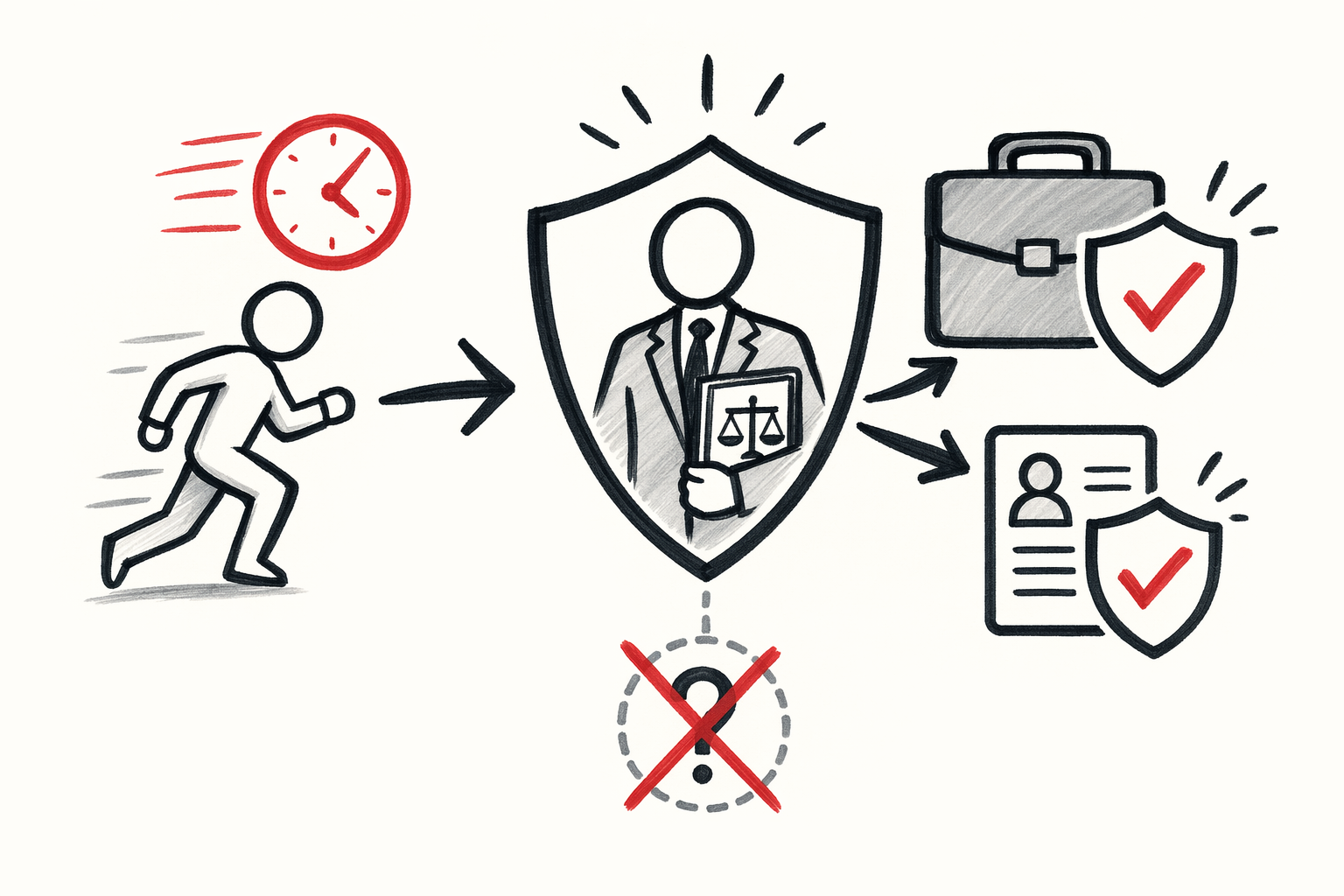
A family member found how GuardLine Defense works online. The service was free to the worker. They never paid GuardLine Defense, and GuardLine Defense never took a percentage of any attorney's fees.
After sharing basic details, the worker was matched with an independent criminal defense attorney in their area. The attorney could review the charge, the court date, and the police report. Because immigration issues can matter in criminal cases, the worker also asked for a lawyer who understood that risk. GuardLine Defense is not an immigration law service and gives no immigration advice, but it can help people look for a defense lawyer who understands that criminal cases may carry immigration consequences.
At the first meeting, the attorney explained the process in plain language. The worker learned what the charge meant, what the possible penalties were, and what steps came next. The attorney also told them what not to do, like talking about the facts of the case with police or posting about it online.
- Bring every paper from court to the first meeting
- Write down the date, time, and place of what happened
- List any witnesses and save texts, photos, or video
- Ask how the case could affect work, licenses, and immigration
- Do not miss court dates
What the attorney focused on
This was not a case about a dramatic courtroom speech. It was about careful work. The attorney looked at the facts, asked for evidence, and checked whether the worker had any prior record. Since this was a first offense, the lawyer also looked for options that could reduce damage to the worker's life.
The worker's main goal was simple. Keep the job. Avoid a result that would make work harder to keep or harder to find later. The attorney helped the worker gather proof of steady employment, family responsibilities, and a clean background. These details can matter when a lawyer asks for a better outcome, but no lawyer can promise one.
The attorney also spoke with the worker about immigration concerns in a careful way. Some criminal outcomes can create serious immigration problems. That is why it is important to tell a defense lawyer if you are not a US citizen. The defense lawyer can then consider that risk while handling the criminal case. This page is not immigration advice, and every case is different.
"I thought one mistake would cost me my job right away. The first real help was having someone explain the court process in words I could understand."
How the case ended, and what helped most
In this example, the case was resolved without the worker losing the job. The final result depended on the facts, the worker's lack of prior record, and the attorney's case work. We are not saying this will happen in every case. Some cases end very differently.
What mattered most was early action. The worker got legal help before missing court, before speaking too much about the case, and before making choices that could make things worse. The attorney could address the charge, speak for the client in court when allowed, and work toward an outcome that reduced harm to the person's record and daily life.
The worker later said the biggest relief was understanding the process. Fear got smaller once they knew the next step, the court date, and what papers to save. For many people, that clarity is the first big win, even before the case is over.
If you want to read more anonymized examples, visit our stories page. If you need to look for an attorney now, you can start with a free match request.
This story is anonymized and illustrative. Names and identifying details have been changed or omitted. Outcomes depend on the facts of each case; we do not promise results.