Anonymized story
How Understanding the Process Changed an Outcome
This is an anonymized example. It shows how learning basic rights and getting a defense lawyer early may change how a criminal case unfolds. Every case is different, and we do not promise any result.
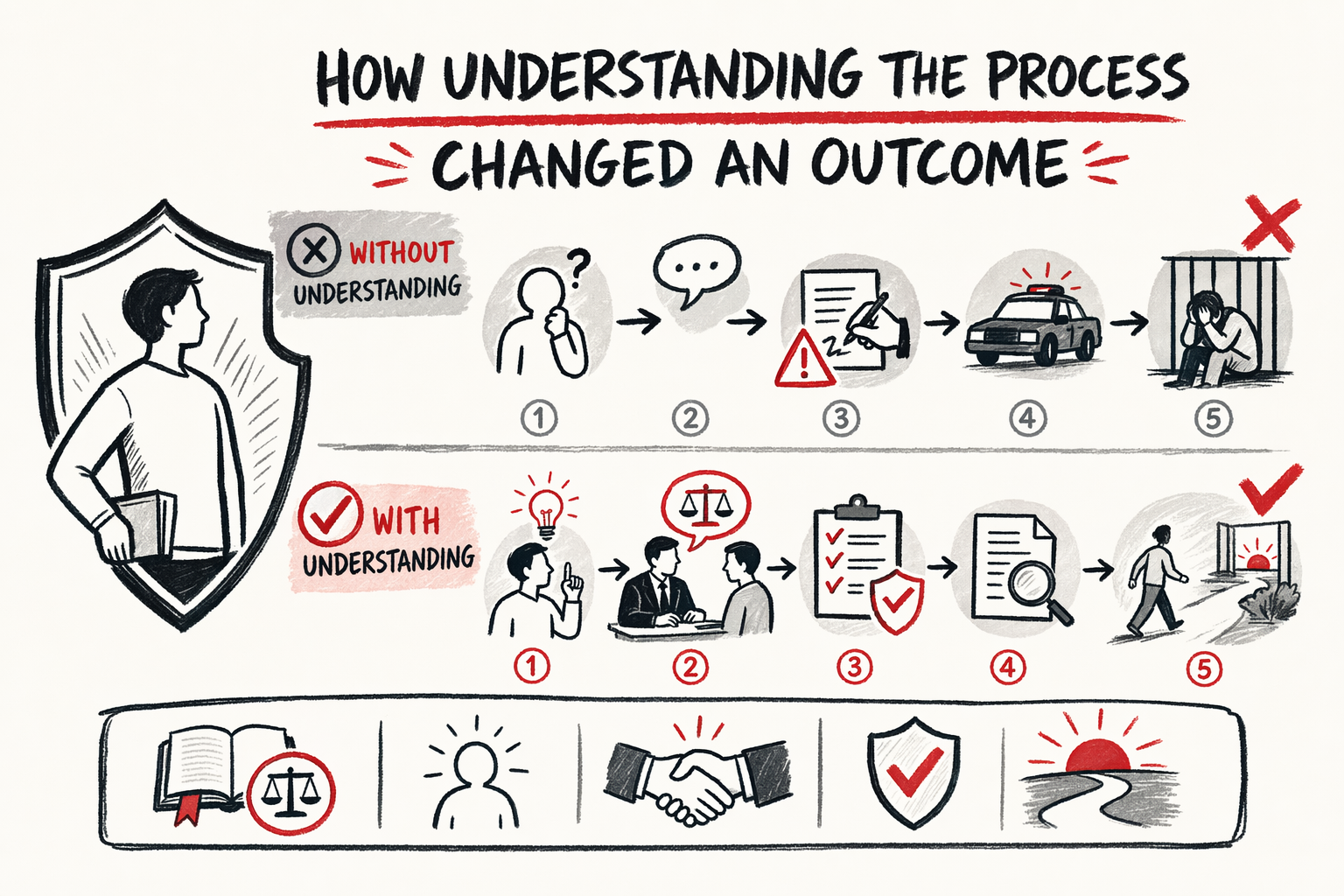
This story is illustrative only. It does not use a real name, and it does not promise what will happen in any case. It shows how one person felt less lost after learning the process and speaking with a criminal defense attorney early.
GuardLine Defense is not a law firm. We do not give legal advice, and using our free service does not create an attorney-client relationship. We help people get matched with an independent defense lawyer. You never pay us, and we never take a percentage of any attorney's fee.
A simple example of what changed
A man in his 30s had lived in the United States for several years. English was not his first language. One evening, police arrested him after an argument outside a store. He was booked, spent the night in jail, and was released the next day with a court date. He felt scared. He worried about jail, his job, and his family. He also worried that a criminal charge could affect his immigration situation.
At first, he thought he should explain everything to the police and the prosecutor by himself. A relative told him to slow down and learn his rights first. He then used our free service to connect with an independent criminal defense attorney who handled local court cases and understood that criminal charges can carry immigration consequences. We are not immigration lawyers and do not give immigration advice, but this issue is important to raise with a defense lawyer right away.
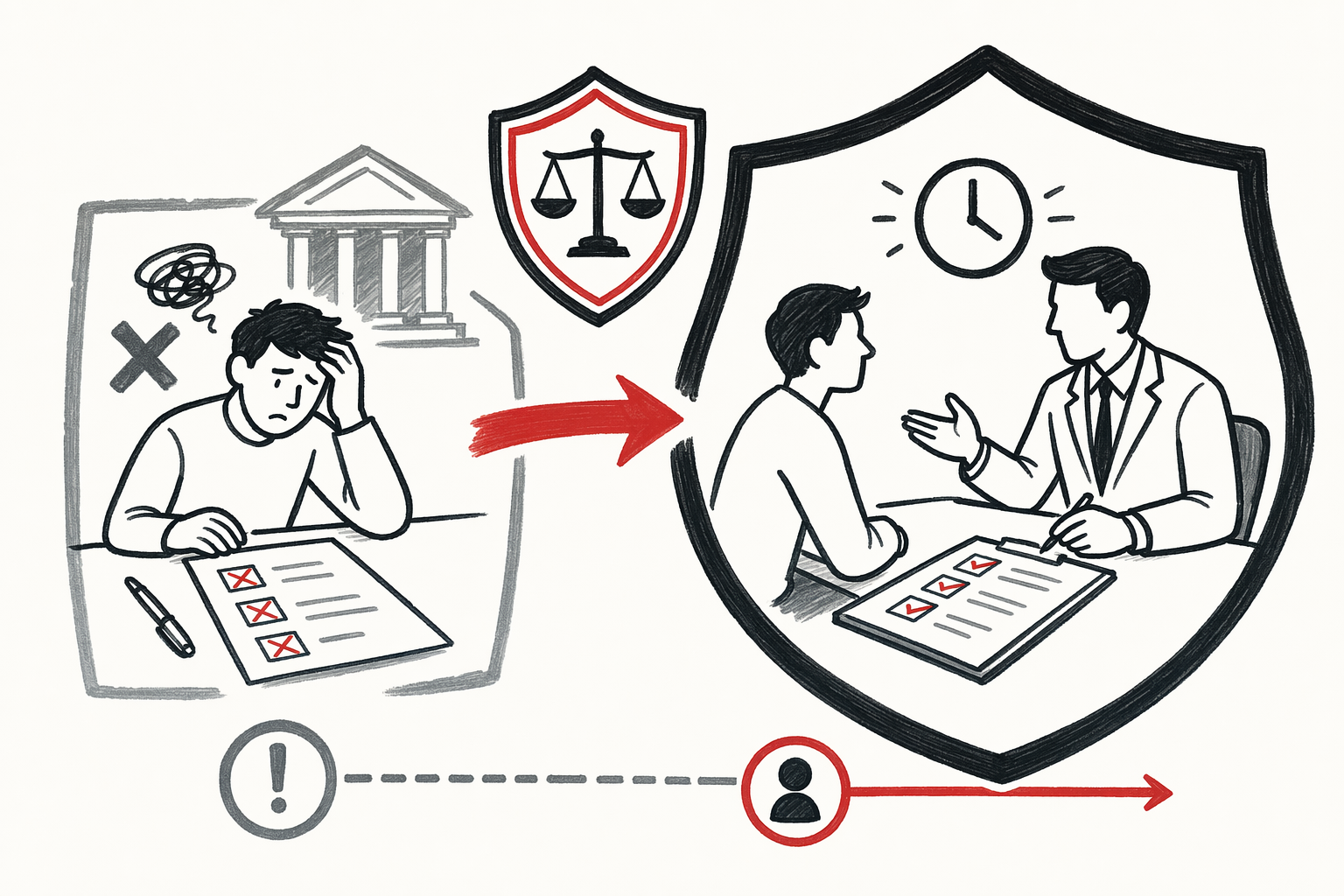
What the lawyer helped him understand
The first big change was not magic. It was information. The lawyer explained the court process in short, clear steps. First came the first appearance. Then possible future dates, such as a hearing, motions, or negotiation with the prosecutor. The lawyer also explained what the charge meant, what the prosecutor would need to prove, and what papers and evidence might matter.
- Do not talk about the facts of the case with police without your lawyer.
- Do not post about the arrest on social media.
- Save papers, photos, messages, and names of witnesses.
- Show up to every court date, early if possible.
- Ask questions until you understand the next step.
This helped him make better choices. Before speaking with the lawyer, he was close to calling the store and arguing with staff. He also wanted to send long text messages to people who were there. The lawyer told him those steps could create problems. Instead, the lawyer gathered facts in a safer way, asked for evidence, and looked closely at the police report.
The lawyer also asked about immigration concerns early. That mattered. Some criminal outcomes can affect a visa, green card, future applications, or lead to other immigration problems. The defense lawyer did not ignore that risk. He treated it as part of the case strategy. Again, GuardLine Defense is not a law firm and gives no immigration advice, but it is wise to ask for a defense lawyer who understands this issue.
How understanding the process changed the case
The outcome did not change because someone found a trick. It changed because the person stopped guessing and started preparing. The lawyer found a few weak points in the accusation. One witness had changed parts of the story. A video clip did not show the full event. The client also had records that supported where he was just before the argument. None of this guaranteed anything, but it gave the lawyer facts to use.
The lawyer handled contact with the prosecutor and explained the client's side in a careful way. The client did not make emotional statements to the court or the police. He followed instructions, appeared at each court date, and stayed organized. Over time, the charge was reduced, which lowered the risk of harsher penalties. That was a meaningful change for him and his family, but it was not a promise and will not happen in every case.
"I thought I had to explain everything right away. Learning when to speak, and when not to, made a huge difference for me."
What other people can learn from this
The lesson is simple. When you are scared, it is easy to act too fast. Many people think silence makes them look guilty. That is not true. Using your rights is not an admission. It is protection. A defense lawyer can explain what is happening, speak for you in court, and look for facts that help your case.
- If police want to question you, say you want to remain silent and want a lawyer.
- If you get court papers, read them and keep them in one safe place.
- Write down what happened while your memory is fresh.
- Tell your lawyer if you are not a U.S. citizen or if you have any immigration concern.
- Use a free matching service if you need help finding a lawyer quickly. You can also read more stories from others in similar situations.
This example is not about a perfect ending. It is about avoiding avoidable mistakes. Knowing the process gave this person a little control during a hard week. Getting a lawyer early helped him protect his words, protect his time, and focus on the facts. Those steps can matter a lot in criminal court.
This story is anonymized and illustrative. Names and identifying details have been changed or omitted. Outcomes depend on the facts of each case; we do not promise results.