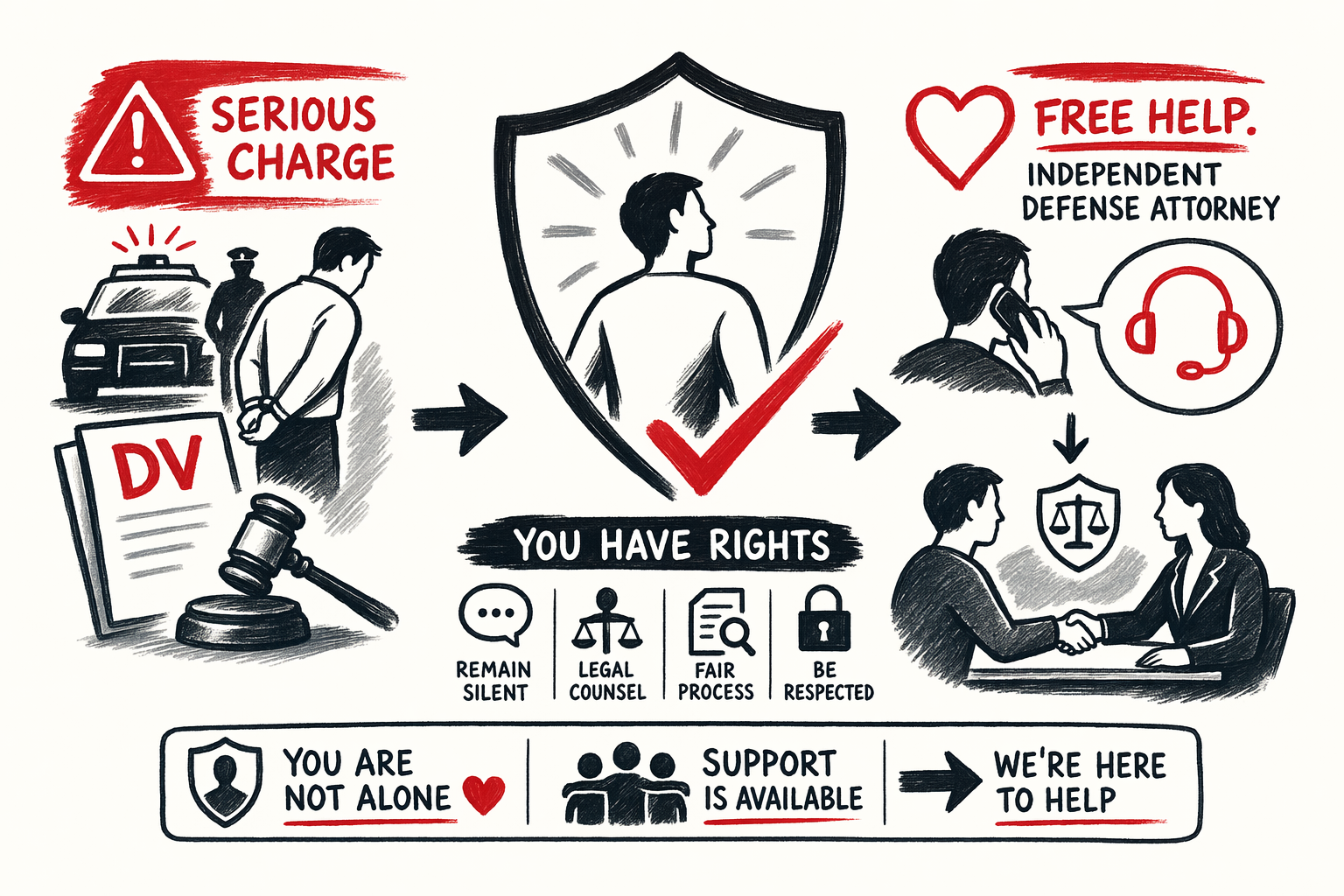
A domestic violence charge can feel frightening, especially if this is your first time dealing with police or court in the United States. You may worry about jail, a protective order, your children, or your immigration status. You are not alone, and you still have rights.
GuardLine Defense is a free, multilingual attorney-matching service. We are not a law firm, we do not give legal advice, and using our service does not create an attorney-client relationship. We can help you get matched with an independent criminal defense attorney. You never pay us, and we never take a percentage of any attorney's fees.
What a domestic violence charge can mean
In many states, domestic violence is not one single charge. It can include assault, battery, threats, harassment, stalking, criminal mischief, or violating a protective order when the other person is a spouse, partner, family member, roommate, co-parent, or someone you dated. Police may arrest first and sort details out later.
Even a misdemeanor charge can bring serious problems. A judge may set bond conditions. The court may order no contact with the other person. You may have to leave your home. In some cases, you can lose access to firearms. If children are involved, family court issues may follow too.
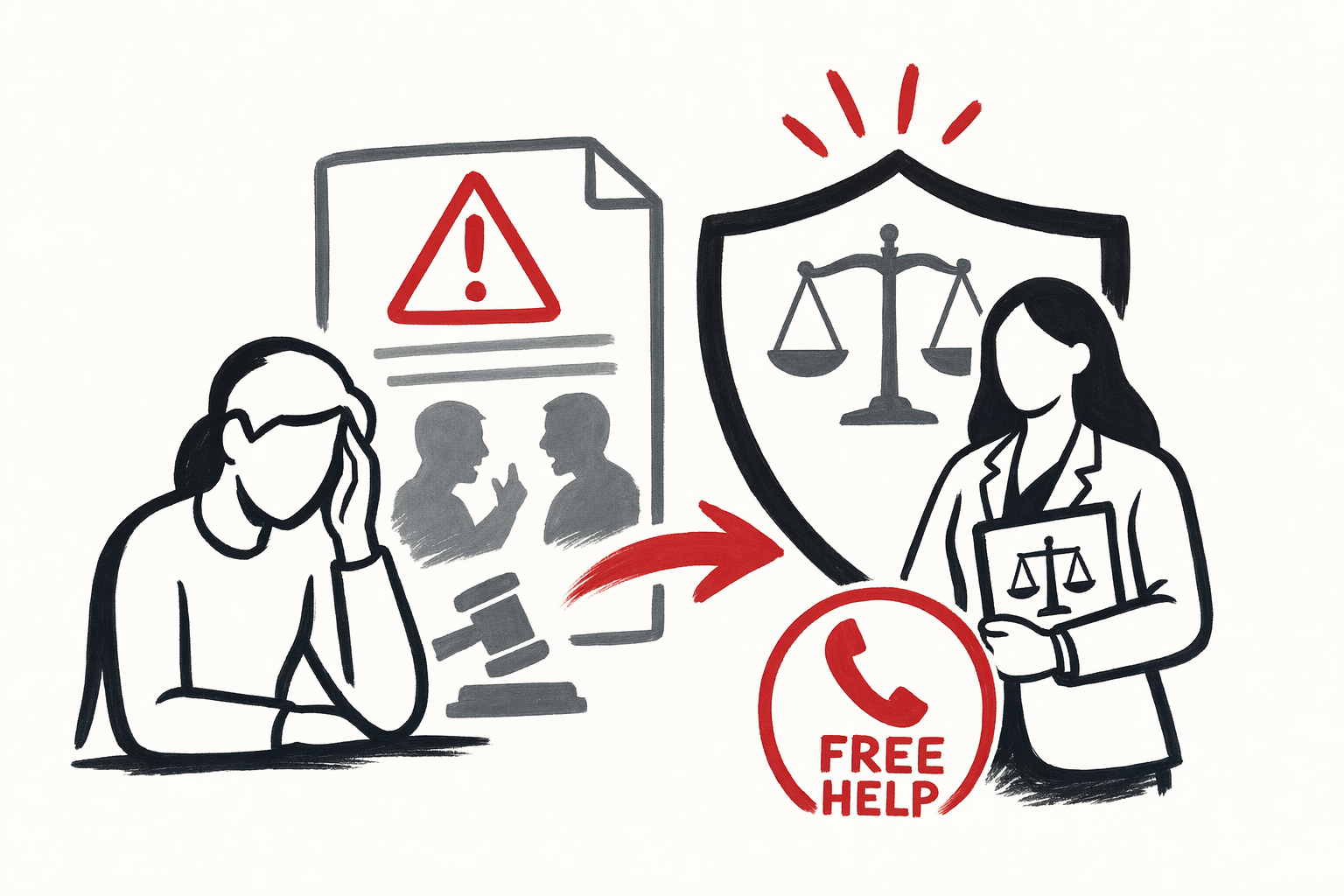
- Police may arrest even if the other person does not want charges.
- A no-contact order can block calls, texts, social media messages, and visits.
- Missing court can lead to a warrant.
- Statements you make can be used against you later.
Your rights after arrest
No matter your immigration status, you have the right to remain silent and the right to a defense. You do not have to explain, argue, or tell your side to the police right away. Many people think talking will clear things up. Often, it does not. It can make the case harder.
If police want to question you, stay calm. Do not resist. Do not sign papers you do not understand. Do not guess about dates, injuries, or what happened. If you need help understanding what happens after arrest, read your rights after arrest.
- Give your basic identifying information if required.
- Say clearly that you want to remain silent.
- Ask for a lawyer.
- Ask for an interpreter if English is hard for you.
- Do not contact the other person if a court order says no contact.
Why fast legal help matters
Domestic violence cases move quickly. A first court date may happen within days. Prosecutors may ask for protective orders early. The other person may have visible injuries, text messages, photos, 911 calls, or witness statements. Your lawyer needs time to review the evidence, explain the charge, and protect your rights.
A defense lawyer may look at whether the accusation is false, exaggerated, missing context, or tied to self-defense. The lawyer may review body camera video, medical records, neighbor statements, phone records, and the exact words in any protective order. The lawyer can also explain possible plea risks, trial risks, and how a criminal case may affect immigration status.
Talking to a lawyer early can help you avoid mistakes that are hard to fix later.
If cost worries you, ask questions early. Criminal defense fees vary by charge, court, and location. You can learn more at cost of a criminal defense lawyer. GuardLine Defense is free to use. We can also show you more about our services.
Common mistakes to avoid
Many people hurt their own case without meaning to. They text apologies to calm things down. They ask a friend to contact the other person. They post online. They skip court because they are scared. These choices can create new charges or make the judge think they will not follow orders.
- Do not contact the other person if there is a no-contact or protective order.
- Do not post about the case on Facebook, WhatsApp, TikTok, or any other app.
- Do not ask friends or family to pass messages for you.
- Do not delete messages, photos, or videos without legal advice.
- Do not miss court dates, even if the other person says the case is over.
Be careful with immigration paperwork too. A criminal case can affect visas, green card cases, asylum, DACA, naturalization, and travel. A defense lawyer who understands immigration-related criminal issues can help you ask the right questions. Again, we are not lawyers and do not give legal advice. We help connect you with an independent attorney.
How GuardLine Defense can help
When you contact us, we try to make the process simple. Tell us what happened, where the case is, and what language you speak. We use that information to help match you with an independent criminal defense attorney in your area. You can start here to get matched.
Our service is confidential. We are not a law firm, and we do not represent you in court. We do not promise any result. What we can do is help you take the next step quickly, without paying us anything. You never pay GuardLine Defense, and we never take a percentage of any attorney's fees.
If you are scared because of your status, remember this. Everyone in the United States has the right to a defense, regardless of immigration status. Getting legal help quickly can make a real difference in how well you understand your options and court orders.
A domestic violence charge is serious, but you have rights and can get free help finding an independent defense attorney.