What to say if you are arrested?
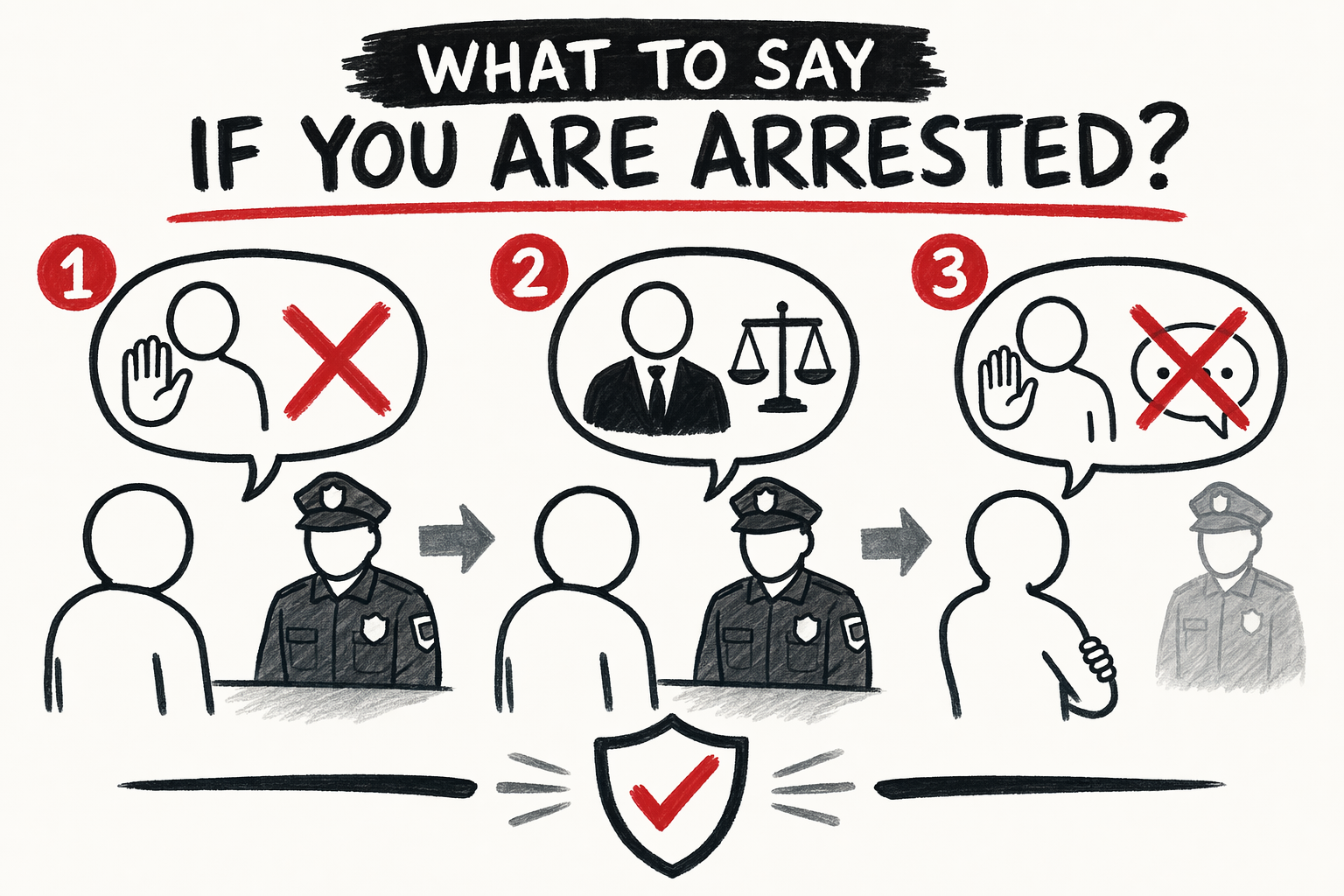
If police arrest you, say very little. Ask for a lawyer, use your right to stay silent, and do not answer questions until you get legal help.
An arrest is scary, especially if this is your first time dealing with police in the United States. You may feel pressure to explain yourself right away. Usually, the safest choice is to say less, not more.
This page gives general information, not legal advice. GuardLine Defense is not a law firm, does not give legal advice, and does not create an attorney-client relationship. If you want help finding a defense lawyer, you can get matched for free in your language.
What to say right away
Keep your words short and clear. You can say: "I want to remain silent. I want a lawyer." Then stop talking about the case. Give your name and basic identifying information if required, but do not explain where you were, what happened, or why police made a mistake.
- "I want to remain silent."
- "I want a lawyer."
- "I do not want to answer questions without a lawyer."
- "I do not consent to a search."
What not to say
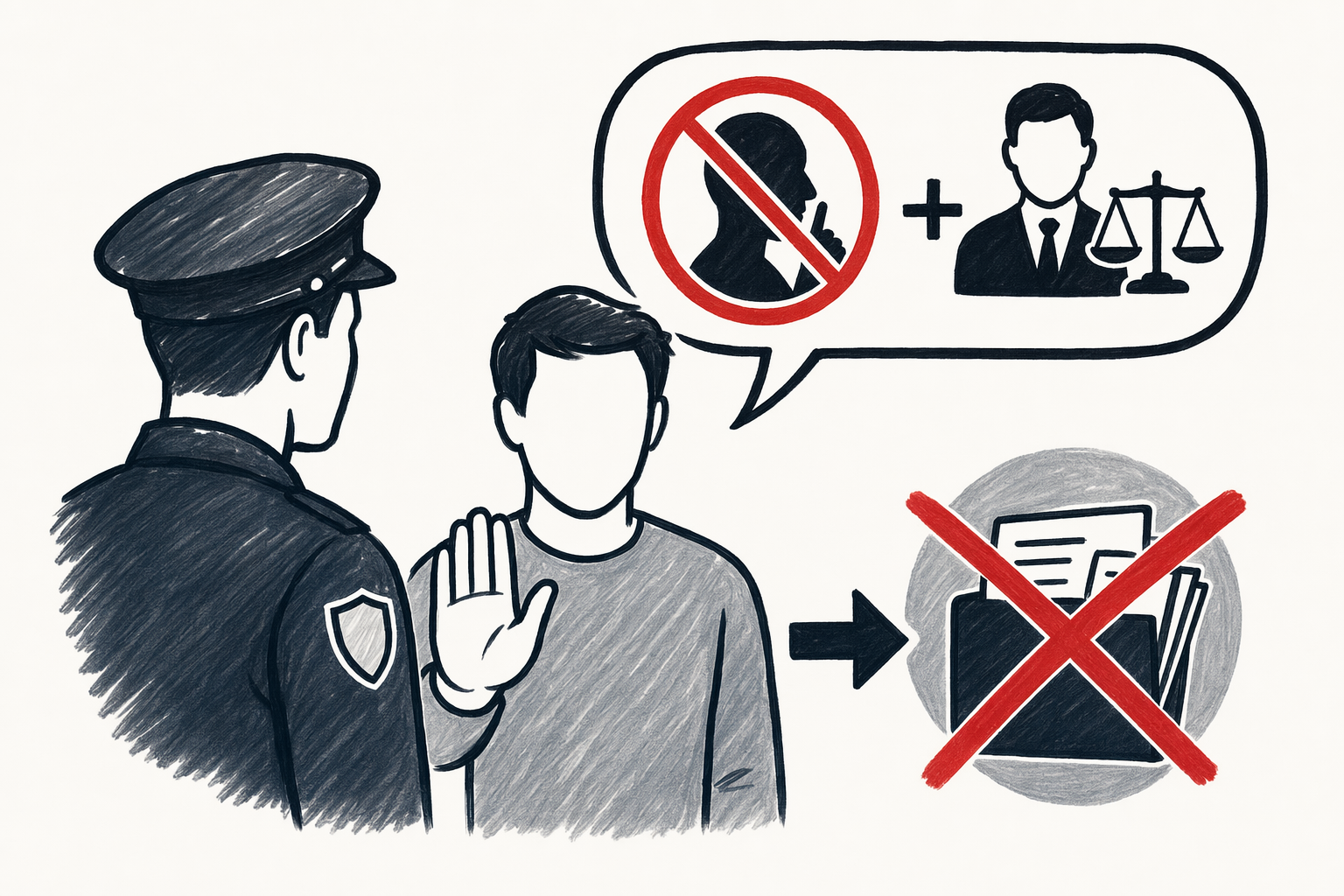
Do not try to talk your way out of handcuffs. Do not argue about the facts. Do not guess. Do not lie. A small statement can still be used against you later. Even saying, "I only had one drink," or "I was just there for a minute," can hurt your case.
Do not talk about your case on the phone from jail, in a police car, in a holding cell, or with other people who were arrested. Many jail calls are recorded. Police may also use statements you make to cellmates, friends, or family.
- Do not explain your side before you have a lawyer.
- Do not sign papers you do not understand.
- Do not post about the arrest on social media.
- Do not agree with police just because you feel scared.
- Do not discuss your immigration status unless your lawyer advises you to.
If police keep asking questions
Police may keep talking after you ask for a lawyer. They may act friendly. They may say they just want to "clear things up." Stay calm. Repeat the same words: "I want to remain silent. I want a lawyer." Then say nothing about the facts.
You do not have to prove your innocence during questioning. Silence is not an admission of guilt.
If officers ask to search your phone, car, home, or bag, you can say, "I do not consent to a search." Do not physically resist. Just state that you do not consent. If police search anyway, your lawyer can review whether the search was legal.
Why this matters for immigrants
A criminal case can affect immigration status. Some charges, pleas, and convictions can lead to serious immigration problems. That is why it is important to get a defense lawyer who understands immigration consequences. GuardLine Defense is not an immigration law firm and does not give immigration advice, but we can help you look for a criminal defense lawyer who understands this issue.
If you are not a U.S. citizen, do not assume a quick plea is harmless. Even a minor case can create problems for a visa, green card, DACA, asylum, or future immigration applications. Learn more about your rights after arrest and, if your charge is serious, read about felony defense.
- Ask for a lawyer right away.
- Do not discuss the facts with police or anyone else in custody.
- Do not accept a plea or sign documents until your lawyer explains the risks.
- Tell your lawyer if you are not a U.S. citizen or if you have any immigration case.
What to do after the arrest
As soon as you can, write down what happened. Include the time, place, officer names if you know them, and names of any witnesses. Save papers from the jail or court. If you have injuries, ask for medical care and keep records. These details may help your lawyer later.
Try to contact a trusted family member or friend. Ask them not to post online about your case. Ask them to help you find a defense lawyer quickly. GuardLine Defense is a free attorney-matching service. You never pay us, and we never take a percentage of any attorney's fees.
If you are arrested, say you want to remain silent and want a lawyer, then stop talking about the case.