What to bring to your first lawyer meeting?
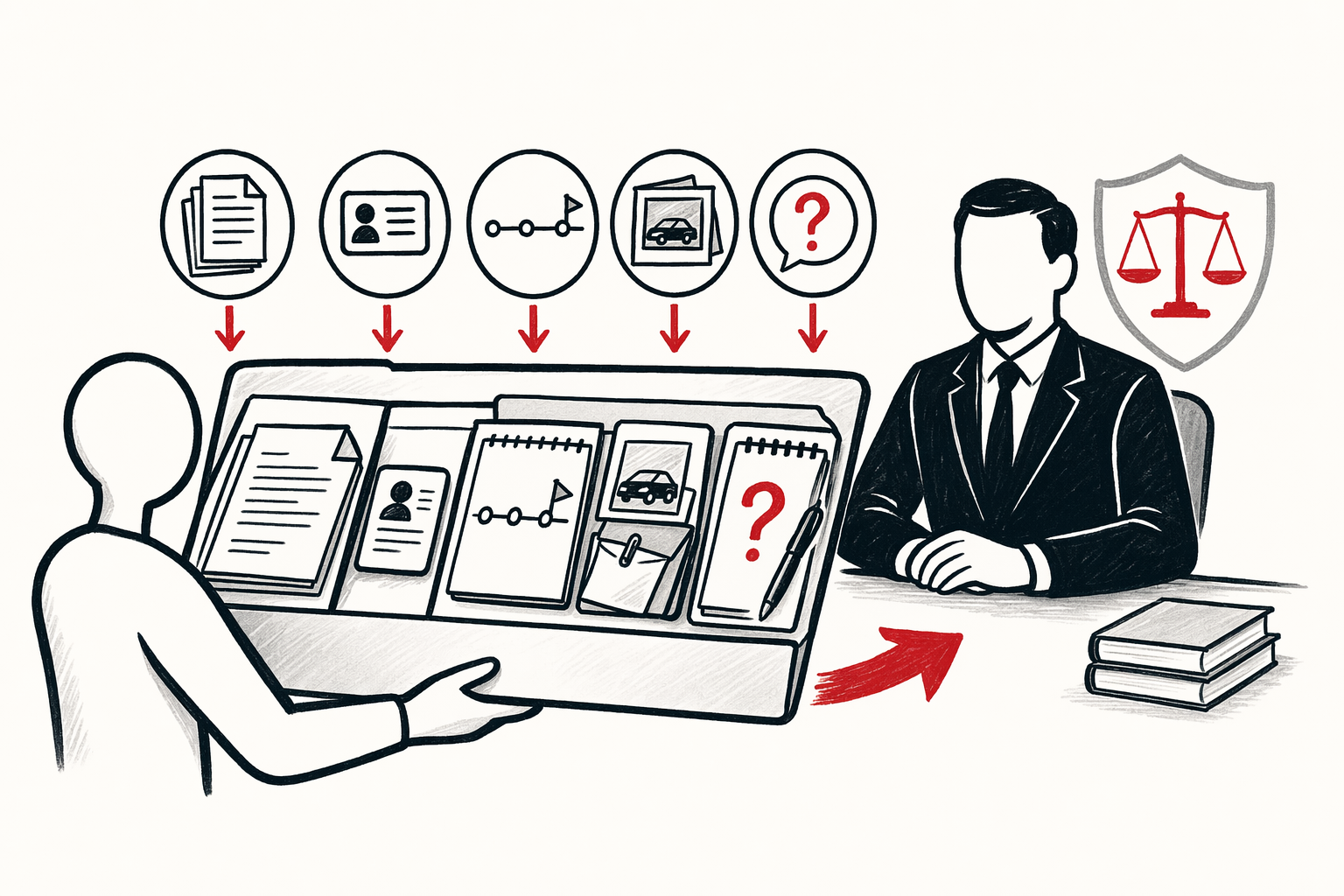
Bring papers, dates, and questions. You do not need to know every legal word. A defense lawyer can understand your situation faster if you bring a few basic things.
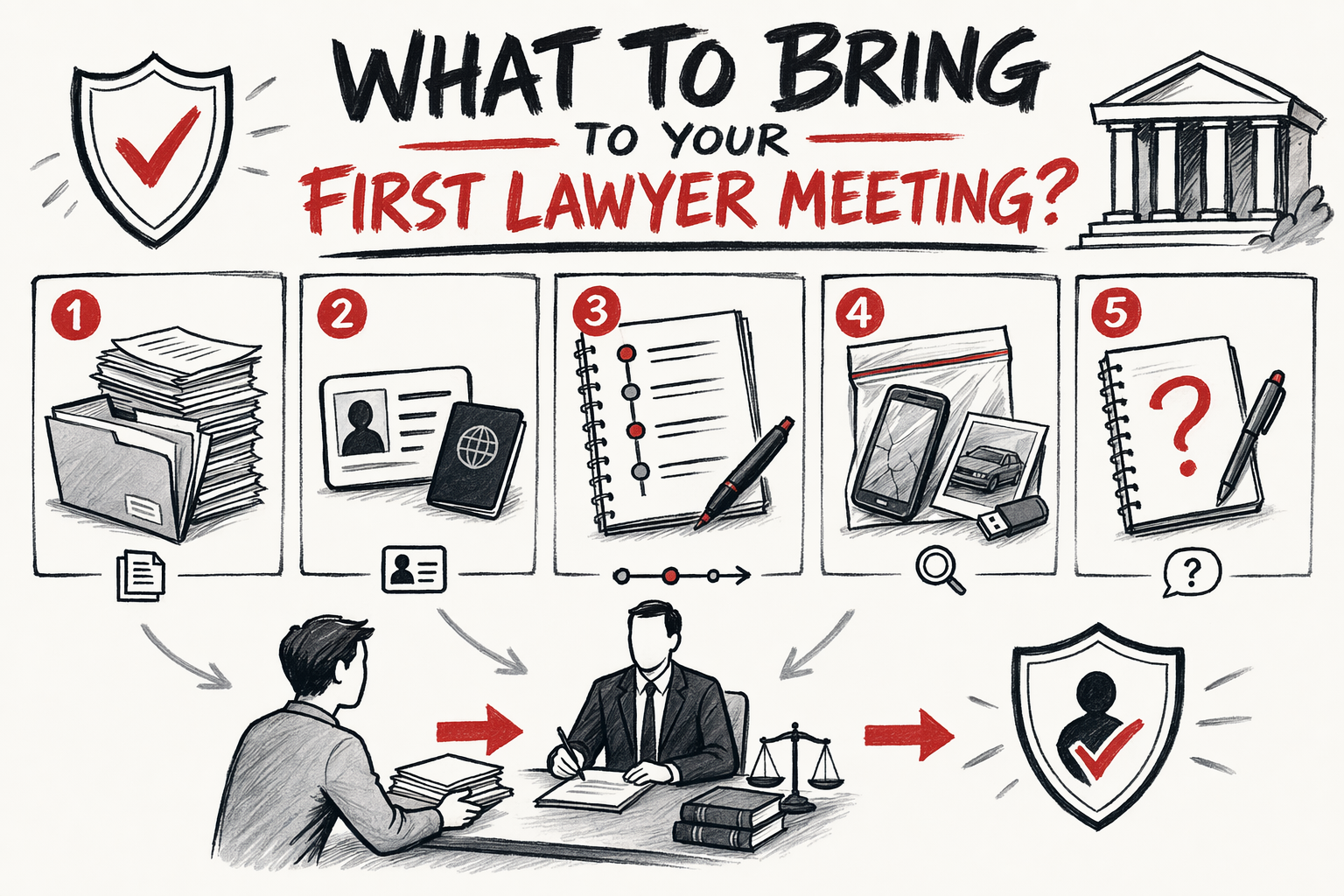
Your first meeting with a criminal defense lawyer can feel scary. That is normal. You do not need a perfect folder or perfect English. Bring what you have, tell the truth, and ask for an interpreter if you need one.
If you are still looking for a lawyer, we can help you get matched with an independent defense attorney. GuardLine Defense is not a law firm. We do not give legal advice, and using our free service does not create an attorney-client relationship.
Start with the most important papers
Bring every paper the police, jail, or court gave you. Even one small paper can matter. A lawyer needs to see the exact charge, the court date, and any release conditions.
- Ticket, citation, complaint, or charging paper
- Arrest record, booking sheet, bail paper, or bond receipt
- Court notice with the date, time, and courthouse address
- Release papers that list rules you must follow
- Any paper about a warrant, probation, or past case
Bring proof of identity and basic life details
Your lawyer may ask for documents that show who you are and how to contact you. This helps the lawyer prepare and reach you quickly if something changes.
- Photo ID, if you have one
- A phone number that works and a safe email address
- Home address and mailing address, if different
- Names and phone numbers for emergency contacts
- Proof of work, school, or family duties, if easy to get
If you are not a U.S. citizen, tell the lawyer your immigration status as best you can. Bring any immigration papers you already have, such as a work permit, green card copy, visa papers, or immigration court notices. A criminal case can have immigration consequences. A defense lawyer who understands those risks is important. GuardLine Defense is not an immigration law firm and does not give immigration advice.
Write down what happened
Before the meeting, make a simple timeline. Use short sentences. Put events in order. This can help your lawyer see the full picture and spot what to ask next.
- Write the date, time, and place of the incident.
- List who was there. Include police, witnesses, and other people involved.
- Write what you saw, heard, and did.
- Write what police said to you and whether they searched you, your car, or your home.
- Write if you gave any statement, signed anything, or let police look at your phone.
Do not change facts to make the story look better. Your lawyer needs the truth, including facts that feel embarrassing or harmful. Honest facts help a lawyer protect you. If you already said something to police, bring that information too. You can also read more about your rights after arrest.
Bring evidence, but do not create new problems
If you have evidence, bring it in a safe and simple way. Good examples are photos, screenshots, videos, receipts, GPS records, medical papers, and names of witnesses. If there are text messages or social media posts, do not delete them. Deleting things can create new trouble.
- Bring your phone charger if key evidence is on your phone
- Print screenshots if possible, and keep the original on the device
- Write witness names, phone numbers, and what each person may know
- Bring medical records or photos of injuries, if they matter
- Bring receipts, work schedules, or location records that show where you were
Do not post about your case online. Do not ask friends to contact witnesses for you unless your lawyer says it is okay. In some cases, that can be risky. If your charge is serious, you may want to learn more about felony defense and what a defense lawyer may review early in the case.
Bring your questions and be ready to talk about money
It is okay to bring a written list of questions. Many people forget things when they are nervous. You can ask what the charge means, what the next court date is, what you should do now, and what not to do.
- What is the exact charge against me?
- What happens at the next court date?
- Should I gather more records or names?
- Can this case affect my immigration situation?
- How will we communicate if I need language help?
- What are the lawyer's fees and payment rules?
Ask clearly about fees before you hire any lawyer. Some lawyers charge a flat fee. Some charge by the hour. Get the fee agreement in writing if you decide to move forward. GuardLine Defense is free for you to use. You never pay us, and we never take a percentage of any attorney's fees.
You do not need to bring everything. Bring what you have now. A good first meeting is about getting organized and protecting your rights.
Bring all papers, basic ID, a simple timeline, any evidence, and your questions so a defense lawyer can understand your case faster.