What not to say to the police?
Do not try to explain, argue, or guess when police question you. You have the right to stay silent and ask for a criminal defense lawyer, no matter your immigration status.
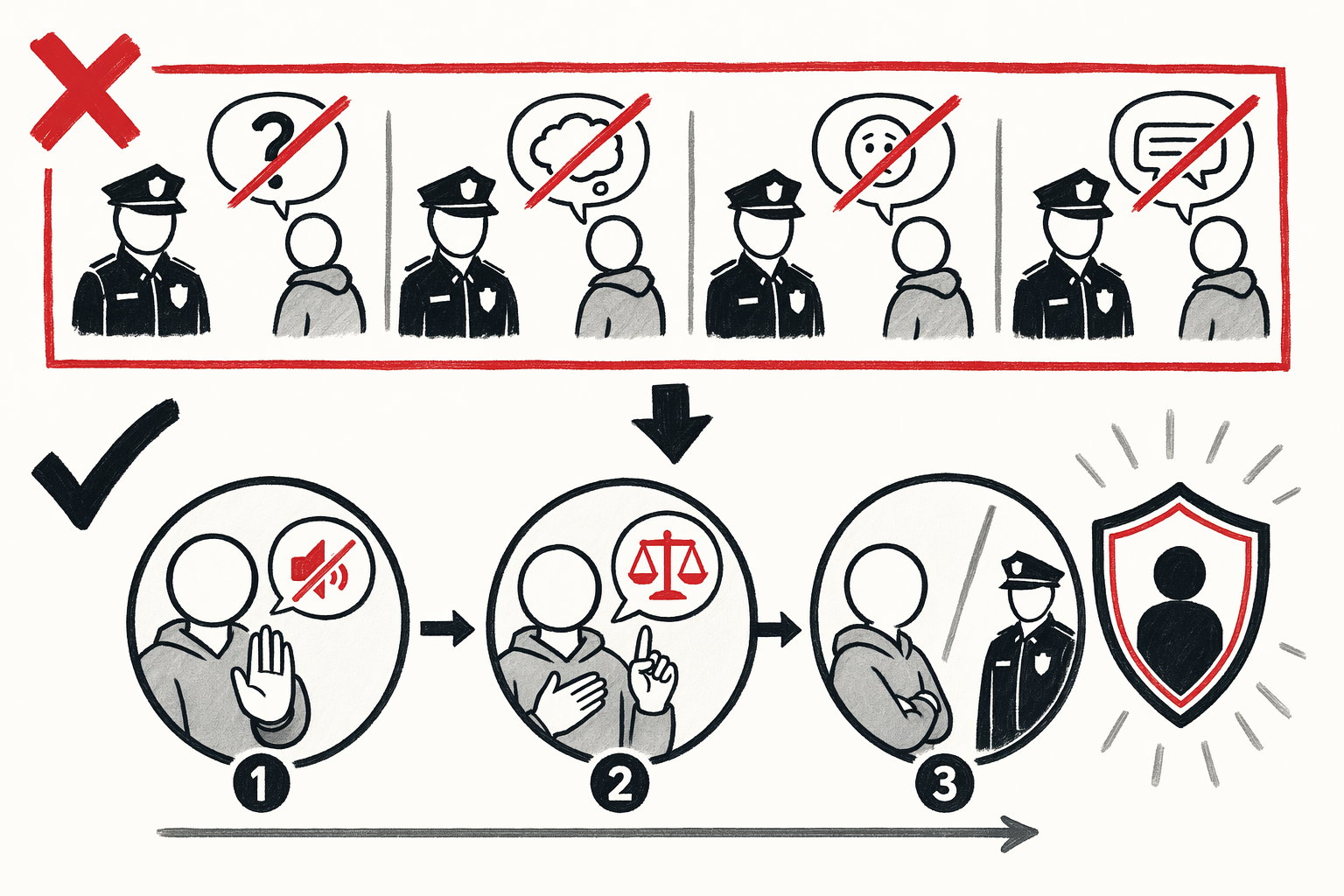
If police stop you, arrest you, or ask questions, your words can be used against you later. Many people talk because they are scared, want to be polite, or think they can clear things up fast. That can make the case worse.
The safest simple answer is short. Say, "I want to remain silent. I want a lawyer." Then stop talking about the facts of the case. If you want help finding an independent attorney, you can get matched here. GuardLine Defense is not a law firm and does not give legal advice.
What not to say
Do not say, "I can explain." Do not say, "I only had one drink," "It was not mine," or "I was just there." Do not guess about times, places, or what other people did. Even small mistakes can be treated like lies.
- Do not admit anything, even partly.
- Do not argue with police about the law.
- Do not tell a long story.
- Do not answer questions to "help yourself."
- Do not sign or agree to a statement you do not fully understand.
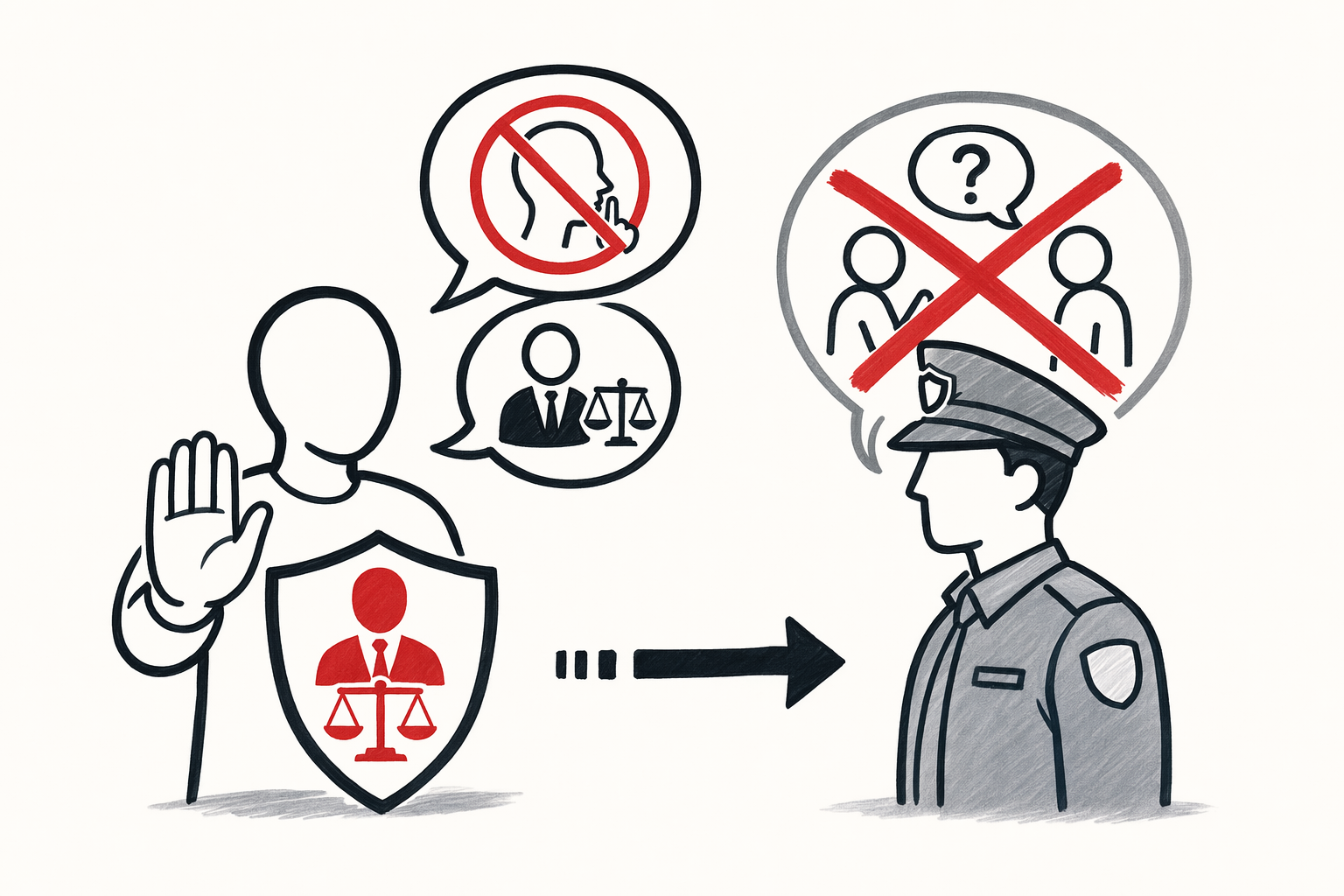
What to say instead
Use calm, clear words. You can say, "I want to remain silent." Then say, "I want a lawyer." If you need language help, say, "I need an interpreter." Repeat these short sentences if officers keep asking questions.
- Stay calm. Keep your hands where police can see them.
- Give your name and basic identifying information if required.
- Say, "I want to remain silent. I want a lawyer."
- Do not discuss the case in the police car, cell, hallway, or by phone if the line may be recorded.
- Wait to speak with a criminal defense attorney before answering questions.
If police already arrested you, read more about your rights after arrest. A lawyer can tell you what to do next based on the facts of your case.
Why talking can hurt you
Police may seem friendly. They may say they just want your side, or that things will go easier if you talk. They are allowed to ask questions and collect evidence. Their job is not to protect you from saying something harmful.
People often think silence makes them look guilty. That is not how your rights work. Using your right to remain silent is not an admission. It is a legal protection. A defense lawyer can help decide what should be said, when, and to whom.
"I was nervous, so I kept talking. Later, I realized I had guessed about details and made things worse."
If you are not a U.S. citizen
A criminal case can affect immigration status, visas, green cards, asylum, or future applications. That is why it is important to get a criminal defense lawyer who understands immigration consequences. GuardLine Defense is not a law firm. We are not immigration lawyers and we do not give immigration advice.
If the charge is serious, such as a felony, fast legal help matters. You can learn more about felony defense and ask to be connected with an independent attorney. Our service is free to you. You never pay us, and we never take a percentage of any attorney's fees.
You do not have to prove your innocence in a police interview. You do not have to answer questions about where you were, what you did, or who else was involved before speaking with a lawyer. Short, respectful silence is often safer than a long explanation.
If police want to question you, say you want to stay silent and want a lawyer, then stop talking about the case.