What is probable cause?
Probable cause means police need a real reason, based on facts, before they arrest you, search you, or ask a judge for a warrant. It is an important rule, but it does not always stop police mistakes.
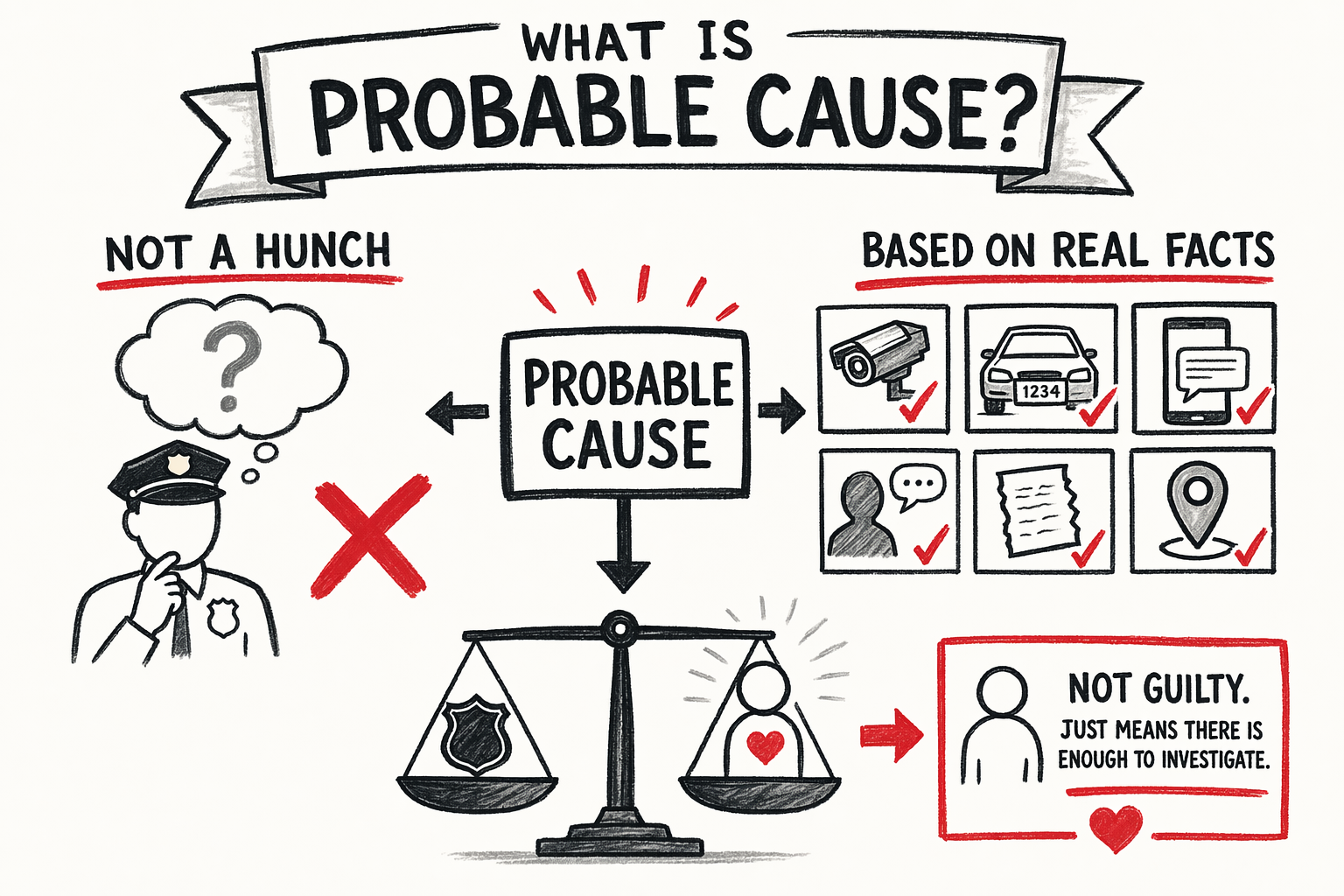
If you or a family member was stopped, searched, or arrested, you may hear the words probable cause. This means police must have facts that would make a reasonable person think a crime happened, is happening, or that evidence of a crime can be found.
This page gives general information in plain English. GuardLine Defense is not a law firm and does not give legal advice. We offer free attorney matching, and you never pay us. We never take a percentage of any attorney's fees. If you need help now, you can get matched with an independent defense attorney.
What probable cause means
Probable cause is more than a guess, but it is less than proof beyond a reasonable doubt. Police do not need enough evidence to convict you at trial. They do need specific facts, not just a feeling, a stereotype, or a rumor with no support.
For example, if an officer sees a person take a wallet from someone else's pocket and run, that may support probable cause for an arrest. If an officer only says, "He looked suspicious," that is usually not enough by itself.
- It can be used to support an arrest.
- It can be used to support a search warrant.
- It can be used when police believe evidence is in a car, home, phone, or other place.
- It must be based on facts the officer can explain later in court.
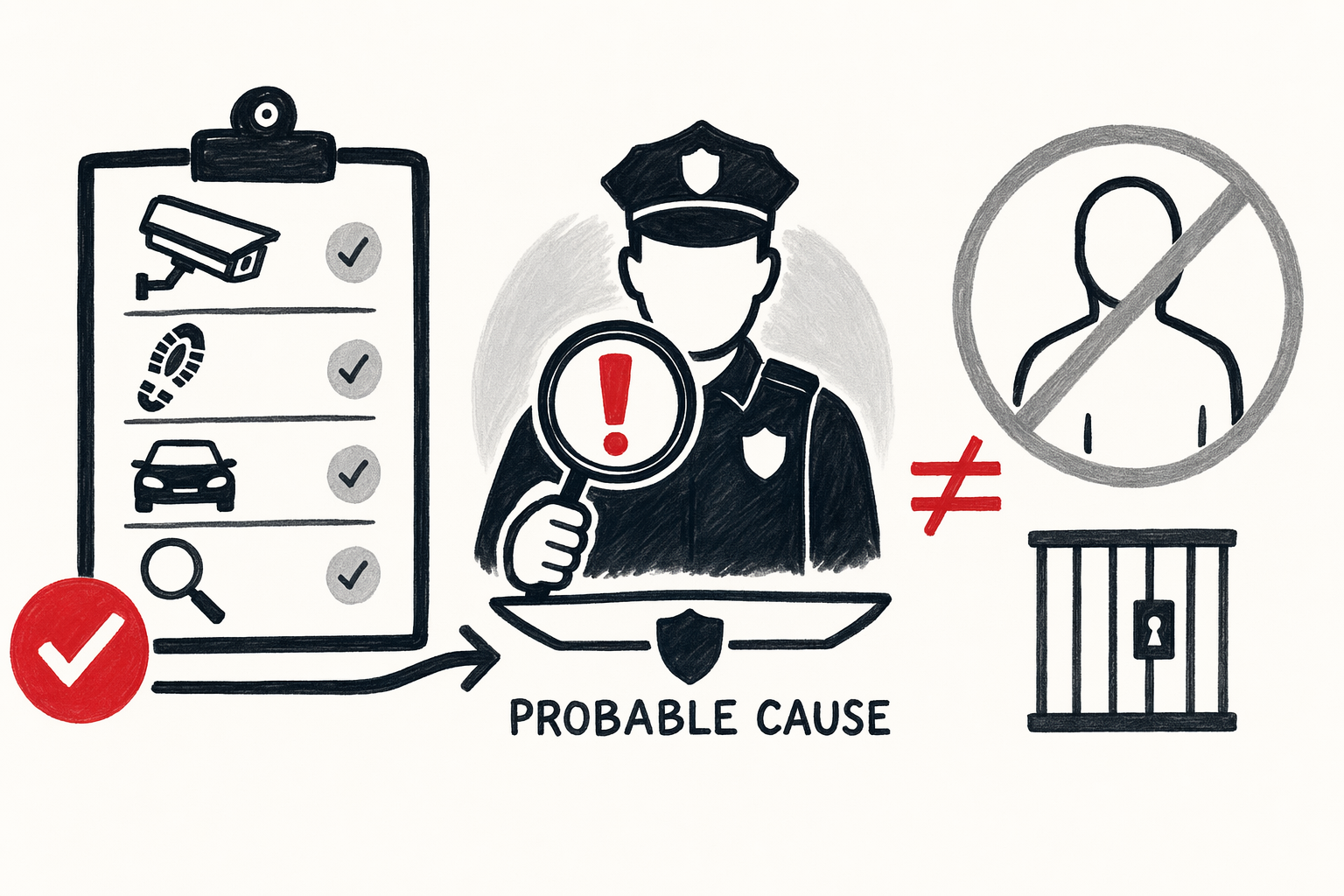
When police use probable cause
Police and judges use probable cause in a few common situations. One is an arrest. Another is a warrant. A judge may sign a warrant if police show facts that make it reasonable to think a crime happened and evidence will be found in a certain place.
Sometimes police act without a warrant. For example, they may arrest someone in public if they believe there is probable cause. In some situations, they may search a car if they have facts suggesting evidence is inside. These rules can be complicated. A defense lawyer can look closely at what really happened.
Probable cause is different from a simple police stop. During a brief stop, police may need a lower level of suspicion. But to arrest you, or to get many kinds of warrants, they usually need probable cause. If you were arrested, it helps to read about your rights after arrest and speak with a defense lawyer quickly.
What probable cause does not mean
Probable cause does not mean you are guilty. It does not mean the police report is correct. It does not mean the prosecutor will prove the case. People can be arrested even when the facts are weak, mixed up, or incomplete.
It also does not mean police can do anything they want. Courts can review whether probable cause was really there. If police acted without enough facts, a lawyer may ask the court to suppress evidence or challenge the arrest. That depends on the details of the case.
- What facts did the officer know at the time?
- Where did those facts come from?
- Did the officer actually see something, or only hear a vague tip?
- Was a judge asked to sign a warrant?
- Did police search first and explain later?
Why this matters for immigrants
A criminal case can also affect immigration status. Even a small charge can create serious immigration problems in some cases. That is why it is important to try to get a defense lawyer who understands how criminal and immigration issues can connect. GuardLine Defense is not an immigration law firm and does not give immigration advice, but we can help you find an independent defense attorney.
If you are accused of a serious charge, you may want to learn more about felony defense. Whether the charge is small or serious, do not explain your case to police, prosecutors, or jail staff without a lawyer. Short, polite silence can protect you.
Many people worry that asking for a lawyer makes them look guilty. It does not. It is a basic right. This is especially important if English is not your first language, because small misunderstandings can hurt your case.
"Probable cause" is a legal standard, not a final answer about what really happened.
If you are scared and do not know what to do next, take one step at a time. Write down what happened, including the time, place, officer names, witnesses, and anything that was searched or taken. Then try to speak with a defense attorney as soon as possible. You can request a free match in your language.
Probable cause means police need real facts, not just a hunch, but it still does not mean you are guilty.