What is an arraignment?
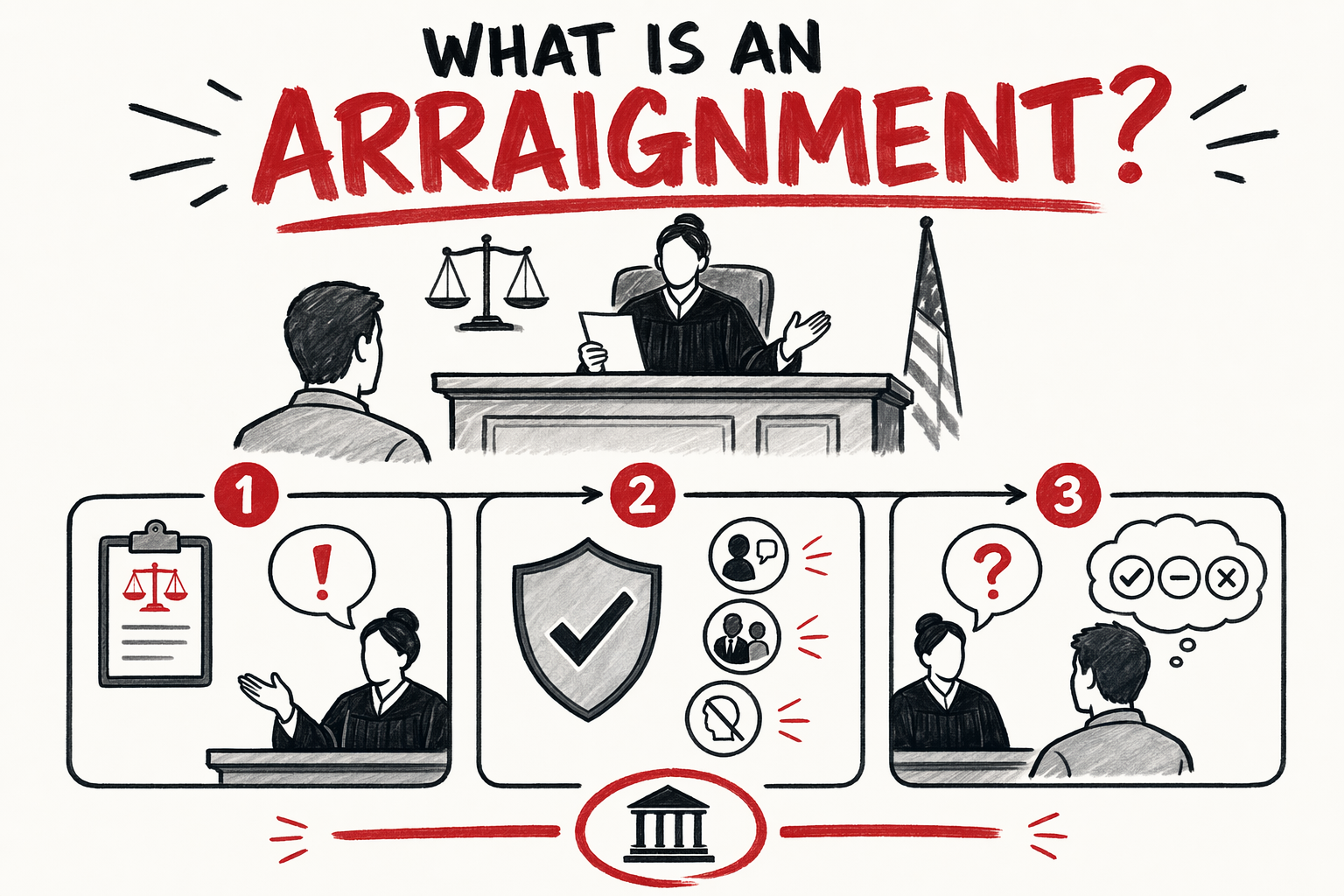
An arraignment is usually your first court hearing after a criminal charge. The judge tells you the charge, explains your rights, and asks for a plea.
If you or someone you love was arrested, the word arraignment can feel scary. This hearing is often short, but it matters. It is one of the first times your case is addressed in court.
For many immigrants, there is extra fear about jail, court, and immigration problems. A criminal case can affect immigration status. Try to get a defense lawyer who understands immigration issues. GuardLine Defense is not a law firm, does not give legal advice, and does not create an attorney-client relationship. We offer free help connecting people with an independent lawyer through our matching service.
What happens at an arraignment
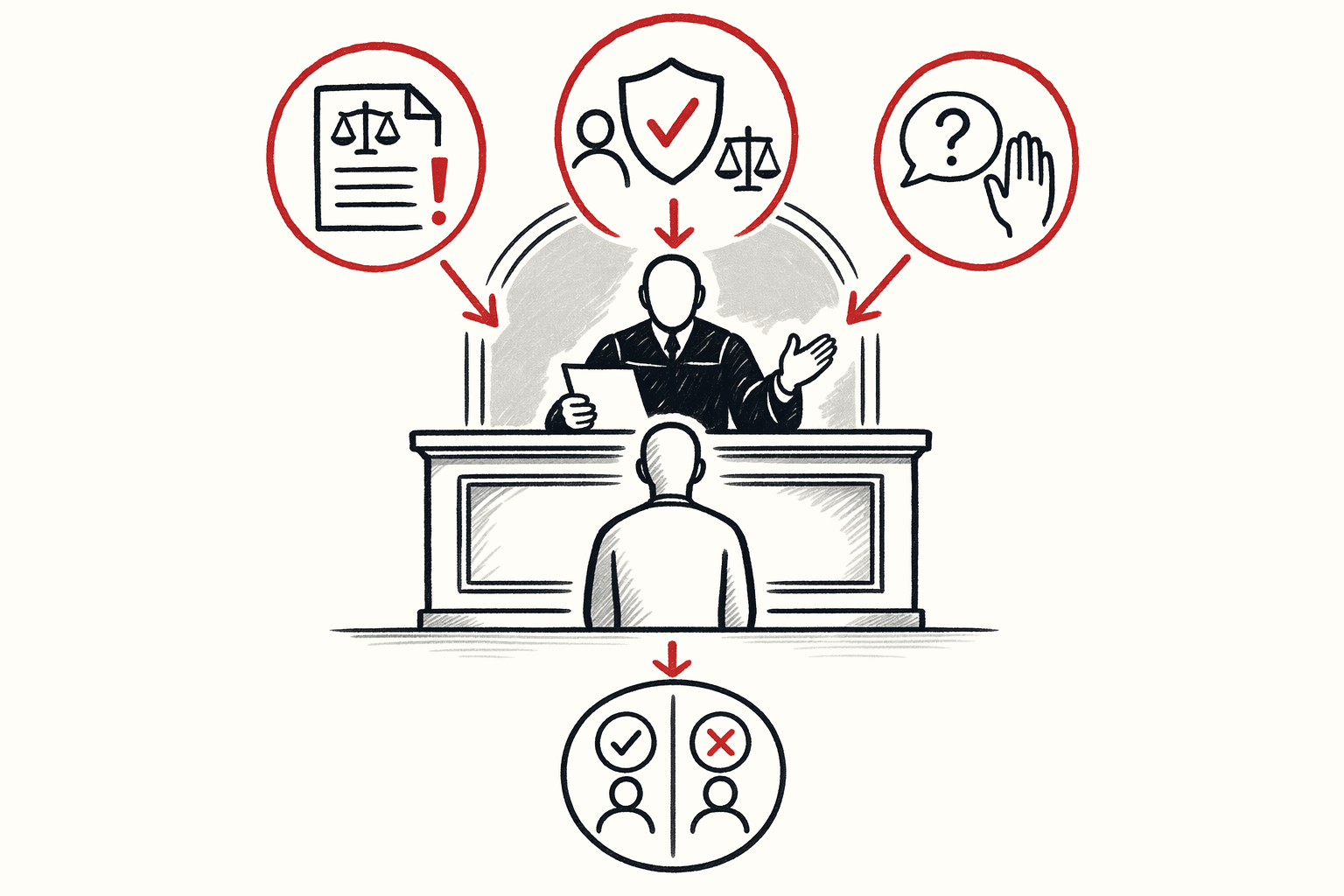
At an arraignment, the judge usually does a few basic things. The judge tells you what charge or charges the government filed. The judge makes sure you know your rights. The judge may ask if you have a lawyer or need time to get one. Then the judge asks for a plea, usually guilty, not guilty, or no contest, depending on the court and the state.
The judge may also talk about release conditions. That can include bail, bond, staying away from a person or place, drug testing, or checking in with the court. In some cases, the judge sets the next court date. Many arraignments are brief. Some last only a few minutes.
What a plea means
A plea is your answer to the charge. In many first hearings, people plead not guilty so the case can continue and a lawyer has time to review the evidence. You should not guess about what plea is best for you. A guilty or no contest plea can have serious criminal and immigration consequences.
If you have not talked to a lawyer yet, say clearly that you want a lawyer. If police arrested you, it may also help to review your rights after arrest. What you say in court can matter later.
- The judge reads or summarizes the charge
- The court checks your name and basic information
- You are told about your rights
- The judge asks about a lawyer
- A plea may be entered
- Bail or release conditions may be discussed
- The next court date may be set
Why arraignment is important for immigrants
For non-citizens, even a small case can lead to bigger problems. Some charges, pleas, or sentences can affect a visa, green card, asylum case, DACA, TPS, or future immigration applications. This is why it is important to ask for a criminal defense lawyer who understands immigration consequences. GuardLine Defense is not an immigration law service and does not give immigration advice. We can help you try to find a defense lawyer for cases like felony defense and other criminal charges.
Do not assume a case is minor just because it sounds minor. A shoplifting charge, drug charge, domestic violence allegation, or plea bargain may create immigration risk. The safest step is to speak with a qualified defense lawyer before making important decisions.
How to prepare for your arraignment
If you have an arraignment coming up, try to stay calm and plan ahead. Wear clean, simple clothes if you can. Arrive early. Bring any court papers you have. If you do not understand English well, ask the court for an interpreter as soon as possible. Speak clearly and do not interrupt the judge.
- Learn the date, time, and courtroom
- Bring your paperwork and identification if the court told you to
- Ask for an interpreter if you need one
- Tell the judge if you want a lawyer
- Do not discuss the facts of your case in open court unless your lawyer tells you to
- Follow all release conditions and come back for every court date
Missing an arraignment can make things worse. The court may issue a warrant, add penalties, or make release harder. If you are in jail, the arraignment may happen there by video or you may be brought to court. If you are out of custody, treat the date seriously and do not be late.
The arraignment is often short, but the choices around it can affect the rest of the case.
An arraignment is usually the first court hearing where the judge tells you the charge, explains your rights, and asks for a plea.