What is a plea bargain?
A plea bargain is an agreement to resolve a criminal case without a trial. It can sound simple, but it may affect jail time, fines, and your immigration situation, so get legal help before you decide.
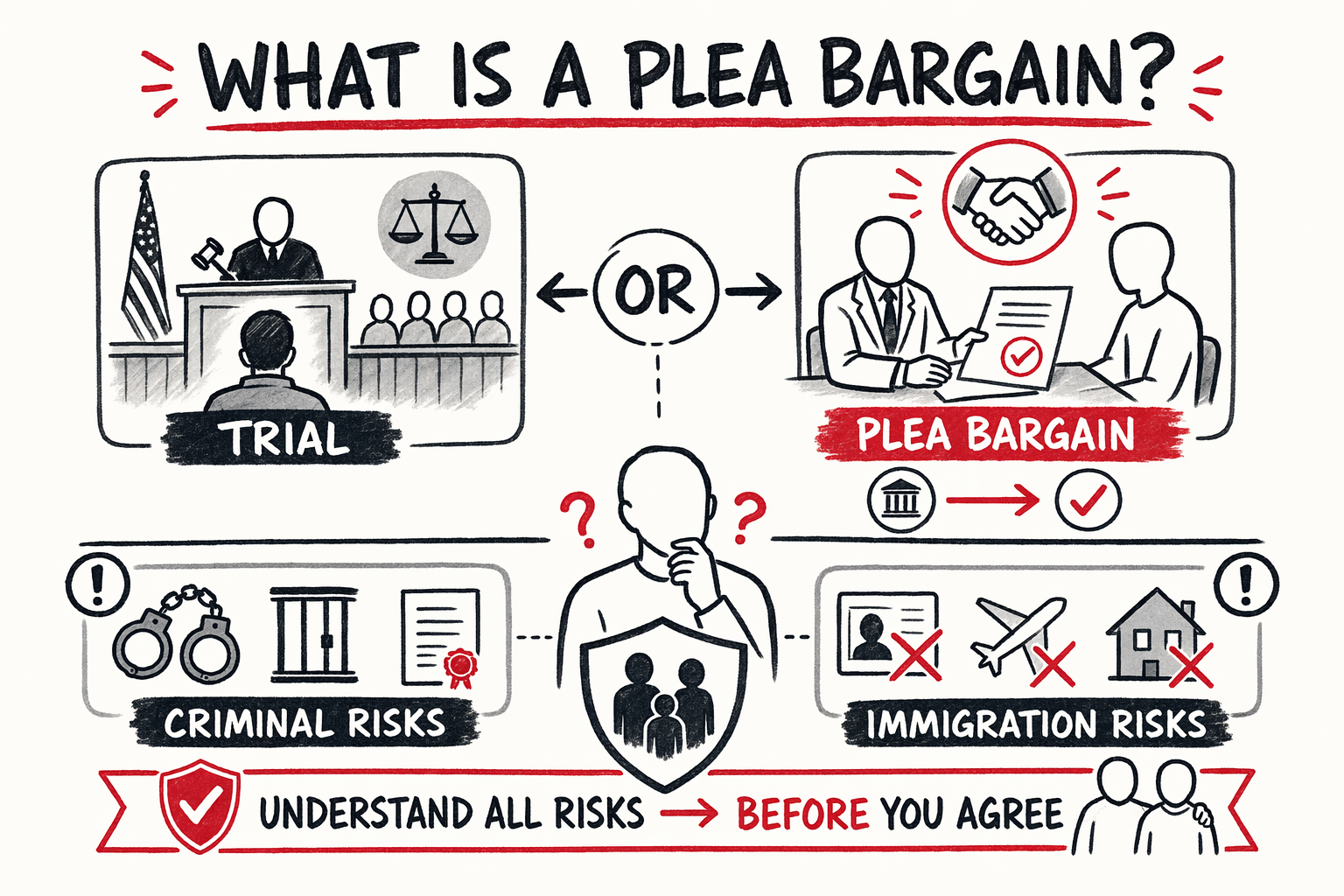
A plea bargain is a deal between the prosecutor and the person charged with a crime. In many cases, the person agrees to plead guilty, or no contest, and the prosecutor agrees to something in return, such as a lower charge or a lighter sentence request.
For many people, this is one of the first big choices in a criminal case. It is not always good or bad. The right choice depends on the facts, the evidence, your record, and possible immigration consequences. You can get matched with an independent defense attorney for free through GuardLine Defense. We are not a law firm and do not give legal advice.
How a plea bargain works
A plea bargain usually happens after charges are filed, but sometimes discussions start earlier. The prosecutor looks at the police report, witness statements, videos, and other evidence. Your defense lawyer reviews the case and talks with you about the risks and possible options.
Then the sides may discuss a deal. For example, the prosecutor may offer to reduce one charge, dismiss another charge, or recommend a certain sentence. In exchange, the defendant gives up the right to a trial and enters a plea in court.
- You may plead guilty to the original charge.
- You may plead guilty to a lesser charge.
- You may plead no contest, depending on the state and the case.
- The prosecutor may agree to dismiss some counts.
- The prosecutor may agree to recommend less jail, probation, classes, or fines.
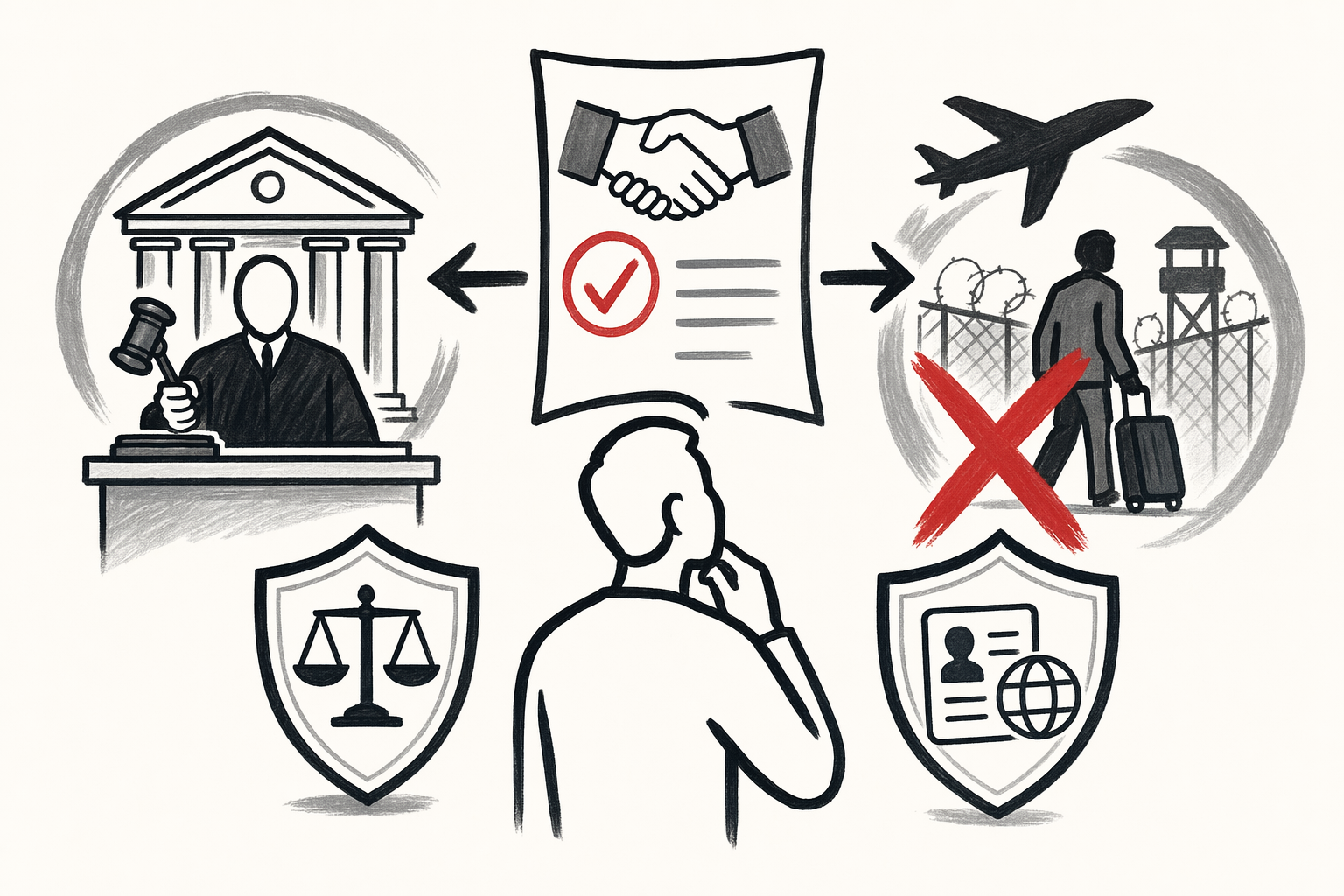
Why people take plea deals
Many criminal cases in the United States end with plea bargains. Trials take time, money, and carry risk. Sometimes a plea offer gives more certainty than going to trial. Sometimes it can reduce the possible punishment. For some people, that matters a lot if they need to return to work, care for family, or avoid a long court process.
But a plea deal also has costs. If you plead guilty or no contest, you may end up with a conviction. That can affect employment, housing, school, professional licenses, and immigration status. Even a minor case can create serious immigration problems for some non-citizens.
- The prosecutor makes an offer.
- Your lawyer explains the offer and possible outcomes.
- You decide whether to accept or reject it.
- If you accept, the judge usually asks questions in court to make sure the plea is knowing and voluntary.
- The judge may accept the deal, reject it, or ask for changes, depending on the rules in that court.
What a plea bargain can mean for immigrants
This part is very important. A criminal case can have immigration consequences. A plea that looks small in criminal court may still affect a visa, green card, DACA, asylum case, naturalization, or future reentry to the United States. That is why it is important to get a defense lawyer who understands immigration issues in criminal cases.
GuardLine Defense is not a law firm. We are not immigration lawyers and we do not give immigration advice. We help people connect with an independent criminal defense attorney. If you were arrested, read your rights after arrest and ask your lawyer to explain any immigration risk before you take a plea.
- A guilty plea may count as a conviction for immigration purposes.
- A reduced charge may still create immigration problems.
- Probation, fines, classes, or a suspended sentence can still matter.
- Finishing the sentence does not always erase the immigration issue.
- You should ask about both criminal penalties and immigration effects before deciding.
Questions to ask before you say yes
You do not have to answer right away just because you feel pressure. It is okay to ask your lawyer to explain the offer in simple words. If English is hard for you, ask for an interpreter. Make sure you understand what happens if you accept the deal and what may happen if you reject it and go forward.
If your case is serious, such as a felony, the risks may be higher. You can learn more about felony defense and ask for help finding a lawyer who can review the evidence, the possible sentence, and any immigration concerns.
- What exactly am I pleading to?
- Will I have a conviction on my record?
- What sentence could the judge give me?
- Will I go to jail, get probation, or pay fines?
- What rights am I giving up by pleading?
- How strong is the evidence against me?
- What are the immigration consequences, if any?
- Is there another option besides this deal?
A plea bargain is a major decision, not just a form to sign. Take time to understand it. Ask questions until the answer is clear. If you are scared, that is normal. A defense attorney can explain your choices and help protect your rights, but no one should promise a result.
A plea bargain is a deal to end a criminal case without trial, and immigrants should understand the criminal and immigration risks before agreeing.