What happens at a bail hearing?
A bail hearing is a short court hearing where a judge decides if you can go home while your case is pending, and on what conditions. For immigrants, this moment matters because criminal charges can also affect immigration status.
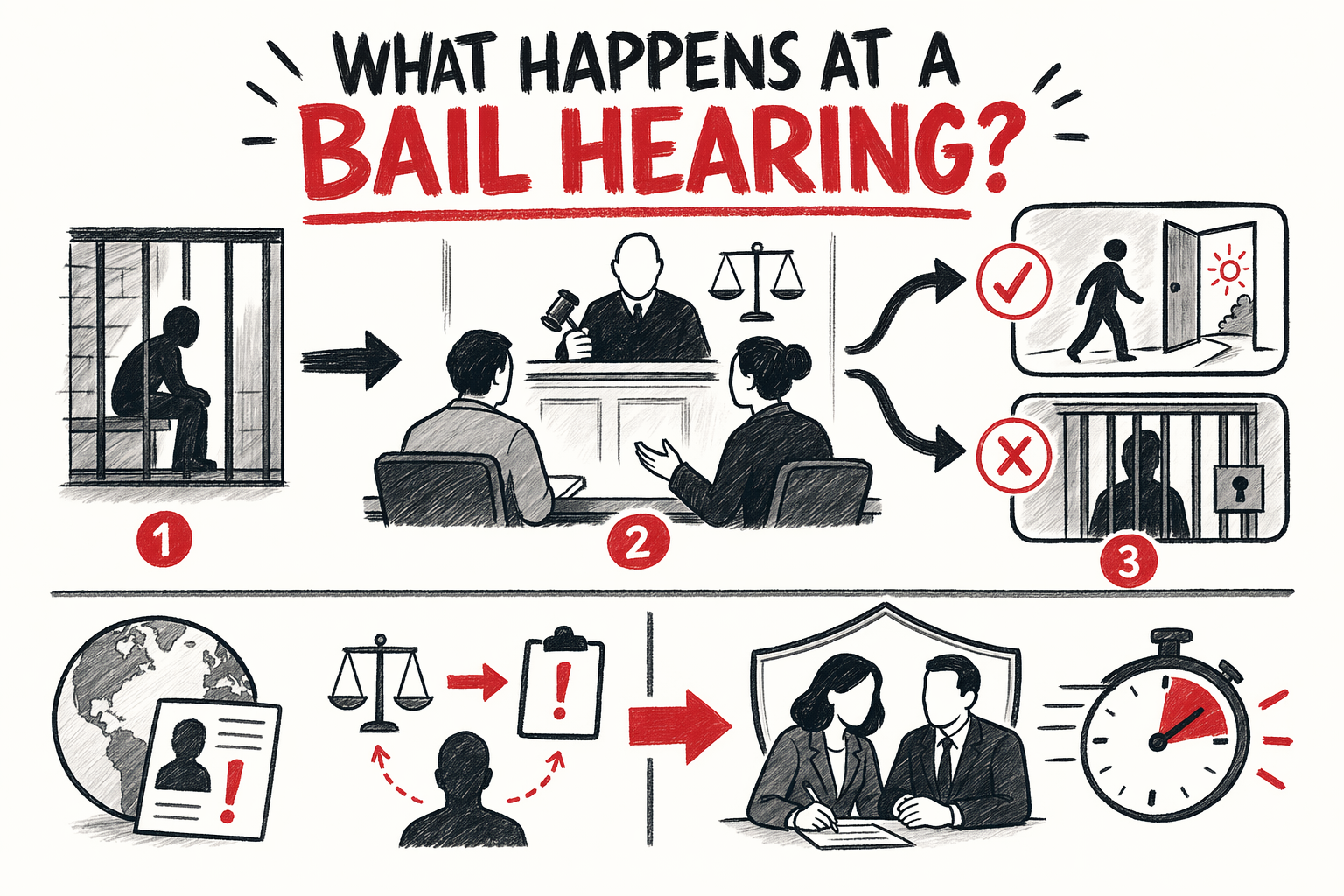
A bail hearing usually happens soon after an arrest. The judge looks at basic facts and decides whether you can be released before trial, and if you must pay money or follow rules to stay out of jail.
If you are new to the U.S. court system, this can feel scary and confusing. You still have rights. You can learn more about your rights after arrest, and you can get matched for free with an independent defense attorney. GuardLine Defense is not a law firm and does not give legal advice.
What the judge decides at a bail hearing
At the hearing, the judge decides if you should stay in jail or be released while the criminal case moves forward. The judge may release you on your promise to return to court, set a money amount called bail, or order other conditions.
The judge is not deciding if you are guilty or innocent at this hearing. This is only about whether you can be out of jail while the case is pending, and whether the court thinks you will return for future dates and follow the rules.
- Release on your own recognizance. This means you do not pay bail, but you must come back to court.
- Cash bail or bond. The judge sets an amount of money.
- Supervised release. You may need check-ins, travel limits, or drug testing.
- No release. In some cases, the judge can order that you stay in jail.
What information the court looks at
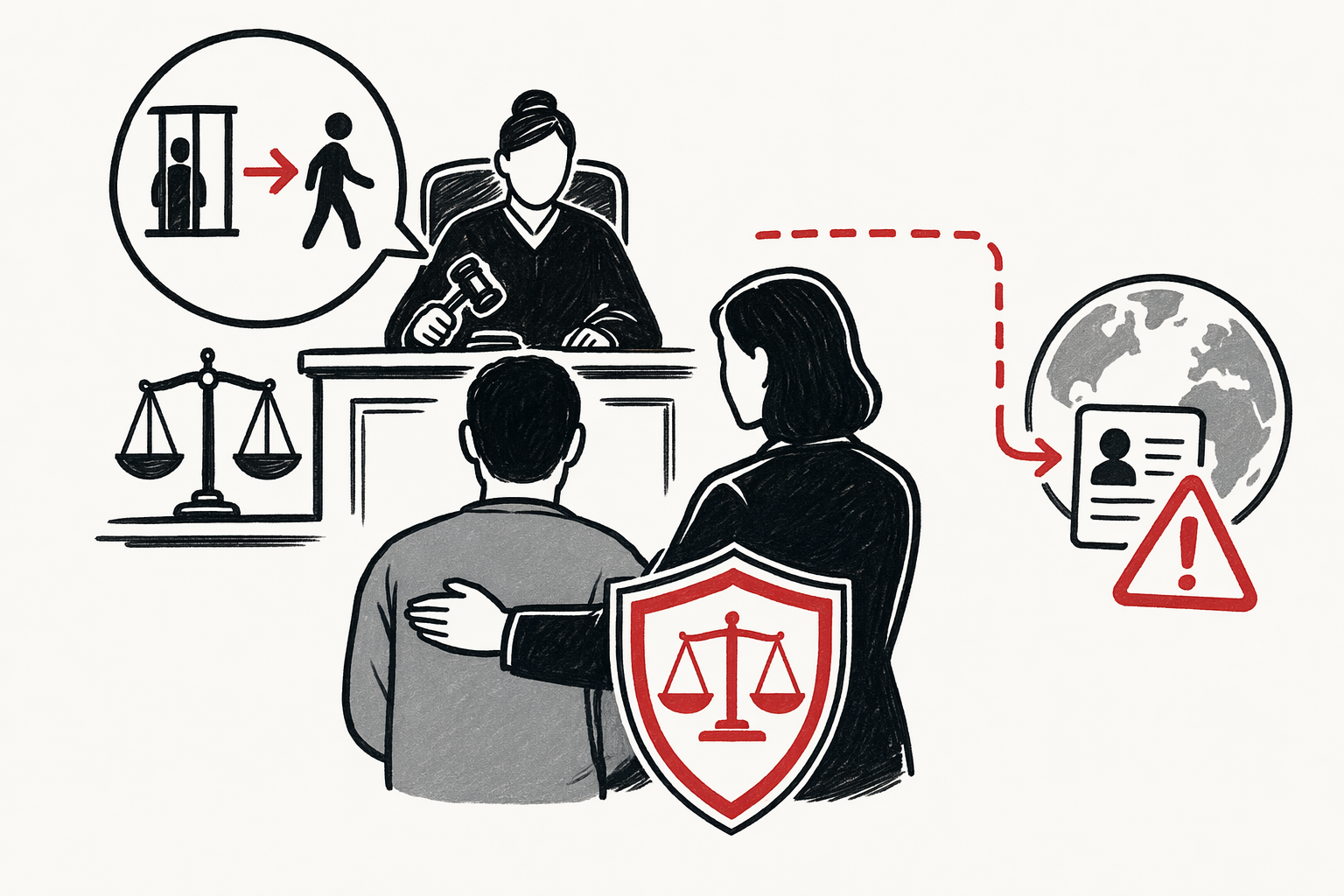
The judge often looks at the charge, your criminal record, past court attendance, ties to the community, and any safety concerns. A defense lawyer may explain that you have family nearby, a job, school, medical needs, or a stable address. These details can matter.
The prosecutor may ask for higher bail or no release. Your defense lawyer may ask for lower bail or release without money. If the charge is serious, such as a felony case, the hearing can be especially important.
- The court calls your case.
- The judge states the charge.
- The prosecutor gives reasons for bail or detention.
- Your defense lawyer speaks for you and asks for release or lower bail.
- The judge makes a decision and explains the conditions.
What bail can look like in real life
Bail is not always a simple payment. In some places, you may have to pay the full amount to the court. In other situations, a bond may be used. The exact rules depend on the state, the court, and the facts of the case.
For example, one person may be released with no payment at all. Another person may have bail set at $500, $2,000, or much more. Some people must also follow rules, such as no contact with an alleged victim, no firearms, no alcohol, or staying in one county.
The bail hearing is often short, but what is said there can affect whether you sleep at home or in jail while the case continues.
If the bail amount is too high, a lawyer may ask the court to lower it later. That does not always happen, but it can be possible. What matters most is getting clear legal help early and getting ready for every court date.
What immigrants should do before and after the hearing
If you have a lawyer, tell them important facts quickly. Share your full name, any medical problems, your address, your work schedule, and who depends on you, like children or older parents. If you are not a U.S. citizen, tell your lawyer that too. That helps the lawyer look for criminal defense help that takes immigration risks seriously.
- Do not miss court. Missing one date can lead to a warrant and make things worse.
- Do not talk about the facts of the case with police without a lawyer.
- Follow every release rule exactly.
- Keep copies of court papers and bail receipts.
- Ask for an interpreter if you need one.
If you are trying to find help, GuardLine Defense can connect you with an independent criminal defense attorney in your language at no cost to you. We are a free attorney-matching and know-your-rights service. We are not a law firm, we do not give legal advice, and we never take a percentage of any attorney's fees.
A bail hearing is where a judge decides if you can leave jail before trial, and immigrants should get defense help fast because the criminal case may also affect immigration status.