What Happens After You Are Arrested
After an arrest, the process can move fast and feel confusing. This page explains the usual steps, from booking to your first court date, in simple words.
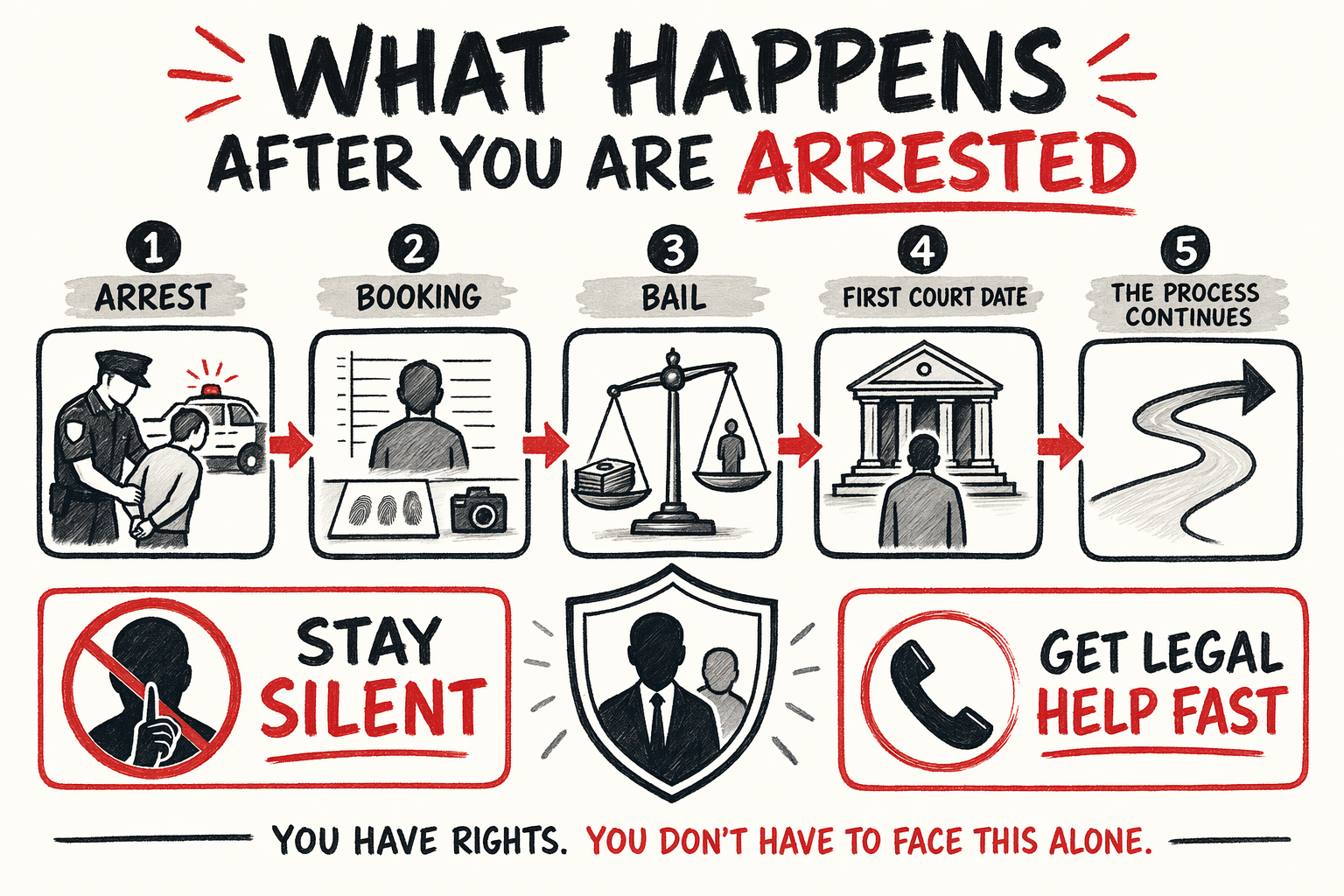
If you were arrested, you may feel scared, ashamed, or confused. That is normal. A criminal case can also affect your immigration situation, so it is important to speak with a defense lawyer who understands immigration issues as soon as possible.
This page gives general information, not legal advice. GuardLine Defense is not a law firm, does not give legal advice, and does not create an attorney-client relationship. If you want help finding a lawyer, you can get matched here or read more on our learn page.
What usually happens right after an arrest
After police arrest you, they usually take you to a police station, jail, or holding center. There, they begin a process called booking. This is the part where the system records that you were arrested.
Booking often includes your name, date of birth, fingerprints, and a photo. Police may take your personal property, like your phone, wallet, keys, or belt, and store it until release. In many places, you may wait for hours before you learn what comes next.
- Police record basic personal information
- They may take fingerprints and a mugshot
- Your belongings are usually held for safekeeping
- You may be placed in a cell or waiting area
- You may be told the charge, or charges, against you
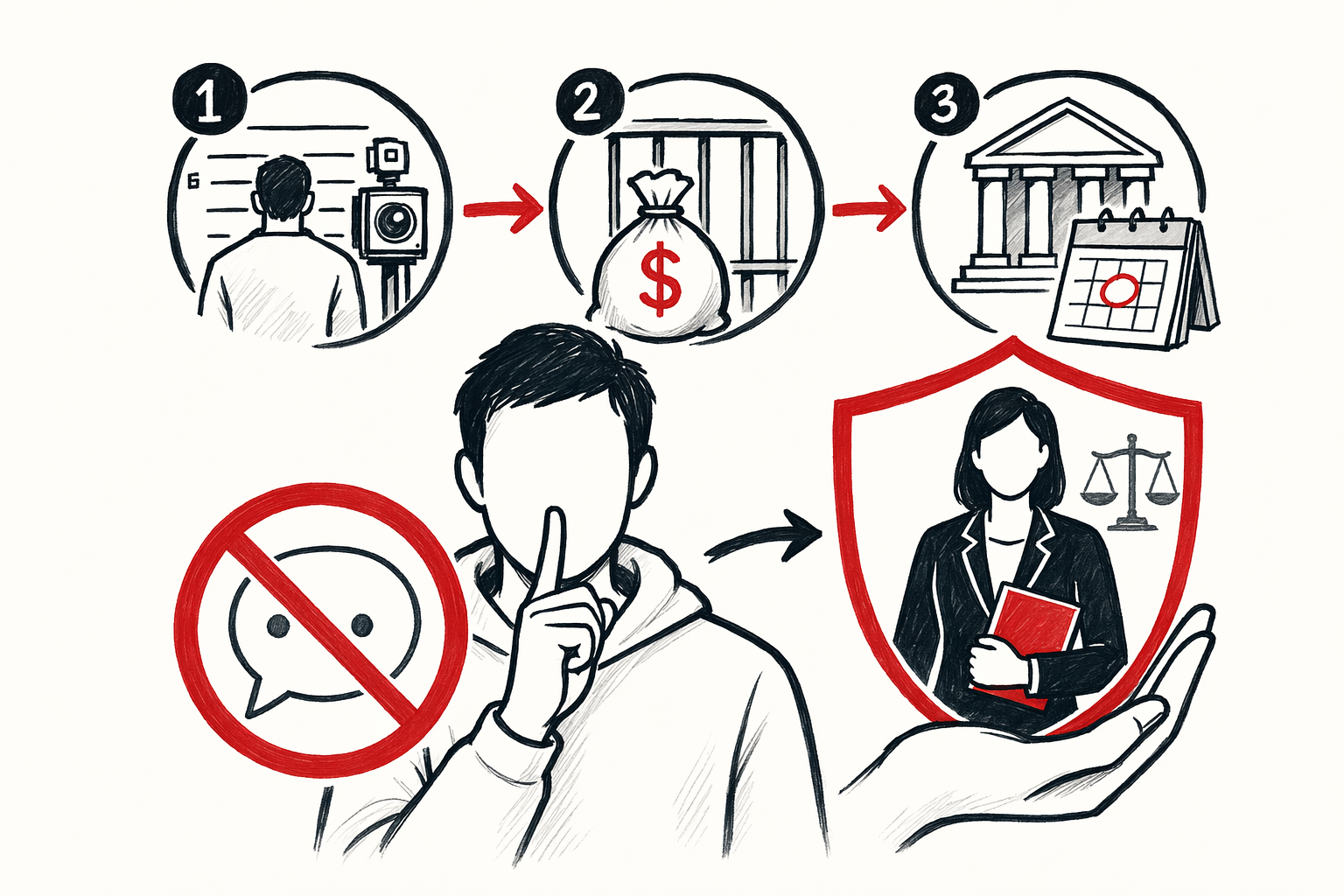
Booking, questioning, and release or bail
Sometimes police try to ask questions after arrest. They may act friendly. They may say this is your chance to help yourself. Be careful. What you say can be used against you later. Even small details can matter.
If police want to question you, you can clearly say that you want to remain silent and want a lawyer. For more on this, read your rights after arrest. Staying calm and saying less is often safer than trying to explain everything on your own.
After booking, one of several things may happen. You may be released with a ticket or written promise to come back to court. You may be held until bail is set. In some cases, you may stay in jail until a judge sees you.
- Release on your own recognizance, which means a promise to return to court
- Bail, which is money or a bond meant to help make sure you return
- A hold until your first court appearance
- In some cases, transfer to another jail or agency
Bail is not a punishment. It is part of the court process. The amount can be low, high, or there may be no bail at all, depending on the charge, local rules, and your record. If you cannot pay bail, you may have to stay in jail until the next hearing.
Your first court date, often called arraignment
The first court date is often called an arraignment. At this hearing, the court usually tells you the charge, your rights, and what happens next. In many courts, this happens quickly. The hearing may last only a few minutes.
At arraignment, the judge may review release conditions. That can include bail, check-ins, travel limits, or orders to avoid contact with certain people. The court may also appoint a public defender if you qualify, or allow time for you to hire private counsel.
- The court calls your name and case
- The charge is read or explained
- The judge talks about your rights
- You enter a plea, often with a lawyer's help
- The judge decides release conditions or keeps old ones
- The court sets the next date
Do not guess if you do not understand something. Ask for an interpreter right away. If English is not your first language, you have the right to understand what is happening in court. If papers are handed to you, keep them in a safe place.
Short hearings can change your case fast. Listen carefully. Do not be afraid to say you need an interpreter or a lawyer.
Some charges are more serious than others. If you are facing a serious charge, you can read more about felony defense. But even a lower-level charge can still matter, especially for immigration, jobs, housing, or family life.
What to do after the first hearing
After your first court date, your case may continue for weeks or months. There may be more hearings, exchange of evidence, plea discussions, motions, or a trial. Not every case follows the exact same path. Local rules and the facts of your case matter.
What you do next is important. Missing court can lead to a warrant. Talking about the case on social media can hurt you. Calling the other person in the case, if there is a no-contact order, can create new problems.
- Write down every court date and time
- Keep all court papers in one folder
- Follow release conditions carefully
- Do not post about the case online
- Ask your lawyer before contacting witnesses or the other side
- Tell your lawyer if your address or phone number changes
Try to meet a lawyer early, not at the last minute. A lawyer can look for facts, videos, witnesses, and deadlines that may matter later. If you need help finding someone, GuardLine Defense may help you connect with an independent criminal defense attorney.
If you are worried about your family, job, or immigration status, tell your lawyer. These details may affect strategy and timing. Be honest. Your lawyer can only protect you well if they know the full situation.
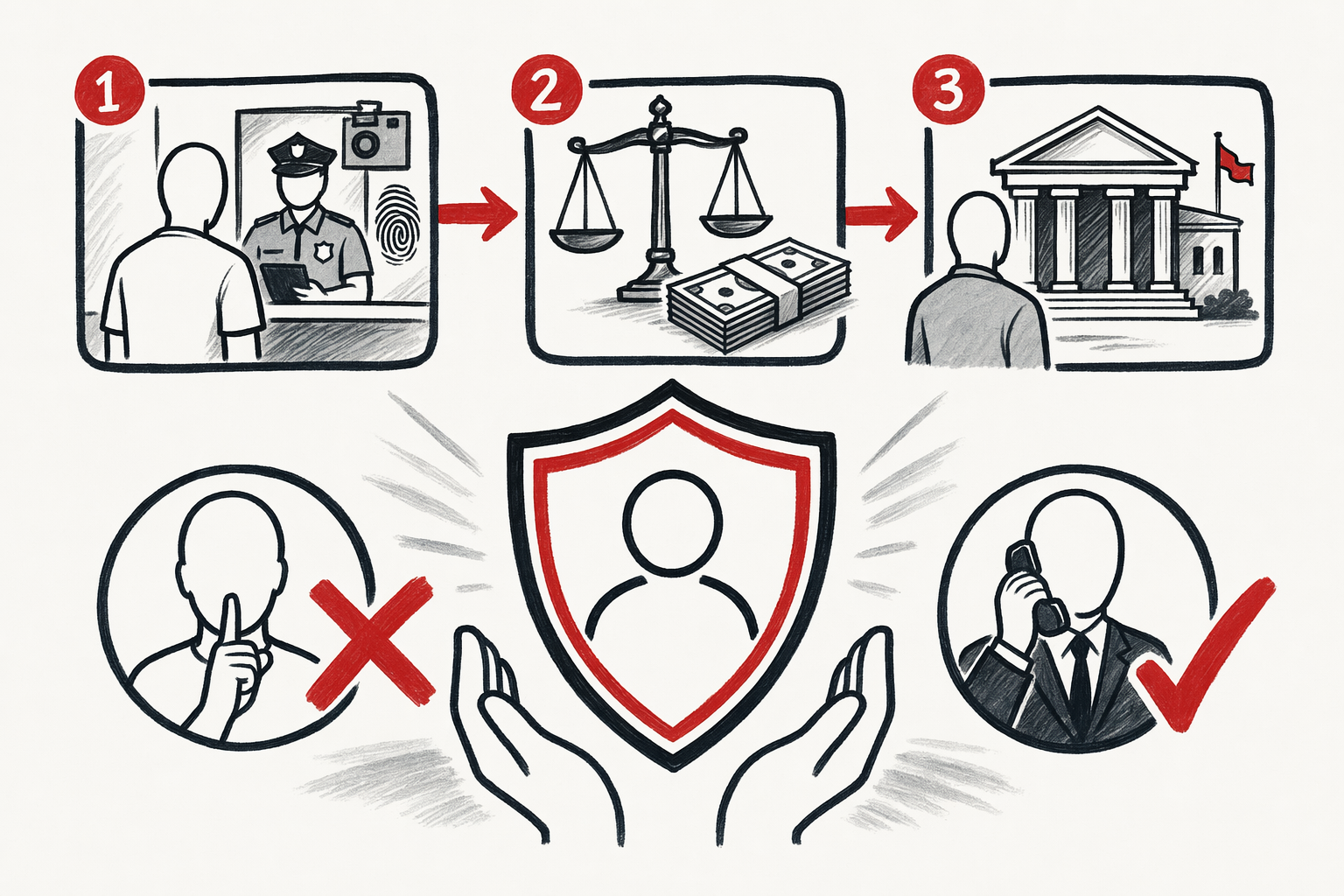
If you feel lost, that does not mean your case is hopeless. It means the system is hard to understand. Learn your rights, keep your papers, and get legal help quickly. Small steps taken early can make a real difference in how prepared you are.
After an arrest, there are common steps like booking, bail, and a first court date, and it is important to stay silent and get legal help fast.