The Right to Remain Silent, Explained Simply
You have the right to remain silent in the U.S. This right matters whether you are a citizen or not, and it can help protect you when police ask questions.
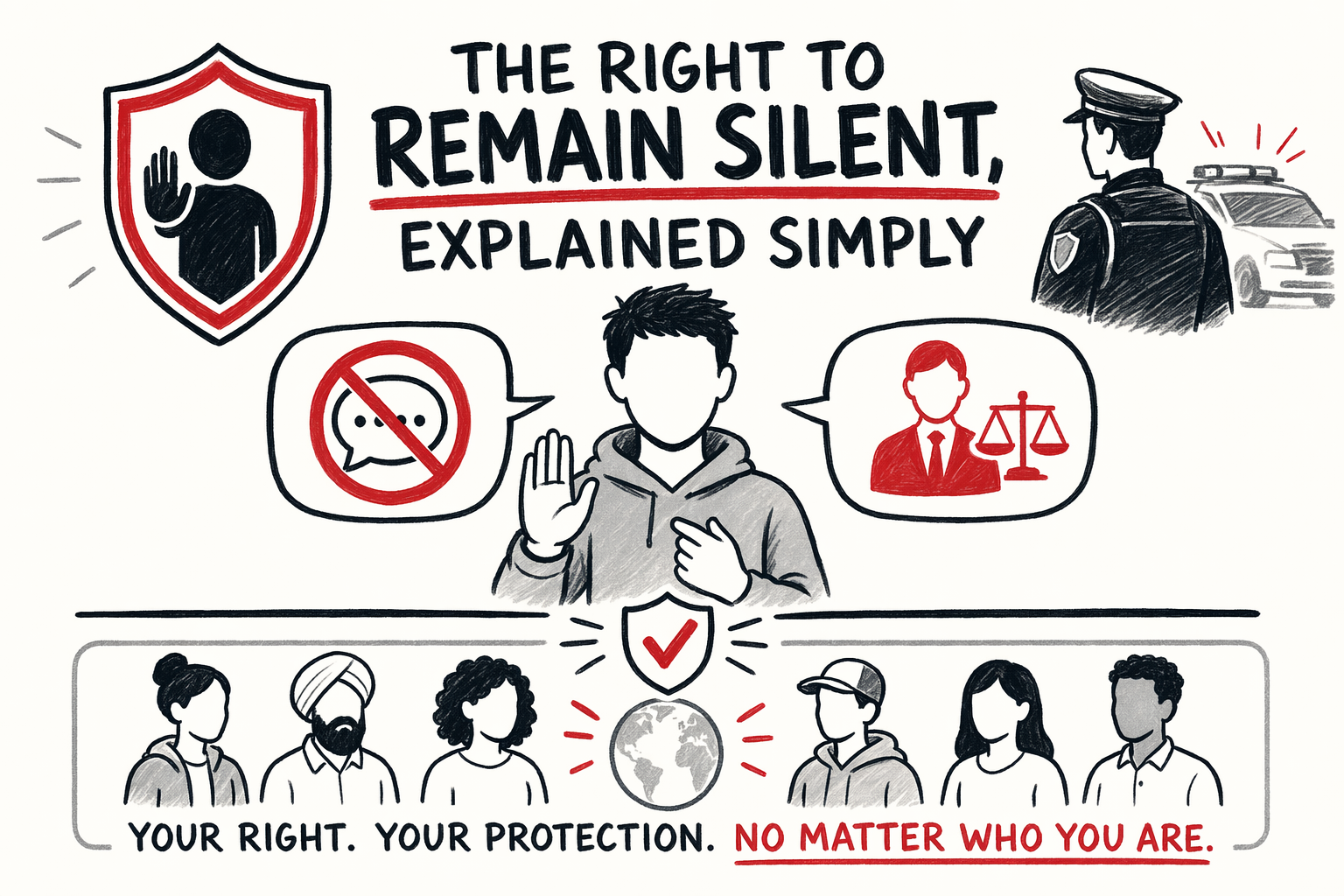
If police stop you, question you, or arrest you, you may feel panic. That is normal. One important right can help you. You can stay silent and ask for a lawyer before answering questions.
This page explains what that right means in simple words. It is general information only. GuardLine Defense is not a law firm, does not give legal advice, and does not create an attorney-client relationship. If you need help finding a defense lawyer, you can get matched here or read more on our learn pages.
What the right to remain silent means
The right to remain silent means you do not have to answer police questions about a crime or suspected crime. You do not have to explain where you were, what you did, who you know, or why something happened. If you speak, your words can be used against you later in court.
This right comes from the U.S. Constitution. It applies to everyone in the United States, including people who are not U.S. citizens. Your immigration status does not erase this right. You still have the right to a defense and the right to remain silent.
When to use it
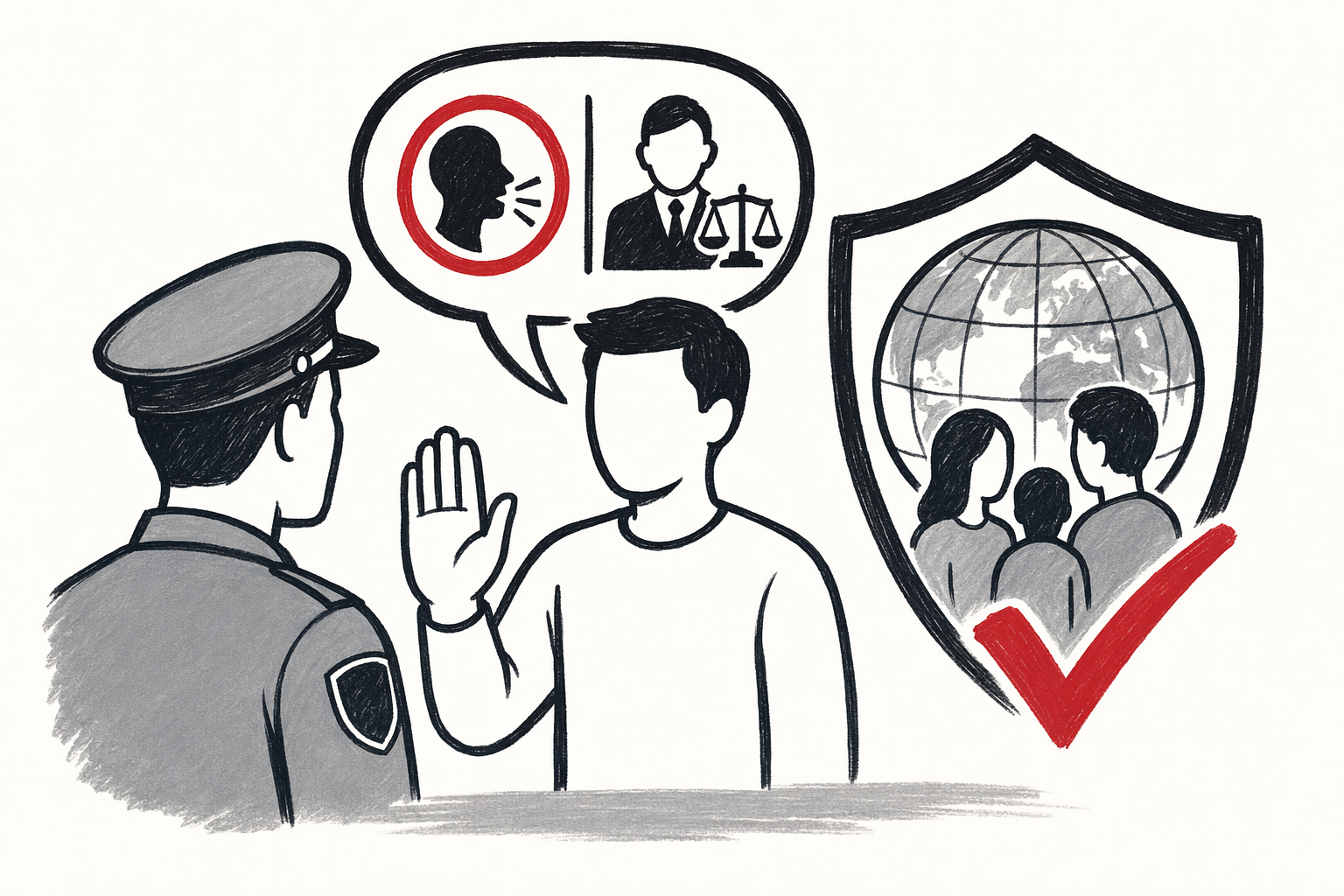
Use this right when police want to question you about possible criminal conduct. This can happen on the street, in your home, in a police car, at the station, or after arrest. Many people think they can talk their way out of trouble. Often, that makes things worse.
Police may sound friendly. They may say they only want to hear your side. They may act like it is a small misunderstanding. Still, if they suspect a crime, even a short answer can hurt you. A guess, a wrong date, or a nervous statement can become evidence.
- You can use this right before arrest and after arrest.
- You can use it even if police did not read Miranda warnings yet.
- You should say the words out loud. Staying quiet without saying why may not be enough in some situations.
- After you ask for a lawyer, stop talking about the case to police.
If you are facing a serious charge, quick legal help matters. You may want to read your rights after arrest. If the charge may be a felony, this page on felony defense may also help you understand the stakes.
What to say, and what not to say
You do not need special legal words. Keep it short and clear. You can say, "I am using my right to remain silent." You can also say, "I want to speak to a lawyer." Then stop talking.
- Speak calmly.
- Say, "I am using my right to remain silent."
- Say, "I want a lawyer."
- Do not explain, argue, or tell your story.
- Do not sign papers you do not understand without legal advice.
Do not lie. Do not give a fake name. In some places, you may have to give basic identifying information if lawfully required, such as your name. But you do not need to answer questions about the facts of a criminal accusation without a lawyer. Keep your answers to basic identification only, if required, and nothing more.
"I want to stay silent. I want a lawyer." These are simple words, but they can protect you.
Common problems and fears
Many people worry that staying silent makes them look guilty. But using a constitutional right is not a crime. It is a protection. Police may keep asking questions. Stay calm. Repeat that you are using your right to remain silent and want a lawyer.
Some people feel pressure because English is hard for them. If you do not understand, say that. Do not guess. Do not agree just to be polite. If possible, ask for an interpreter. If the police keep questioning you, keep repeating that you want a lawyer and do not want to answer questions.
Criminal charges can also affect immigration status. A plea, conviction, or even the facts written in a police report can matter later. Because of that, try to get a criminal defense lawyer who understands immigration consequences. GuardLine Defense is not a law firm and does not give immigration advice or legal advice, but we can help connect you with an independent defense attorney.
What happens next after you stay silent
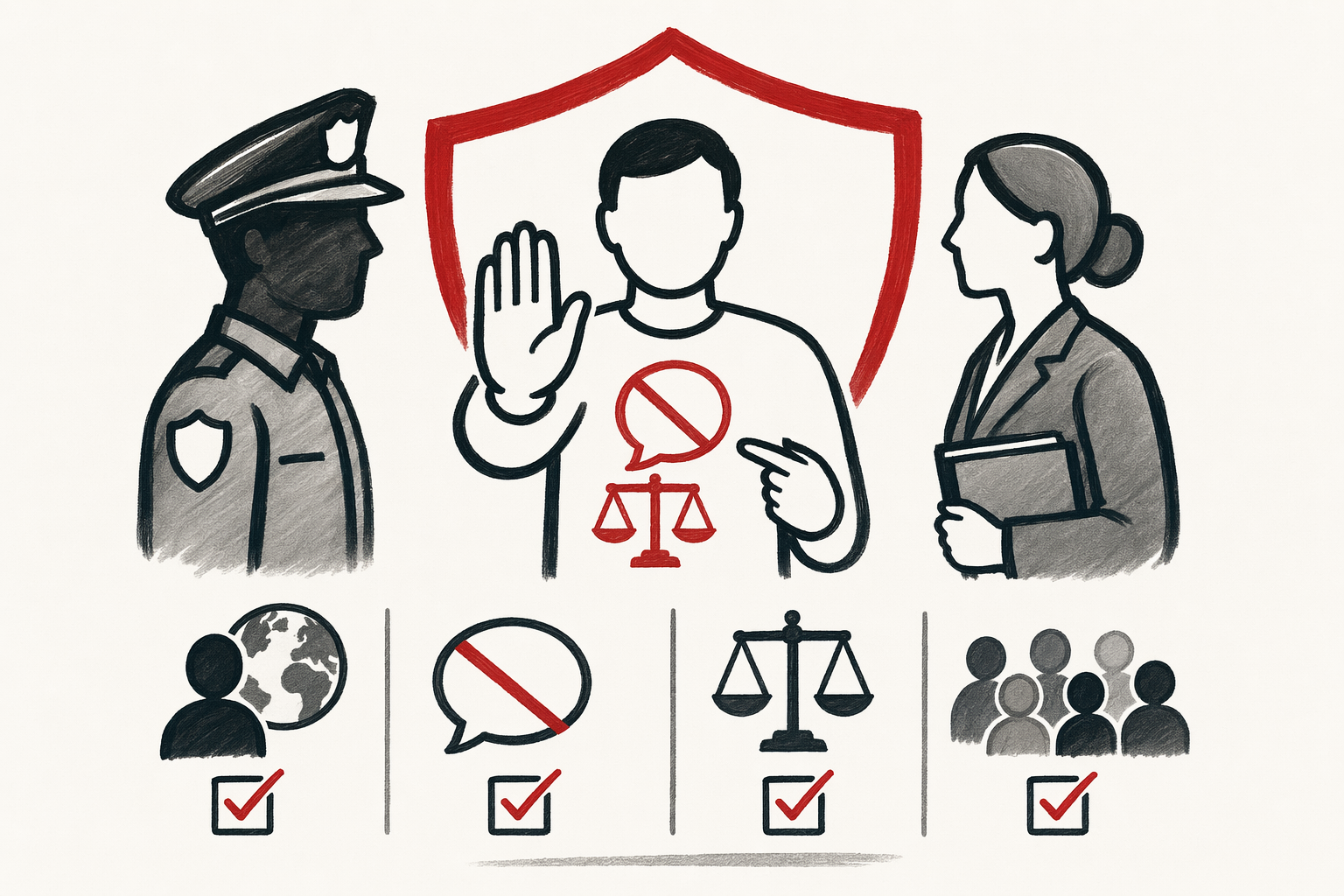
Staying silent does not make the case disappear. Police may still arrest you. A prosecutor may still file charges. But staying silent can help prevent extra statements from being used against you. It gives your lawyer more room to protect you and review the evidence first.
After arrest, there may be a booking process, a bond decision, and a first court date. Try to remember basic facts like the officers' names, the time of arrest, and where you were taken, but do not discuss the case details with police or other people in jail. Once you speak with a lawyer, ask about the criminal case and possible immigration consequences.
- Ask for a lawyer as soon as you can.
- Do not discuss the facts of the case on recorded jail calls.
- Do not let friends or family post details online.
- Save papers you receive from police or court.
- Go to every court date.
You are not alone, even if this is your first time dealing with police or court. Learning your rights is a strong first step. If you want help finding an independent criminal defense attorney, you can start here. This service is free to you.
You can tell police you want to stay silent and want a lawyer, and that right applies even if you are not a citizen.