Going to Criminal Court: What to Expect
Criminal court can feel scary, especially the first time. This page explains who is there, what usually happens, and how to get ready without guessing.
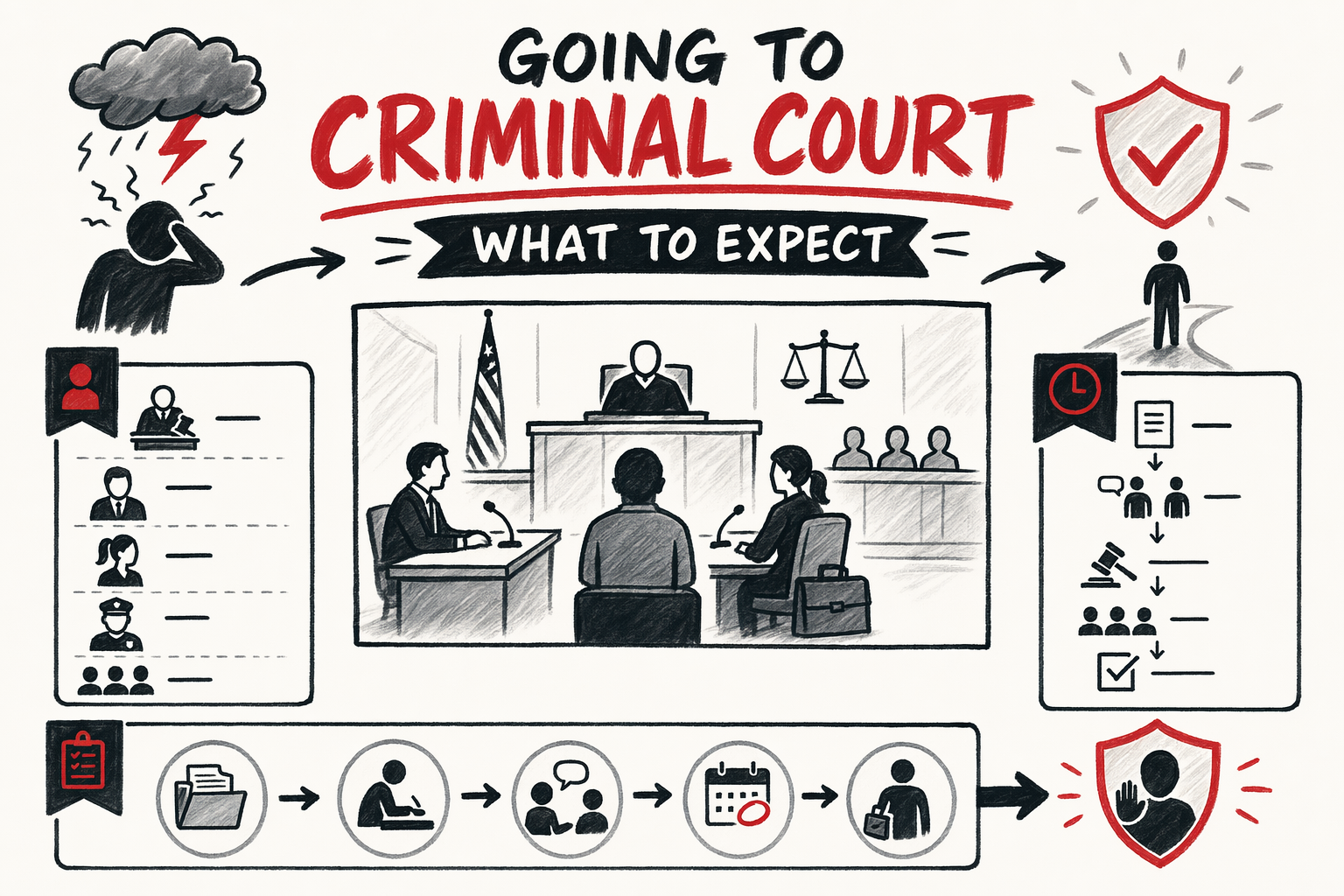
If you have to go to criminal court, you may feel confused, embarrassed, or afraid. That is normal. Court has rules, new words, and many people in one room. Knowing the basic steps can help you feel more steady.
This page gives general information only. GuardLine Defense is not a law firm, does not give legal advice, and does not create an attorney-client relationship. If you need help finding a defense lawyer, you can get matched here. You can also read more on our learn page.
What criminal court is like
A criminal court hearing is a meeting in front of a judge about your case. The judge manages the courtroom and makes legal decisions. The judge does not act as your lawyer. The prosecutor speaks for the government. Your defense lawyer speaks for you. A clerk keeps the record. A bailiff or deputy helps with safety and order. Sometimes an interpreter is present.
Many hearings are short. Some last 5 to 15 minutes. Others take longer if there are many cases, legal arguments, or questions about release conditions, evidence, or scheduling. You may spend more time waiting than speaking.
- Judge. Runs the hearing and makes decisions about the case.
- Prosecutor. Tries to prove the charge for the government.
- Defense lawyer. Protects your rights and speaks for you.
- Clerk. Writes down what happens and handles paperwork.
- Bailiff or deputy. Keeps order and calls cases.
- Interpreter. Translates if the court provides one or if one is requested.
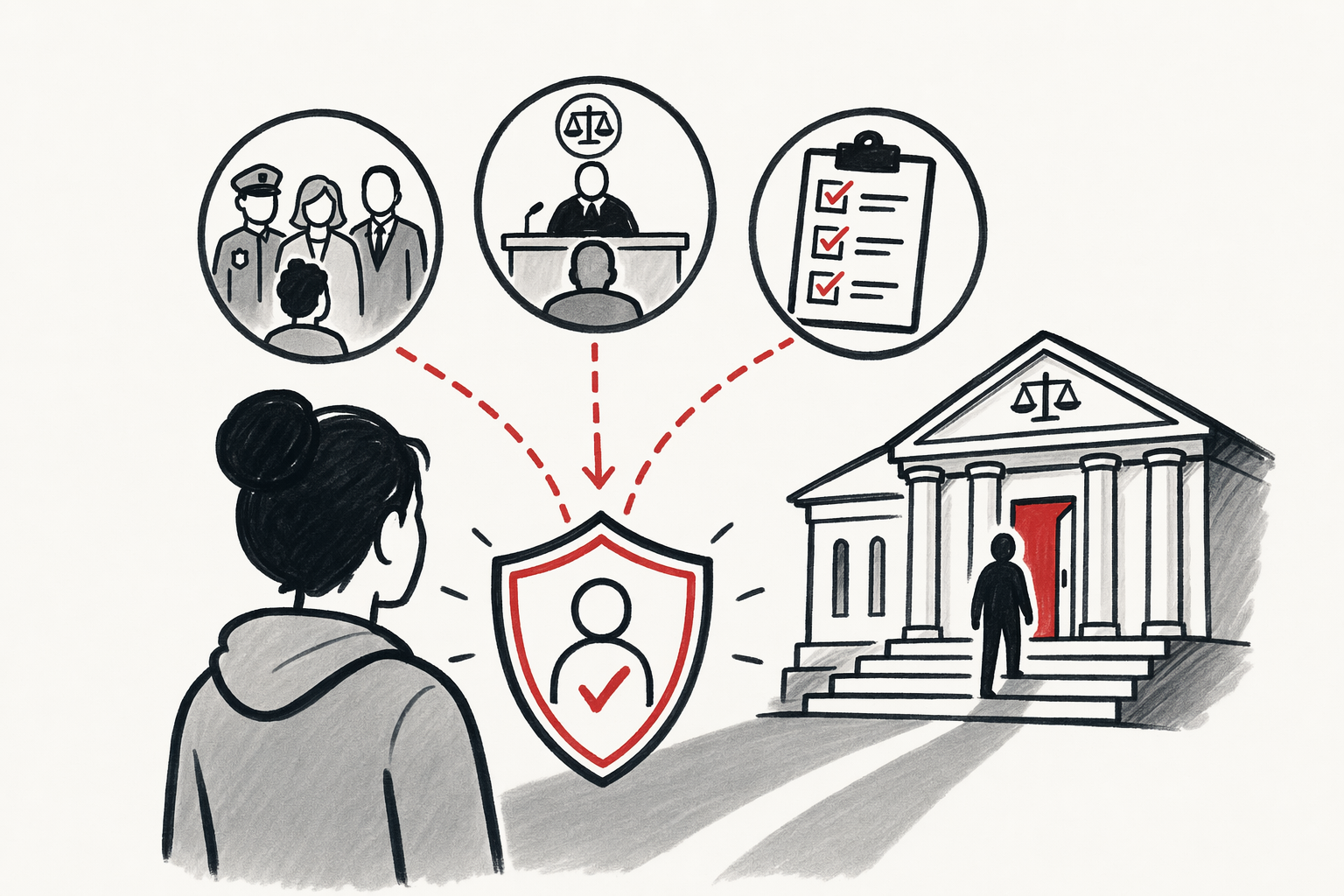
What usually happens at a hearing
The exact steps depend on the court and the stage of your case. At an early hearing, the court may call your name, confirm the charge, check whether you have a lawyer, and set future dates. In some hearings, the judge may talk about release conditions, bond, or scheduling. In other hearings, lawyers may discuss evidence, witnesses, motions, or possible resolutions.
You may hear words that are new to you. "Arraignment" often means the first court hearing where the charge is read and the court asks about a plea. "Pretrial" often means later hearings before a trial. A "motion" is a request asking the judge to decide something. If you do not understand a word, tell your lawyer. If you do not have a lawyer yet, ask the court for time to get one.
- Check in when you arrive, if the court requires it.
- Wait until your case is called.
- Stand when the judge enters, if the courtroom asks for that.
- Listen carefully. Speak only when asked, or after talking with your lawyer.
- Your lawyer may do most of the talking.
- The judge may set another date, make a ruling, or explain next steps.
Do not expect your whole case to end at the first hearing. Many criminal cases take more than one court date. Some end through dismissal, plea, diversion, or trial. Some charges, including serious charges, can have immigration consequences. That is why it is important to have a defense lawyer who understands immigration issues. GuardLine Defense is not an immigration law service and does not give immigration advice, but we can help you look for a defense lawyer. If your case is serious, you can read about felony defense.
How to prepare before you go
Preparation can lower stress. The night before, find the courthouse address, courtroom number, and start time. Plan how you will get there. Try to arrive 30 to 45 minutes early. Courthouses often have security lines. If you are late, the judge may move on without you or issue a warrant in some situations.
Wear clean, simple clothes if you can. You do not need expensive clothing. Avoid shirts with rude words or pictures. Turn off your phone before the hearing. Bring your court papers, a photo ID if you have one, your lawyer's contact information, and a small notebook. If English is hard for you, ask for an interpreter as early as possible. If you were arrested before, review your rights after arrest so you remember what to say and what not to say.
- Know the courthouse address and room number.
- Arrive early. Security can take time.
- Bring all court papers in one folder.
- Ask for an interpreter if you need one.
- Do not bring prohibited items. Many courthouses ban pocket knives, spray, or tools.
- If you have a lawyer, meet before the hearing if possible and ask what the goal is for that day.
What to do in the courtroom, and what happens after
When your case is called, go where your lawyer tells you. Stand up straight. Speak clearly. Be polite, even if you feel upset. If the judge asks a yes or no question, answer only that question. Do not interrupt. If you do not understand, it is okay to say, "I do not understand," or "I need an interpreter." If you have a lawyer, look at your lawyer before answering questions about the case.
After the hearing, your lawyer may explain what happened and what comes next. You may get another court date. You may have conditions to follow, such as appearing again, checking in, staying away from a place or person, drug testing, or not leaving the state. Follow every court order carefully. Missing court or breaking conditions can make your situation worse.
If you do not have a lawyer yet, try to speak with one as soon as possible after court. A criminal case can affect your record, your job, your family, and your immigration situation. We are not a law firm and we do not give legal advice, but our service is free to you. You never pay us, and we never take a percentage of any attorney's fees. We are paid a flat marketing fee if a lawyer chooses to participate.
You do not need to know every legal word today. You do need to protect your rights, show up, and get real legal help fast.
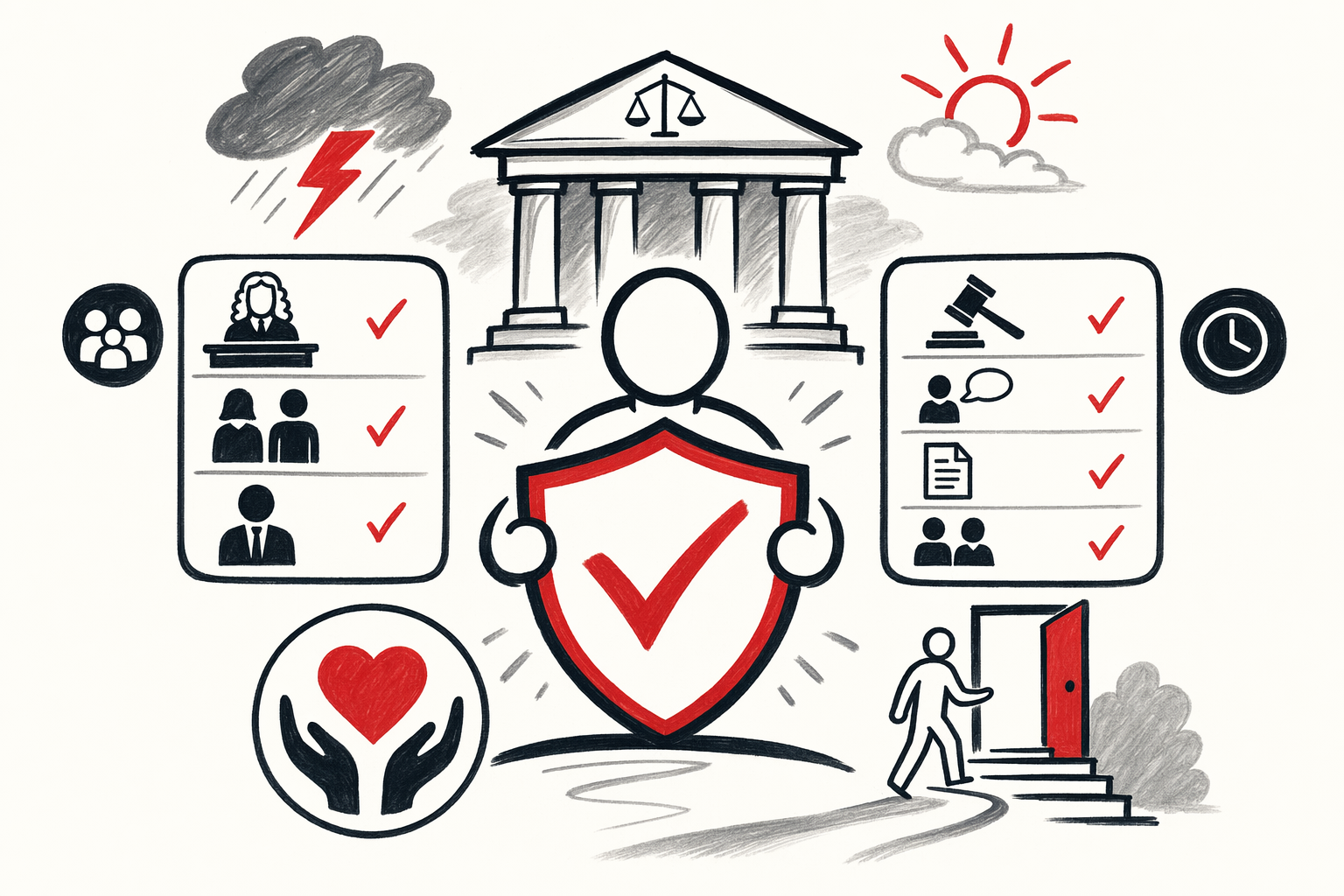
Court is stressful, but knowing who is there, what usually happens, and how to prepare can help you protect your rights and take the next step.