Can police search my phone?
Police usually need a warrant, your consent, or a specific legal reason to search your phone. If police ask for your phone or password, stay calm, say you want a lawyer, and do not agree to a search.
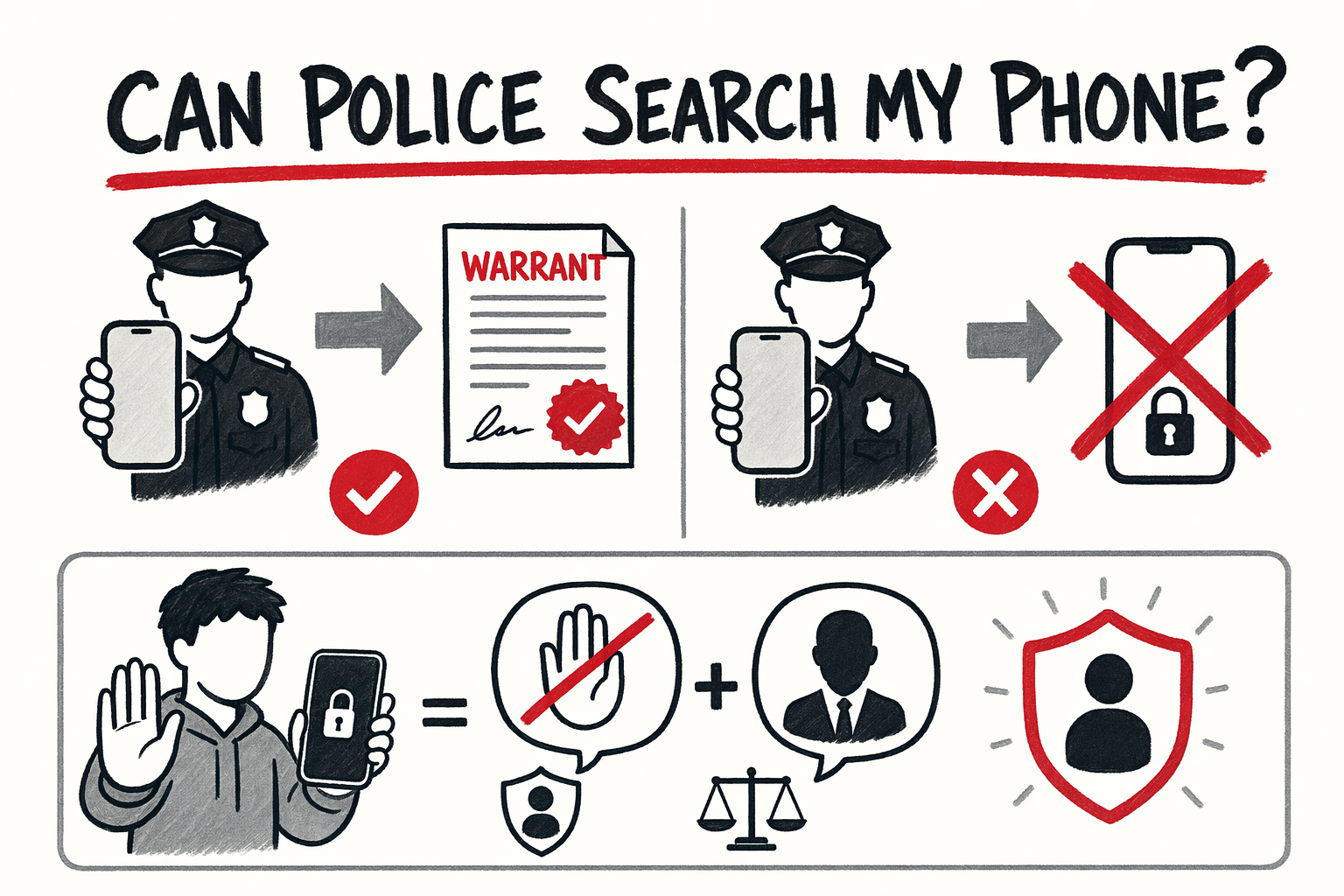
Your phone can hold private parts of your life. It may have texts, photos, bank apps, health details, and messages with family. In many cases, police need a warrant from a judge before they can search what is inside your phone.
But the rules can change fast. They depend on where you were, why police stopped or arrested you, and whether you said yes to a search. If you are facing charges, you can get matched with an independent defense attorney. GuardLine Defense is not a law firm and does not give legal advice.
The short answer
Police cannot always search your phone just because they took it from you. In many situations, they need a search warrant to look through the phone's contents. A warrant is a paper signed by a judge that says what police can search for and where.
Still, there are important exceptions. If you give permission, police may say they can search. If the phone is unlocked and in plain view, police may still need a warrant to explore the data, but they may try to use what they see right away. The facts matter.
When police may try to search your phone
A phone search can happen in a few different ways. Police may take the phone from your hand, from your pocket during an arrest, from your car, or from your home during a search. Taking the phone is not the same as legally searching the data inside it.
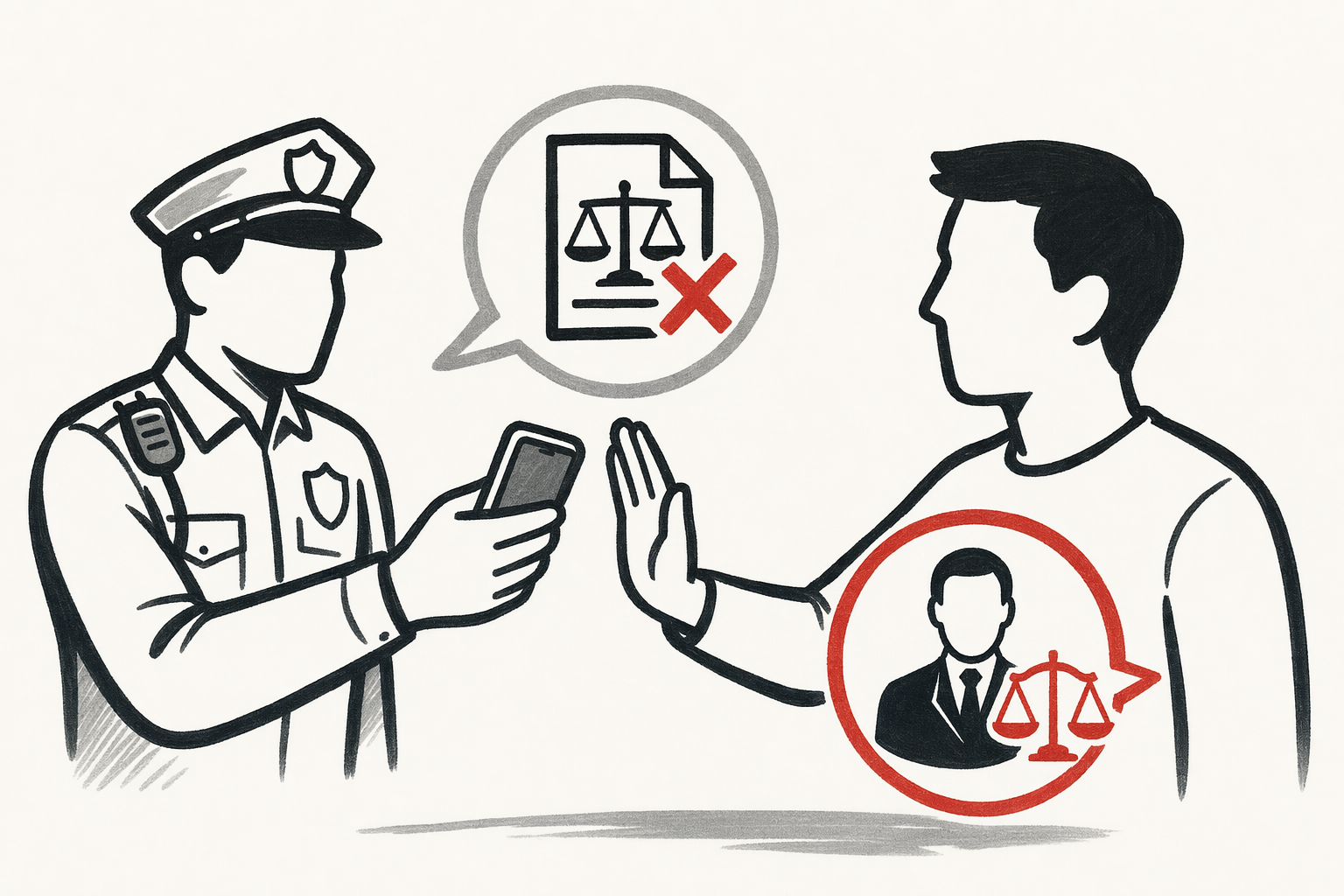
- If police ask, "Can I look through your phone?" you can say, "I do not consent to a search."
- If police ask for your passcode, PIN, pattern, or face scan, you can say, "I want a lawyer."
- If police already have a warrant, do not fight with them. Stay calm and say you want a lawyer.
- If they take the phone, do not lie, hide evidence, or try to destroy anything.
Police may also ask in a casual way, like, "Just unlock it so we can clear this up." Be careful. A simple yes can become consent. Consent can make it harder for a defense lawyer to challenge the search later.
Common situations and what they can mean
If you are arrested, police may usually take property from your pockets, including your phone. But taking it does not automatically let them read your texts, photos, email, or app messages. In many cases, they still need a warrant to search the phone's contents.
If police stop you on the street and ask to see your phone, you can refuse consent. If they say they have a warrant, do not resist. If they do not have one, your lawyer may later argue the search was unlawful, depending on the facts.
If police search your home with a warrant, read the warrant if you can. It may name certain devices or certain evidence. Sometimes police will take phones and ask a judge later for permission to search the contents. Your lawyer can review the scope of the warrant.
Border situations can be different. The rules at airports and border crossings are not always the same as inside the country. If that applies to you, tell your defense lawyer right away. Criminal charges can also affect immigration status, so it is important to get a defense lawyer who understands immigration consequences. GuardLine Defense is not an immigration law firm and does not give immigration advice.
What to do right now if police ask for your phone
- Stay calm. Keep your hands where police can see them.
- Do not run, argue, or physically resist.
- Say, "I do not consent to a search of my phone."
- Say, "I want to remain silent. I want a lawyer."
- Do not give your password, PIN, pattern, or face unlock unless your lawyer tells you to.
- Write down what happened as soon as you can. Note the time, place, officers, and exact words used.
- Get legal help quickly. You can read your rights after arrest and ask to get matched with an independent defense attorney.
If your case involves a serious charge, fast legal help matters. You can also learn more about felony defense. A defense lawyer can review whether police had a valid warrant, whether you gave consent, and whether evidence from your phone can be challenged.
Many immigrants feel pressure to cooperate because they are scared. That feeling is normal. But you still have rights. Everyone in the United States has the right to a defense and the right to remain silent, regardless of immigration status.
Police often need a warrant to search your phone, and if they ask, you can say you do not consent and want a lawyer.