Bail and Bond in the U.S., Explained
Bail is money or a promise made to the court so a person can leave jail and come back for court dates. This page explains bail, bond, common costs, and basic rights in plain English.
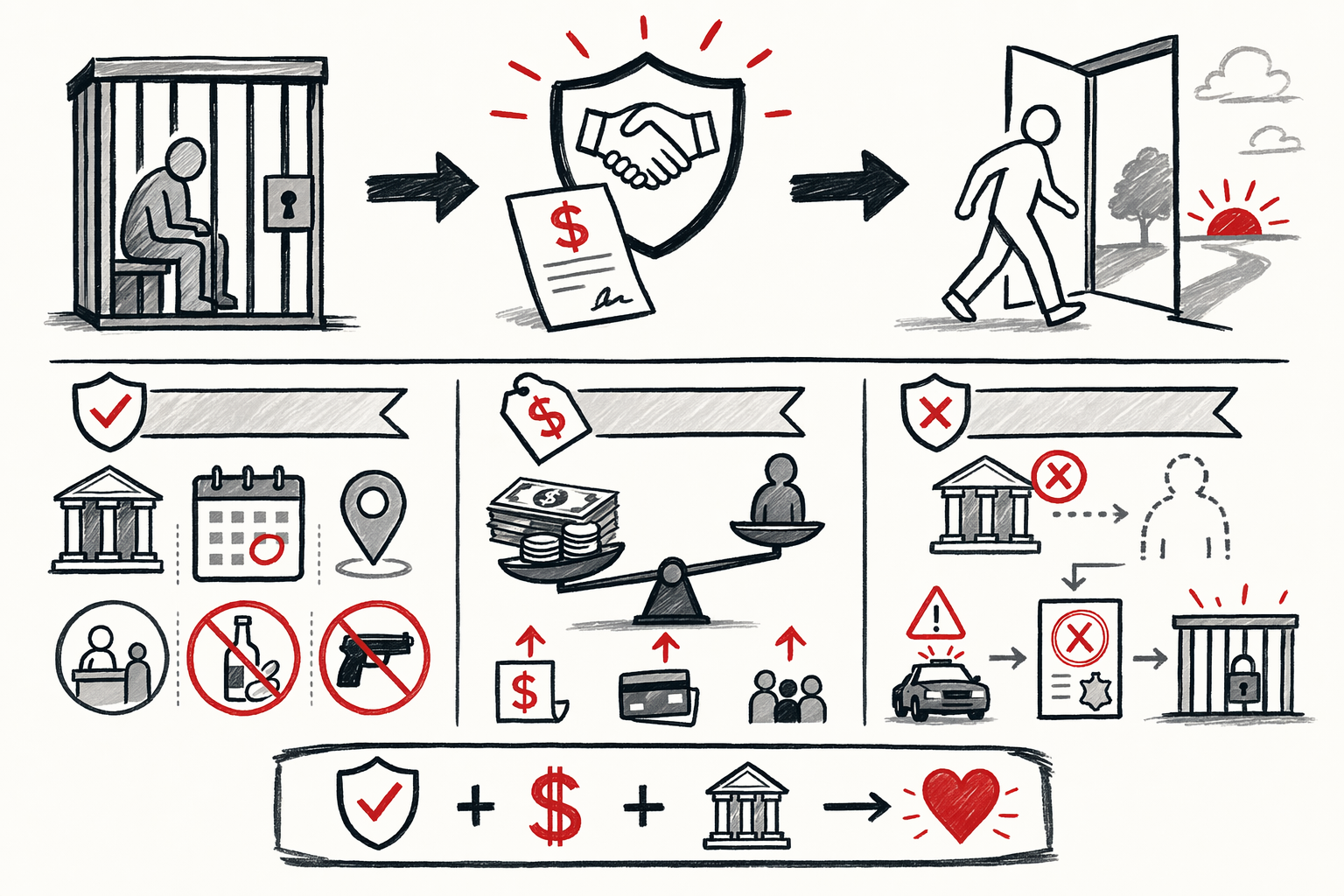
If your family member was arrested, the words bail and bond can feel confusing. The process moves fast. It is normal to feel scared, especially if this is your first time dealing with police or court in the United States.
This page gives general information, not legal advice. GuardLine Defense is not a law firm, and using our free service does not create an attorney-client relationship. A criminal case can also affect immigration status, so it is important to speak with a defense lawyer who understands immigration issues. You can get matched with an independent lawyer, or read more on our learn page.
What bail and bond mean
Bail is the amount or condition set by a court to let a person leave jail while the case is still open. The court uses bail to try to make sure the person returns for future court dates.
Bond is the way bail gets posted. Sometimes a person or family pays the full amount directly to the court. Sometimes they use a bail bond company, also called a bondsman, that posts a bond for them for a fee.
- Bail is set by a judge or by a schedule used by the jail or court.
- If the person follows the rules and returns to court, the case continues while they remain out of jail.
- If the person misses court, the judge can issue a warrant and bail can be lost or revoked.
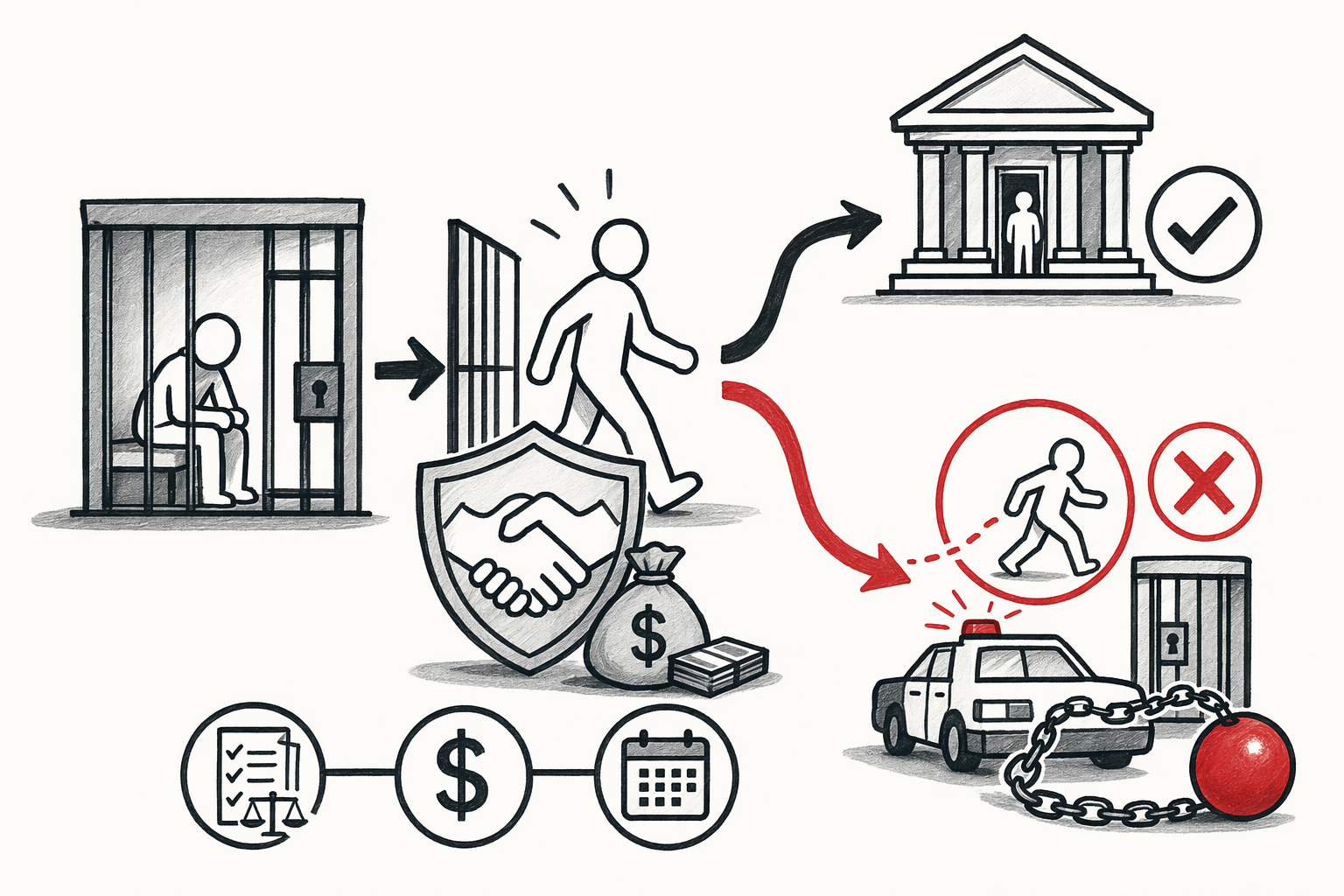
How a person gets bail set
After an arrest, the person is usually booked into jail. Booking often includes fingerprints, a photo, and basic personal information. In some places, a bail amount may be set quickly using a schedule. In other cases, the person must wait for a first court hearing, often called an arraignment or bail hearing.
At that hearing, the judge may decide whether to release the person, set money bail, set conditions, lower or raise bail, or keep the person in jail. The judge may look at several things.
- The charge and whether it is a misdemeanor or felony
- Past criminal history, if any
- Whether the person has missed court before
- Ties to the community, like family, work, school, or housing
- Public safety concerns
Some people are released without paying money. This may be called release on recognizance, or "ROR." It means the person promises to come back to court. Other people may have to follow conditions, such as no contact with an alleged victim, no alcohol or drugs, travel limits, or check-ins with pretrial services.
If the charge is serious, you may also want to read about felony defense. If police want to ask questions, review your rights after arrest.
Paying cash bail or using a bail bond
There are two common ways to get someone out when money bail is set. One is to pay the full amount to the court or jail, if that is allowed. The other is to use a bail bond company.
Option 1: Pay the full bail amount
If bail is $2,500, the family may be able to pay $2,500 directly to the court. If the person comes to all required court dates and follows the rules, most or all of that money may later be returned, depending on local rules, fees, and fines. The return does not usually happen right away. It may take weeks or months after the case ends.
Option 2: Use a bail bond company
If the full bail amount is too high, a bail bond company may post a bond for the person. In many states, the company charges a nonrefundable fee, often around 10% of the bail amount, though rules vary by state. Example: if bail is $5,000, the bond fee may be about $500. Even if the case is dismissed later, that fee is usually not returned.
The bond company may also ask for collateral. Collateral is property or value used as security, such as a car title, jewelry, or money in a bank account. Read every paper before signing. Ask what happens if the person misses court, if extra fees can be added, and when collateral will be returned.
- Find out the exact bail amount and the jail location.
- Ask the jail what forms of payment they accept.
- If using a bond company, ask for the total fee in writing.
- Keep receipts, bond papers, and court date information in one place.
What can happen after release
Getting out of jail is not the end of the case. The person must go to every court date and follow all release conditions. Missing even one date can cause serious problems.
- The judge can issue a bench warrant for arrest.
- Bail can be increased, revoked, or forfeited.
- The person may be taken back to jail.
- A bond company may look for the person and may seek payment under the bond agreement.
Try to get the next court date in writing before leaving the jail or courthouse. Put the date in a phone calendar. Set two reminders. Keep the court papers in a safe place. If the person moves, they should tell their lawyer and the court right away if local rules require it.
A criminal case can have immigration consequences, even before the case is over. For some people, release from criminal jail can lead to an immigration hold or transfer to immigration detention. We are not immigration lawyers and do not give immigration advice, but this is one reason it is important to find a defense lawyer who understands how criminal charges can affect non-citizens.
The most important rule after release is simple: go to court every time, and follow every condition.
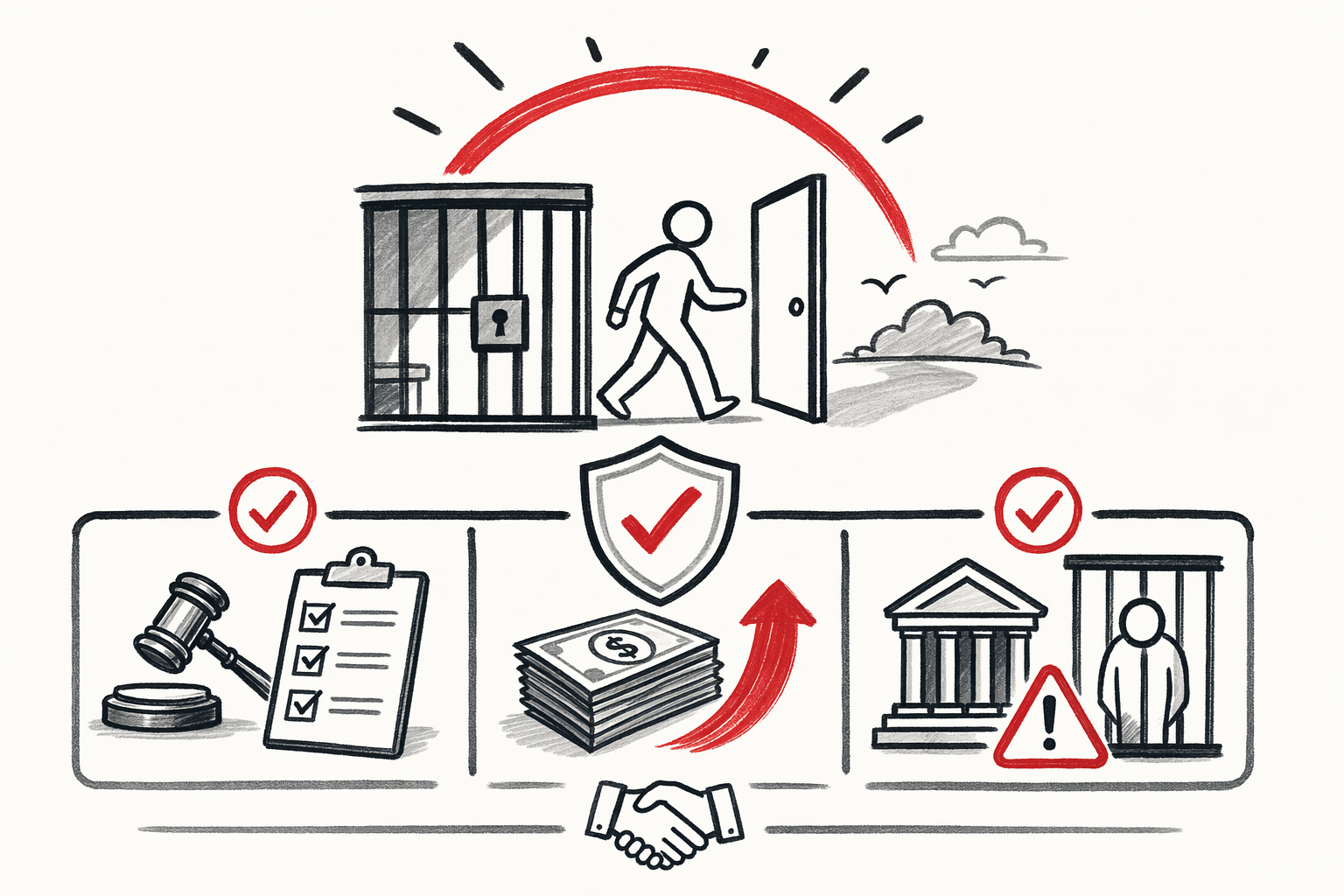
Common questions families ask
Families often ask how long release will take. The honest answer is that it depends. Sometimes release happens in a few hours after bail is posted. Sometimes it takes longer because of booking delays, court schedules, holds from another county, weekends, paperwork, or jail crowding.
People also ask whether bail means the person is guilty. No. Bail is not a conviction. It is a release decision while the case is pending. The criminal charge still must be handled in court.
Another common question is whether bail can be changed. Sometimes yes. A defense lawyer can ask the court to lower bail or change conditions. The judge may or may not agree. No one should promise a result.
If you are helping a loved one from outside the jail, write down five basic facts: full name, date of birth, jail name, booking number if known, and the next court date if known. That can make calls to the jail, court, or lawyer much easier.
If English is hard for you, ask for an interpreter in court. Many courts provide language help. Keep saying clearly that you need an interpreter for your language. Short, calm communication helps.
Bail can help a person leave jail before the case ends, but the rules matter, the costs can be high, and missing court can cause bigger problems.